11 Best Foods for Thyroid Patients in India: Diet Plan for 2026
Updated on: July 02, 2026 | Medically reviewed by: Dr. Anupam Kumari
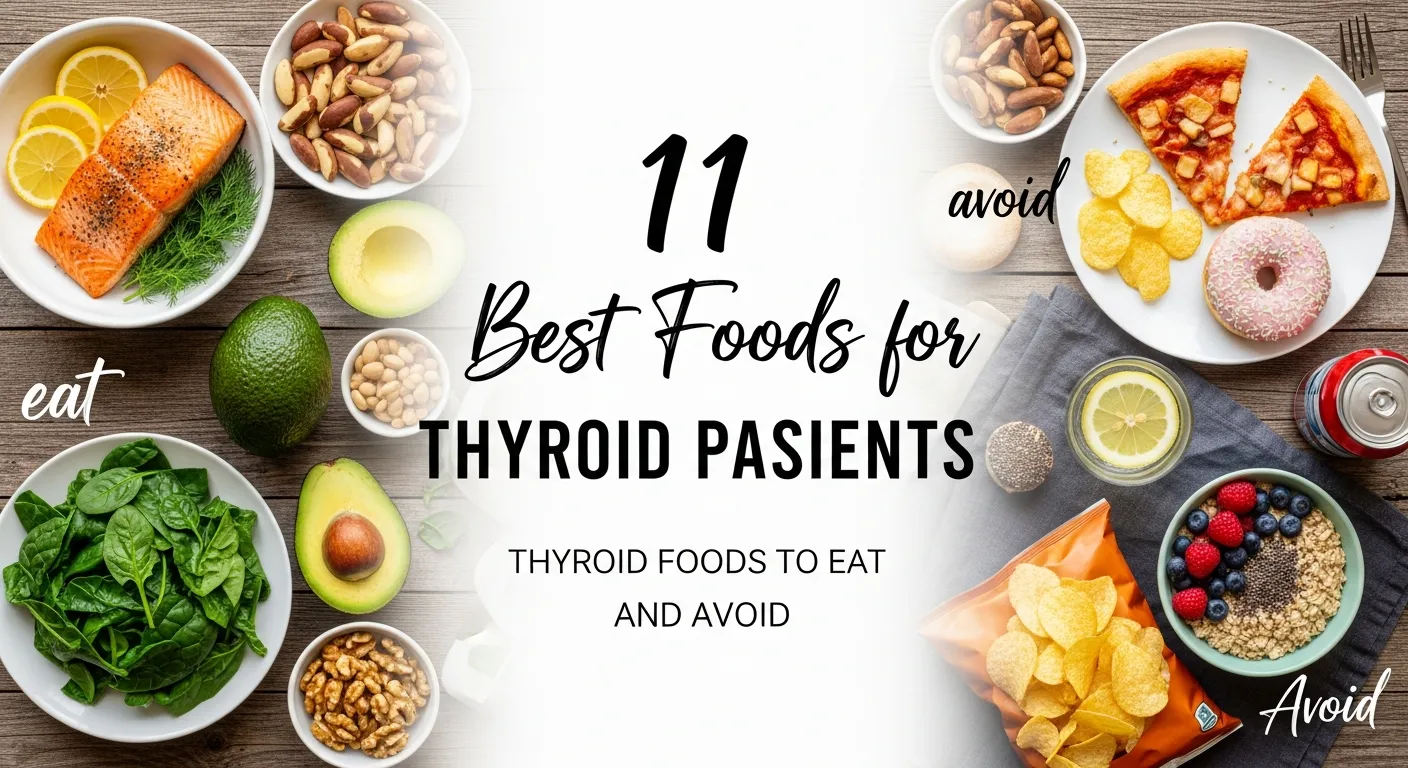
The Best Food for Thyroid Patients: Direct Answer
According to endocrine experts, the best foods for thyroid patients include Iodized Salt, Curd (Dahi), Selenium-rich Eggs, Zinc-heavy Moong Dal, and Metabolism boosters like Ghee. To manage thyroid weight gain, incorporate high-fiber foods like Apples, Bottle Gourd (Lauki), and Pumpkin Seeds. Patients should strictly limit raw cruciferous vegetables (Cabbage, Broccoli) and minimize processed soy products.
Imagine your body is like a busy Indian household. To keep everything running smoothly—from cooking meals to cleaning—you need a steady supply of power. In your body, that power regulator is a small, butterfly-shaped gland in your neck called the thyroid.
Think of the thyroid like the regulator on a gas stove or the speed dial on a ceiling fan. If you turn it too high (Hyperthyroidism), everything burns up too fast, and you feel shaky and anxious. If you turn it too low (Hypothyroidism), the flame struggles to stay lit, and you feel cold, tired, and sluggish. This 'low setting' is very common in India, especially among women.
Many patients come to me worried about sudden weight gain or hair fall, thinking it is just stress. Often, it is the thyroid asking for help. The good news? You don't always need expensive imported foods to fix this. Your kitchen, filled with simple Indian ingredients, holds the key to better health.
| Foods to EAT (Best) | Foods to AVOID / LIMIT |
|---|---|
| Iodized Salt, Curd, Eggs | Raw Cabbage, Cauliflower |
| Moong Dal, Chickpeas (Chana) | Soy Products (Chunks, Tofu) |
| Pumpkin Seeds, Almonds | Sugar & Processed Flour (Maida) |
| Bottle Gourd (Lauki), Spinach (Cooked) | Excessive Tea/Coffee (Caffeine) |
Detailed Guide to Thyroid-Friendly Indian Superfoods
Research suggests that while medicine helps balance hormones, food helps the medicine work better. Here is a list of simple, effective foods readily available in local markets.
1. Curd (Dahi) and Yoghurt
WHAT: Fresh, homemade curd or yoghurt.
WHY: Dairy products are excellent sources of Iodine. The thyroid gland needs iodine to create the hormones that give you energy. Furthermore, curd is rich in Probiotics (good bacteria).
HOW: A healthy gut absorbs medicine and nutrients better. Having a bowl of dahi with your lunch helps repair your stomach lining and creates a healthy environment for your thyroid to function.
2. Moong Dal and Chickpeas (Chana)
WHAT: Lentils, specifically Moong Dal and white/black Chana.
WHY: These are packed with Zinc and Protein. The thyroid gland uses zinc to activate the hormones. Without enough zinc, the hormones sit inactive in your body.
HOW: Eating dal-chawal (lentils and rice) or chana chaat provides the raw materials your body needs to 'switch on' your metabolism. It helps reduce the feeling of constant tiredness.
3. Pumpkin Seeds (Kaddu ke Beej)
WHAT: The flat, green seeds found inside pumpkins.
WHY: They are one of the best vegetarian sources of Zinc and Iron.
HOW: Just one teaspoon a day helps prevent hair thinning, a common complaint among thyroid patients. The iron helps carry oxygen to your cells, making you feel more awake.
4. Eggs (Anda)
WHAT: Whole eggs, including the yellow yolk.
WHY: Eggs contain Selenium and Iodine. While iodine makes the hormone, selenium protects the thyroid gland from damage during the process.
HOW: Doctors recommend eating the whole egg because the yolk holds most of the vitamins. A boiled egg for breakfast can stabilize your energy levels until lunch.
5. Coconut Oil and Ghee
WHAT: Healthy saturated fats used in traditional Indian cooking.
WHY: Unlike refined vegetable oils that can cause inflammation, Ghee and Coconut oil contain Medium-Chain Fatty Acids.
HOW: These fats are easily digested and turned into energy instantly, rather than being stored as fat. This helps combat weight gain associated with hypothyroidism.
6. Bottle Gourd (Lauki) and Cucumber
WHAT: Water-rich vegetables.
WHY: Weight gain in thyroid issues is often due to water retention and bloating, not just fat. These vegetables are loaded with Fiber and Water.
HOW: They act as natural detoxifiers. Eating Lauki ki sabzi or cucumber salad helps flush out excess water and reduces puffiness in the face and feet.
7. Spinach (Palak) and Leafy Greens
WHAT: Seasonal green leafy vegetables.
WHY: They are high in Magnesium and B-Vitamins.
HOW: Magnesium helps relax muscles and ensures smooth bowel movements. Note: Always cook these greens; do not eat them raw if you have thyroid issues.
8. Apples and Guavas (Amrood)
WHAT: High-fiber fruits available in Indian markets.
WHY: They contain Pectin, a gelatin-like fiber.
HOW: Pectin helps clear out heavy metals from the body, which can interfere with thyroid function. The fiber also keeps you full longer.
9. Walnuts and Almonds (Dry Fruits)
WHAT: Soaked nuts, easily available in every Indian home.
WHY: Walnuts are a great source of Omega-3 fatty acids, and Almonds are rich in Magnesium and Zinc. These nutrients are essential for the conversion of T4 to the active T3 hormone.
HOW: Soak 2 walnuts and 4 almonds overnight and have them first thing in the morning (after your medicine). Soaking makes them easier to digest.
10. Iodized Salt (The Basic Necessity)
WHAT: Regular fortified table salt.
WHY: The most common cause of Hypothyroidism in India is still Iodine deficiency. Without enough Iodine, your thyroid "gas stove" simply cannot produce fuel.
HOW: Do not switch completely to Rock Salt (Sendha Namak) just for the trend. Use standard Iodized salt in moderate amounts in your daily cooking to maintain baseline iodine levels.
11. Amla (Indian Gooseberry)
WHAT: Vitamin C rich superfood.
WHY: Thyroid imbalance often leads to hair fall and dull skin. Amla has 8 times more Vitamin C than an orange. It boosts immunity and helps in the better absorption of Iron, which is often low in thyroid patients.
HOW: You can have it as a small piece of Murabba, fresh juice (30ml), or even in dried form after lunch to aid digestion.
Daily Indian Thyroid Diet Chart (Sample Day)
Many patients ask exactly how to combine these. Here is a sample menu:
| Time | Recommended Meal Plan |
|---|---|
| 6:30 AM | Thyroid Medication + Plain Water |
| 7:30 AM | 5 Soaked Almonds + 1 Walnut |
| 9:00 AM | Breakfast: Moong Dal Chilla OR Veg Poha OR 2 Boiled Eggs |
| 11:30 AM | Mid-Meal: One Apple or 100g Cucumber |
| 1:30 PM | Lunch: 1 Roti + 1 bowl Moong Dal + 1 bowl Lauki Sabzi + Curd |
| 5:00 PM | 1 tsp Pumpkin Seeds + Coconut Water or Green Tea |
| 8:00 PM | Dinner (Light): Veg Clear Soup OR grilled Paneer + Sautéed Greens |
Thyroid Foods to Avoid: What to Limit
- Soy Products: Limit Soya chunks/Tofu (keep 4-hour gap from medicine).
- Uncooked Cruciferous Veggies: Avoid raw Cabbage or Broccoli as they contain Goitrogens.
- Refined Sugar & Maida: These slow down your metabolism significantly.
- Excess Caffeine: Don't drink coffee within 1 hour of taking medicine.
Read More: Thyroid Diet Chart for Women
Common Misconceptions About Thyroid Diets
There is a lot of fear-mongering about food. Let’s clear up the confusion with evidence-based facts.
Myth 1: "I must stop eating Cabbage, Cauliflower (Gobi), and Broccoli completely." Correction: Research suggests you do not need to ban these. These vegetables contain compounds called goitrogens that can slow down the thyroid, but only if eaten raw and in huge amounts.
- Doctor's Tip: Cooking destroys these compounds. You can safely enjoy your Aloo Gobi or cooked cabbage sabzi. Just avoid putting raw cauliflower in smoothies or salads.
Myth 2: "Soy (Soya) is poison for thyroid patients." Correction: You do not need to eliminate it entirely, but moderation is key. Clinical studies show that soy can interfere with how your body absorbs thyroid medication.
- Doctor's Tip: Do not eat soya chunks or tofu within 4 hours of taking your morning thyroid pill. Limit consumption to once or twice a week.
Myth 3: "Cutting out salt completely will lower my weight." Correction: This is dangerous. The thyroid needs iodine, and in India, iodized table salt is the primary source.
- Doctor's Tip: Do not switch to non-iodized rock salt (sendha namak) exclusively unless advised by a doctor. Use standard iodized salt in moderation.
Local Care and Support
Understanding your diet is the first step, but every body is unique. If you are experiencing persistent fatigue, sudden weight changes, or mood swings despite eating well, it is time for a check-up.
We encourage you to visit specialists at General Hospital, Delhi/NCR. Our Endocrinology department focuses on holistic care, combining medication with personalized lifestyle plans suited for the Indian palette.
Conclusion: Small Steps for Big Changes
Healing your thyroid is not about starving yourself or buying expensive supplements. It is about returning to balanced, home-cooked meals. By adding a little extra curd to your lunch, snacking on pumpkin seeds, and cooking your vegetables well, you are giving your body the tools it needs to restart its engine.
Remember, consistency is better than perfection. Start with one small change today, and your body will thank you.
MEDICAL DISCLAIMER
Important Note: This information is intended for educational purposes only and does not substitute professional medical advice, diagnosis, or treatment. The "best food for thyroid patients" listed above can help manage symptoms, but every individual's body chemistry is different. Thyroid conditions are complex clinical issues that require regular monitoring by a healthcare professional. Always seek the advice of your physician or qualified health provider with any questions you may have regarding a medical condition. Never disregard professional medical advice or delay in seeking it because of something you have read on this website.
Results may vary based on your age, metabolic rate, and current dosage of thyroid medication. For a personalized thyroid diet chart and clinical evaluation, we recommend booking a consultation with the specialists at Nova Hospital & Research Centre, Meerut.