25+ High Protein Veg Foods: The Indian Dietician’s No-Nonsense August 2026 Guide
Updated on: October 16, 2026 | Medically reviewed by: Dr. Anupam Kumari
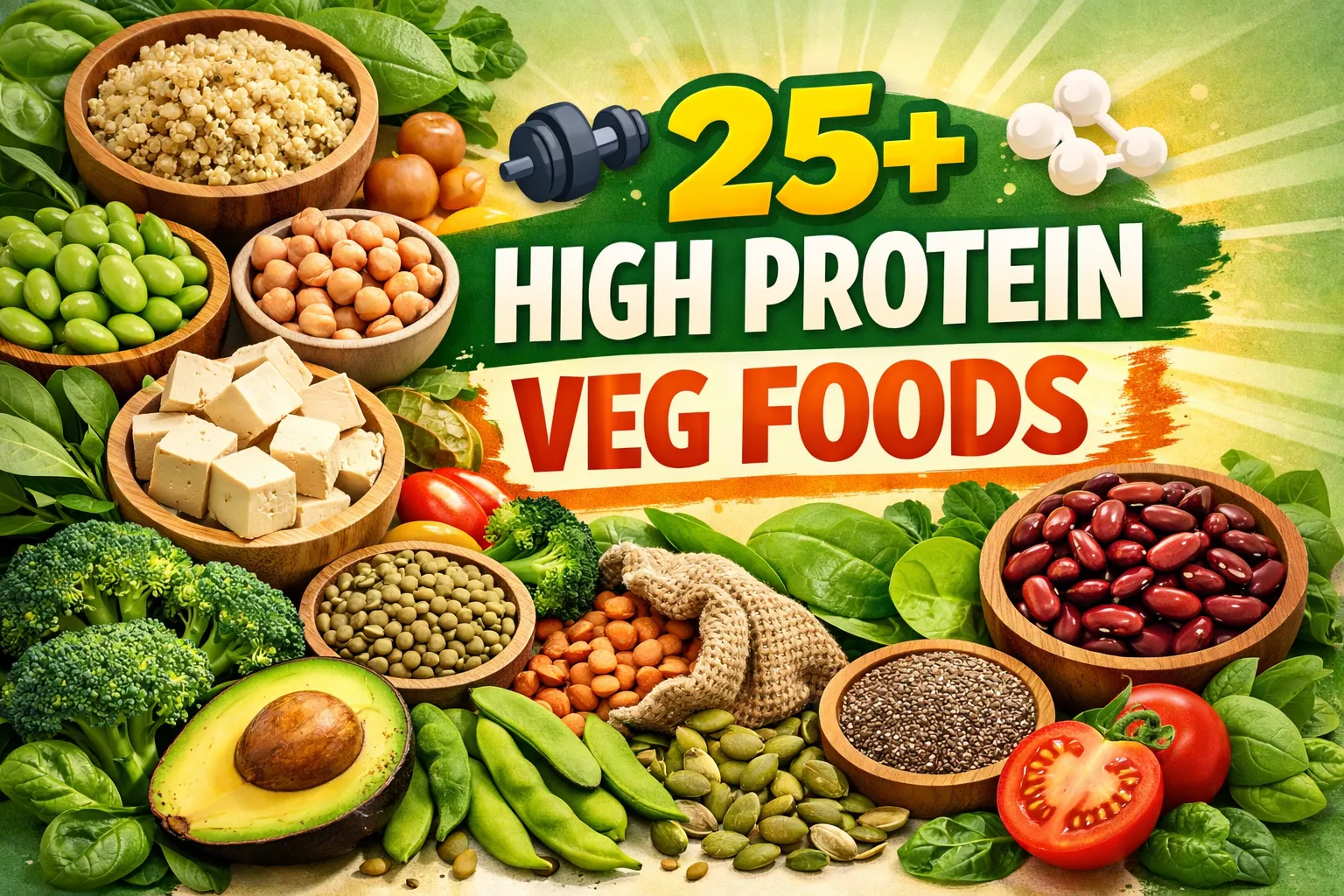
Let’s be real for a second. Every time someone finds out I’m a nutritionist, the first question they ask is, “Yaar, can you actually build muscle or get fit on a plant-based diet, or is that just a myth?”
If you’ve been scrolling through social media, you’ve likely seen fitness influencers guzzling chicken breasts or egg whites, making it seem like if you aren’t eating meat, your gym progress is doomed. But I’m here to tell you: that is absolutely false.
As a certified dietician with over a decade of clinical experience—specifically working with Indian households—I have seen hundreds of clients hit incredible health milestones without a single gram of animal protein.
If you are looking for high protein veg food that works as hard as a plate of grilled chicken, I have good news for you. Our traditional Indian kitchen is a goldmine. You don’t need imported powders or expensive supplements; you need to understand the science of your pantry. In this comprehensive guide, I’ll walk you through how to hit your protein targets, avoid the most common pitfalls, and master protein-rich vegetarian food in a way that actually tastes like home.
Why Protein Matters: It’s More Than Just Muscle
People often associate protein strictly with gym bros looking to grow biceps. While yes, protein is essential for muscle hypertrophy (that's the technical term for muscle growth), it is also the literal mortar holding your house together.
Your body is constantly breaking down and rebuilding cells. Your immune system needs protein to create antibodies. Your hair, nails, and skin? Mostly protein. Even your enzymes—the "laborers" of your metabolism—are protein-based.
When you increase your high protein foods vegetarian intake, you aren’t just helping your biceps; you are helping your satiety levels. High protein intake suppresses ghrelin (the hunger hormone), meaning you’re less likely to fall victim to the 4:00 PM tea-time samosa urge. If your day involves mental work or intense physical activity, high-quality protein-rich foods vegetarian sources keep your blood sugar steady so you avoid the dreaded afternoon energy crash.
The Math: How Much Protein Do You Actually Need?
pI often see clients stress over complex percentages. As a clinical expert, my goal is to make nutrition actionable, not exhausting.
-
Sedentary Lifestyle: Aim for roughly 0.8g to 1g of protein per kilogram of your body weight. If you weigh 70kg, aim for 60g to 70g of protein.
-
Active Lifestyle/Athletic: Aim for 1.2g to 1.6g per kilogram. If you are weight training 3-4 times a week, pushing toward that 1.6g mark will make a massive difference in your recovery.
-
Fat Loss Phase: Increasing protein is actually better for fat loss because it prevents muscle breakdown while you are in a caloric deficit.
Remember, these are guidelines. Use them as a starting point, not as a source of stress.
Why Vegetarians Struggle (and How We Fix It)
The "incompleteness" myth is the number one reason people give up on vegetarian diets. It goes like this: plant proteins aren't "complete" (they don’t have all nine essential amino acids) like meat is.
This used to be a big debate, but nutrition science has evolved. You do not need to eat a "perfect" meal every single time. Your body is smart. It stores amino acids for a period. As long as you are eating a diverse range of protein sources for vegetarians throughout your day—mixing cereals, pulses, and legumes—you will naturally form a "complete" protein profile over 24 hours. The magic happens in the variety, not just the selection.
Top 25+ High Protein Veg Food Sources
Here is my categorized breakdown of the heavy hitters available in your kitchen or your local sabzi mandi.
1. The Legume & Pulse Stars (Protein Rich Veg Food)
-
Soya Chunks: The absolute king of protein. With about 50g of protein per 100g, it’s unbeatable.
-
Tip: Use it in matar-soya masala or grind it to make soya kebabs.
-
-
Chickpeas (Kabuli Chana): ~19g per 100g.
-
Lentils (All kinds): Moong, Masoor, Urad, Arhar—average 8-9g per cooked bowl.
-
Kidney Beans (Rajma): Excellent source of both protein and fiber.
2. Dairy & Milk Products (Protein Containing Food Veg)
-
Paneer: A classic Indian favorite. Roughly 18-20g per 100g.
-
Pro Tip: Use hung curd to make high-protein marinades for grilled paneer instead of using butter/cream.
-
-
Greek Yogurt/Hung Curd: Excellent probiotic benefits + 10g protein per 100g.
-
Paneer/Tofu Scramble (Bhurji): An easy breakfast protein powerhouse.
3. Soy & Soy Alternatives
-
Tofu: If you don't love the texture of paneer or need a lower-fat option, Tofu is the way.
-
Edamame: The "hidden" snack of high-protein beans.
4. Grains & Seeds (The "Boosters")
-
Quinoa: A grain that is actually a complete protein. Use it as a rice substitute.
-
Hemp & Pumpkin Seeds: Great to sprinkle on yogurt.
-
Peanut Butter/Peanuts: Great "protein-fat" combination, but watch the portions if you're on a fat-loss goal.
| High Protein Foods Veg | Serving Size | Approx Protein (g) |
| Soya Chunks | 100g | 50g |
| Paneer | 100g | 19g |
| Chickpeas | 1 cup cooked | 15g |
| Lentils (Dal) | 1 cup cooked | 18g |
| Quinoa | 1 cup cooked | 8g |
Budget-Friendly & Indian Protein Staples
Eating high protein doesn't mean eating exotic or expensive superfoods. Let's look at the best protein-rich vegetarian foods that cost pennies per serving:
-
Roasted Chana (Bhuna Chana): My absolute favorite. Carry a snack-size bag of roasted chana. It is cheaper than protein bars and packs a solid protein-fiber punch.
-
Black Chickpeas (Kala Chana): More fibrous and slightly different flavor profile than Kabuli chana. A fantastic lunch staple.
-
Sprouts: Moong sprouts at home. 100% control, 100% natural, almost zero cost.
-
Peanuts: The "poor man's almond." Perfect for snacking when you are at the office.
Strategic Nutrition: Weight Loss vs. Muscle Gain
If you’re in a Weight Loss Phase:
You want to maximize volume. Think about "diluting" your high-carb staples. If you eat a bowl of rice, eat half a bowl of rice mixed with double the serving of lentils (dal) and a massive side of fiber-rich, low-calorie greens. This gives you the high-protein intake without the excess calories from grains.
If you’re trying to build muscle:
You need consistency, not just quantity. Aim for "protein pulsing." Instead of having 50g of protein in one dinner (which your body may not effectively utilize all at once), aim to distribute your veg protein rich food across three or four meals throughout the day. Add sprouts to breakfast, a yogurt-based drink for snack, and lentils/tofu for your main meals.
Sample 1-Day High-Protein Indian Meal Plan
-
Early Morning: Warm water + 5-6 soaked almonds.
-
Breakfast: Paneer Stuffed Moong Dal Chilla (Green gram pancake).
-
Why? The paneer adds high-quality dairy protein, while the dal base provides slow-digesting carbohydrates and plant protein.
-
-
Mid-Morning: A small bowl of Greek yogurt or a serving of roasted chana.
-
Lunch: One cup of Rajma (kidney bean curry) + one cup of cooked quinoa or small multigrain roti + a large side bowl of cucumber-carrot-tomato salad.
-
Evening Snack: A handful of pumpkin seeds or a sprouted moong bean salad (chaat style with onions/lemon/tomato).
-
Dinner: Tofu/Soya chunks stir-fry with a wide variety of crunchy veggies + small serving of lentils.
-
Why? Lighter on carbs, focus on protein-density for evening digestion.
-
Common Mistakes You Are Likely Making
-
Treating "Dal" as a protein source ONLY: A typical bowl of dal is actually mostly carbs (like 60% carb, 40% protein). To get 20g of protein from dal, you’d have to eat a huge, carb-heavy volume. Treat your dals as "protein + carb" sources, not pure protein sources.
-
Not Planning Your Snacks: If you don't have roasted chana or a high-protein snack, you’ll end up buying biscuits, which have essentially zero protein and all refined carbs.
-
Being Scared of Soy: There’s an outdated myth that soy hurts your hormones. For the vast majority of healthy, active individuals, whole-soy foods (like tofu or soya chunks) are completely safe and arguably the best source of high protein vegetarian food we have.
-
Forgetting Hydration: As you increase fiber-rich protein foods (like beans and lentils), you must increase water intake. Otherwise, you’ll experience digestive discomfort and bloating.
Expert Conclusion & Action Plan
I hope this guide has made you feel like you’ve been taking your dietary reins back. Eating for protein in a vegetarian context isn’t about sacrificing taste or struggling to fill your plate—it's about reclaiming the nutrition density our ancestors practiced, but upgrading it with a modern understanding of fitness.
Here is your action plan for the next 7 days:
-
Add ONE high-protein snack to your existing schedule (replace that 4 PM tea-biscuit ritual with a bowl of roasted chana).
-
Double the Dal/Protein portion of your lunch and halve the amount of white rice or bread.
-
Stop over-complicating it. Pick 3 sources from the list above and rotate them. You don't need a hundred recipes; you just need to keep your pantry stocked with the good stuff.
You have all the tools. Your plate is already holding everything you need to build the best version of yourself. Start small, stay consistent, and remember: protein is the foundation—your body is the project!
Disclaimer: This blog provides general nutritional guidance. As every body has different metabolic needs, underlying digestive or renal concerns, or specific health conditions, please always talk to your personal doctor or a registered clinical dietician before making major dietary overhauls.