12 Home Remedies for Dandruff: How to Get Rid of Dandruff Naturally (August 2026)
Updated on: October 26, 2026 | Medically reviewed by: Dr. Bhanu Pratap Singh
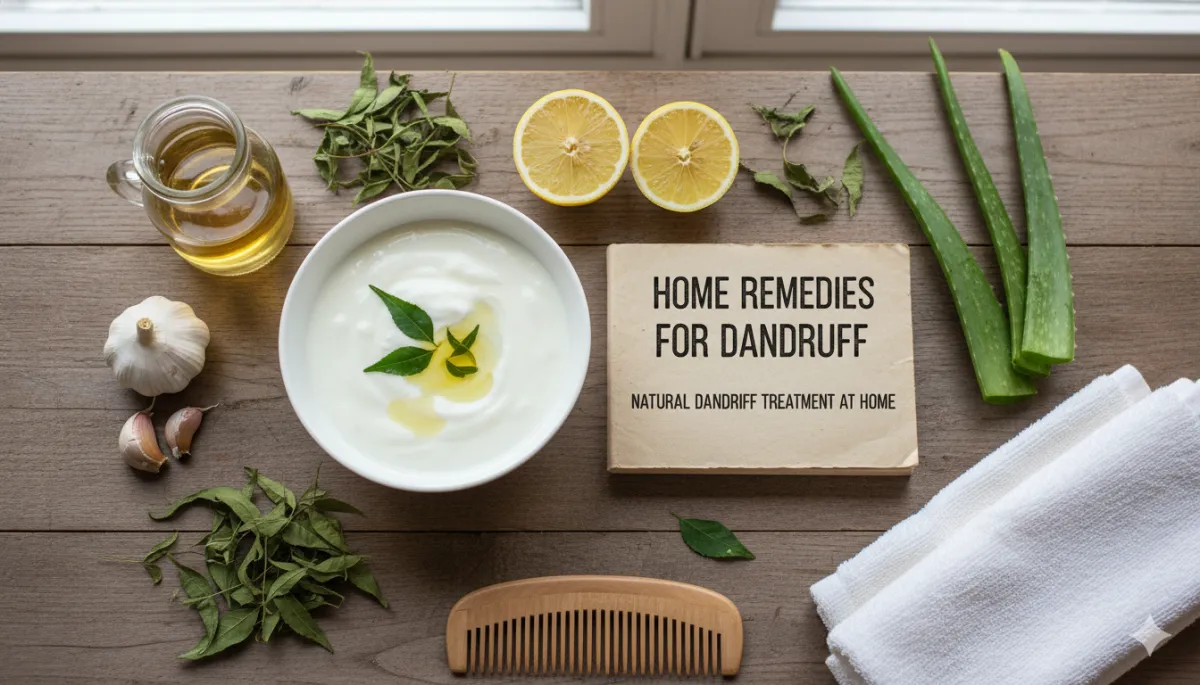
Wondering how to get rid of dandruff at home? You are not alone. Dandruff is one of the most common scalp conditions in the world, affecting nearly 50% of adults at some point in their lives. Those stubborn white flakes on your shoulders — and the constant itching that comes with them — can be frustrating and embarrassing. The good news? The most effective home remedies for dandruff are probably already sitting in your kitchen.
This guide walks you through 12 proven natural dandruff remedies, explains why each one works, and tells you exactly how to use them — including a long-term plan for anyone looking for a permanent solution for dandruff at home.
How to Get Rid of Dandruff at Home — Best Natural Dandruff Remedies
Apply 1–2 times per week for 2–4 weeks. These are the best home remedies for dandruff, ranked by effectiveness:
- Apple Cider Vinegar — Balances scalp pH, kills dandruff-causing fungus. Mix equal parts ACV and water, apply for 15–20 mins, rinse.
- Tea Tree Oil (Diluted) — Clinically proven antifungal. Add 2–3 drops to coconut oil or shampoo. Never apply undiluted.
- Neem Leaves — Most powerful natural antifungal dandruff remedy. Use as scalp rinse or paste from boiled neem leaves.
- Coconut Oil + Lemon Juice — Moisturises scalp and fights fungal growth. Apply for 20–30 mins, then rinse.
- Aloe Vera Gel — Soothes inflammation, reduces flaking. Apply fresh gel to scalp for 20–30 mins.
- Fenugreek Seed Paste — Best natural remedy for dandruff with dry scalp. Soak overnight, grind into paste, apply 30–45 mins.
- Yoghurt + Honey Mask — Restores scalp microbiome, locks in moisture. Leave on 30 mins, once a week.
- Olive Oil Massage — Deep hydration for dry, flaky scalp. Warm oil, massage, leave 1 hour, then shampoo out.
Medical Note: These natural dandruff remedies are safe for mild-to-moderate dandruff. If flaking is severe, accompanied by redness, oozing, or hair loss, please consult a dermatologist. Home remedies do not replace prescribed medical treatment.
What Causes Dandruff? (Know Before You Treat)
Before picking the best remedy for dandruff, it helps to understand what is triggering it. The most common causes are:
- Malassezia Fungus: A naturally occurring fungus on the scalp that overgrows when conditions are right — causing irritation and skin shedding. Most home remedies for dandruff target this fungus.
- Seborrhoeic Dermatitis: An inflamed, oily scalp condition that produces yellow or white greasy flakes.
- Dry Scalp: Caused by cold weather, harsh shampoos, or dehydration — produces small, dry white flakes.
- Product Buildup: Excess styling products clog follicles and cause flaking and itching.
- Nutritional Deficiencies: Low levels of zinc, B vitamins, or omega-3 fatty acids can worsen scalp irritation.
- Psoriasis or Eczema: Chronic skin conditions that cause thick, silvery scales on the scalp.
Identifying your cause helps you choose the most effective dandruff home remedy for your specific type.
At a Glance: Which Natural Dandruff Remedy Is Best for You?
| Natural Dandruff Remedy | Best For | How Often | Effectiveness |
|---|---|---|---|
| Apple Cider Vinegar | Fungal + oily scalp | 2×/week | Best All-Round |
| Tea Tree Oil | Fungal dandruff | 2×/week | Clinically Proven |
| Neem Leaves | Recurring dandruff | 1–2×/week | Strong Antifungal |
| Coconut Oil + Lemon | Dry scalp + fungal | 2×/week | Good |
| Aloe Vera Gel | Inflamed, sensitive scalp | 3×/week | Good |
| Fenugreek Paste | Dry scalp dandruff | 1×/week | Good |
| Yoghurt + Honey | Dry, irritated scalp | 1×/week | Moderate |
| Olive Oil Massage | Dry scalp only | 1×/week | Moderate |
| Onion Juice | Oily scalp + circulation | 1–2×/week | Moderate |
| Baking Soda | Quick exfoliation only | Max 1×/week | Short-term |
Dandruff Treatment at Home: 12 Effective Natural Home Remedies
1. Apple Cider Vinegar — Best All-Round Dandruff Home Remedy
Apple cider vinegar (ACV) is one of the most popular and effective home remedies for dandruff available. Its acetic acid content helps restore the scalp's natural pH level (between 4.5 and 5.5), creating an environment where the Malassezia fungus cannot survive. It also removes dead skin cell buildup and unclogs hair follicles.
How to use:
- Mix equal parts apple cider vinegar and water.
- Apply to the scalp using a cotton ball or spray bottle after shampooing.
- Leave on for 15 to 20 minutes.
- Rinse thoroughly with cool water.
- Use twice a week for consistent results.
2. Tea Tree Oil — Clinically Proven Natural Dandruff Remedy
Tea tree oil contains a compound called terpinen-4-ol, which has been clinically shown to reduce fungal populations on the scalp. Studies have found that a 5% tea tree oil shampoo significantly reduces dandruff severity with regular use. It is one of the most science-backed natural dandruff remedies available.
How to use:
- Mix 2 to 3 drops of tea tree oil with 1 tablespoon of coconut oil.
- Massage gently into the scalp for 5 minutes.
- Leave on for 20 to 30 minutes, then shampoo normally.
- Important: Never apply tea tree oil directly without diluting it — it can cause scalp burns.
3. Neem Leaves — Strongest Natural Dandruff Treatment at Home
Neem (Azadirachta indica) has been used in Ayurvedic medicine for centuries. Its active compounds — nimbidin and azadirachtin — provide strong antibacterial and antifungal action against the organisms that cause dandruff. For those seeking a long-term natural remedy for dandruff that keeps recurring, neem is the most powerful plant-based option available.
How to use:
- Rinse method: Boil 20 to 25 neem leaves in 4 cups of water for 15 minutes. Let it cool completely and use as a final hair rinse after shampooing.
- Paste method: Grind soaked neem leaves into a smooth paste. Apply to the scalp, leave for 30 minutes, then wash off with a mild shampoo.
4. Coconut Oil with Lemon Juice
Coconut oil is rich in lauric acid, a fatty acid with natural antifungal and moisturising properties. When combined with lemon juice, which contains antifungal citric acid, the two ingredients work together to reduce flaking and nourish a dry scalp — making this an excellent dandruff home remedy for combination scalp types.
How to use:
- Gently warm 2 tablespoons of virgin coconut oil (do not overheat).
- Add 1 tablespoon of fresh lemon juice and mix well.
- Massage the mixture into the scalp.
- Leave on for 20 to 30 minutes, then rinse and shampoo.
- Repeat twice a week.
5. Aloe Vera Gel
Aloe vera is well known for its soothing and anti-inflammatory properties. It contains enzymes that gently exfoliate dead skin cells from the scalp, while anthraquinone compounds provide antifungal and antibacterial action. As a natural dandruff remedy, it is especially effective for inflammation-driven or mild fungal dandruff.
How to use:
- Scoop fresh gel directly from an aloe vera leaf, or use 100% pure aloe vera gel.
- Apply evenly to the scalp and massage gently.
- Leave on for 20 to 30 minutes.
- Rinse off with lukewarm water.
- Use 2 to 3 times per week.
6. Fenugreek Seed Paste
Fenugreek seeds are packed with nicotinic acid, proteins, and saponins — compounds that strengthen hair follicles, restore moisture, and fight the fungal organisms responsible for dandruff. They are among the best home remedies for dandruff for people dealing with both a dry scalp and recurring flakiness.
How to use:
- Soak 2 tablespoons of fenugreek seeds in water overnight.
- Grind into a smooth paste the next morning.
- Optionally add 1 teaspoon of lemon juice for extra antifungal benefit.
- Apply to the scalp, leave for 30 to 45 minutes, then wash off.
7. Yoghurt and Honey Mask
Plain yoghurt contains live Lactobacillus cultures — probiotics that help restore the scalp's natural microbial balance and reduce inflammation. Raw honey adds antimicrobial properties and locks moisture into the scalp. Together, they make a nourishing natural dandruff remedy particularly suited to dry or irritated scalps.
How to use:
- Mix 3 tablespoons of plain, unsweetened yoghurt with 1 tablespoon of raw honey.
- Apply evenly across the scalp.
- Leave on for 30 minutes, then rinse thoroughly and shampoo.
- Use once a week.
8. Olive Oil Scalp Massage
Olive oil is a rich emollient that loosens dry, flaky skin, reduces scalp inflammation, and provides deep moisturisation. It works best as a dandruff home remedy for dry-scalp dandruff rather than oily scalp types. Its antioxidant content also helps protect the scalp from environmental damage.
How to use:
- Warm 2 to 3 tablespoons of extra-virgin olive oil until slightly warm (not hot).
- Massage into the scalp using circular motions for 5 to 10 minutes.
- Cover with a shower cap and leave on for 1 hour.
- Wash out with a clarifying shampoo.
9. Coconut Oil Massage (Plain)
Used alone, virgin coconut oil acts as a standalone deep moisturiser for chronically dry scalps. Its lauric acid penetrates the skin barrier and reduces the flaking triggered by dryness and irritation. It is one of the simplest and most accessible natural remedies for dandruff.
How to use:
- Warm a small amount of virgin coconut oil until melted.
- Part your hair and massage the oil gently into the scalp.
- Leave on for 30 minutes to 1 hour, then wash out with a mild shampoo.
10. Honey and Warm Water Scalp Pack
Honey is hygroscopic — meaning it draws moisture from the environment into the scalp. It also contains natural hydrogen peroxide, which gives it mild antimicrobial properties without disrupting the scalp's healthy bacteria. This makes it a gentle home remedy for dandruff well-suited for sensitive scalps.
How to use:
- Dissolve 1 tablespoon of raw honey in 3 tablespoons of warm water.
- Apply to the scalp and massage in gently.
- Leave on for 15 to 20 minutes.
- Rinse with lukewarm water.
11. Baking Soda (Occasional Use Only)
Baking soda gently exfoliates dead skin cells, absorbs excess oil, and has mild antifungal properties. However, it can disrupt the scalp's pH balance if overused, so it should be treated as a short-term dandruff home remedy rather than a regular one.
How to use:
- Wet the hair thoroughly.
- Apply a small amount of baking soda directly to the scalp and rub gently for 1 to 2 minutes.
- Rinse very thoroughly with water.
- Do not use more than once a week.
12. Onion Juice
Onion juice is rich in quercetin, a flavonoid with proven antifungal and antibacterial properties. It also stimulates blood circulation in the scalp, which promotes healthier skin cell turnover and reduces the buildup that leads to flaking. As a natural dandruff remedy, the smell dissipates once the hair is dry.
How to use:
- Blend one medium onion and strain through a cloth to extract the juice.
- Apply to the scalp using a cotton ball.
- Leave on for 30 minutes, then wash off with a mild shampoo.
- Use once or twice a week.
Permanent Solution for Dandruff at Home: Is It Possible?
Many people search for a permanent solution for dandruff at home and feel disappointed when flakes return. Here is the honest answer from a dermatologist's perspective:
Dandruff is a chronic, manageable condition — not a one-time problem. The Malassezia fungus that causes it lives permanently on every human scalp. It only becomes a problem when your scalp's oil levels, pH balance, or immune response go out of balance. This means a true "permanent cure" does not exist — but permanent control absolutely does.
✅ Long-Term Plan: How to Permanently Control Dandruff at Home
- Weeks 1–2: Start with apple cider vinegar or tea tree oil (the fastest-acting natural dandruff remedies) to reduce active flaking and fungal load.
- Weeks 3–4: Switch to neem rinses 2× a week for deeper, sustained antifungal action.
- Month 2 onwards (maintenance): Use neem or tea tree oil treatment once a week. Combine with a sulphate-free shampoo and a zinc-rich diet.
- Ongoing habits: Change pillowcases weekly, manage stress, stay hydrated, and avoid excessive heat styling.
- If dandruff returns: Resume the 2× weekly routine for 2 weeks. If it does not clear, see a dermatologist — a single course of ketoconazole shampoo often provides months of relief.
Following this long-term plan gives you the best chance of keeping dandruff permanently under control without relying on medicated products indefinitely.
Lifestyle Tips to Prevent Dandruff from Coming Back
Natural dandruff remedies work best when paired with consistent scalp hygiene habits. Here is what dermatologists recommend:
- Shampoo regularly — Wash hair 2 to 3 times a week with a gentle, sulphate-free shampoo. Washing too often strips natural oils; washing too rarely allows buildup.
- Eat a scalp-friendly diet — Include zinc (pumpkin seeds, meat), B vitamins (eggs, dairy), and omega-3 fatty acids (fish, walnuts) to reduce inflammation from within.
- Stay hydrated — Drinking enough water maintains the scalp's skin barrier function.
- Manage stress — High cortisol levels increase oil production and weaken immunity, both of which worsen dandruff. Regular exercise, breathing exercises, or yoga can help.
- Limit heat styling — Excessive blow-drying and straightening dry the scalp. Always use a heat protectant.
- Change pillowcases weekly — Pillowcases can harbour fungal spores and bacteria that trigger recurrence.
- Avoid sharing personal hair items — Combs, hats, and towels can transfer Malassezia from one person to another.
When Home Remedies Are Not Enough: OTC Medicated Shampoos
If you have used dandruff home remedies consistently for four weeks without noticeable improvement, over-the-counter medicated shampoos are the next step. Look for these clinically proven active ingredients:
- Ketoconazole — Directly targets and kills the Malassezia fungus. The most potent antifungal option available without a prescription.
- Pyrithione Zinc — Has both antibacterial and antifungal properties. Controls yeast and bacterial growth on the scalp.
- Selenium Sulphide — Slows down the rate at which skin cells die and flake off, and reduces excess oil production.
- Coal Tar — Slows the lifecycle of scalp skin cells. Particularly useful for seborrhoeic dermatitis and scalp psoriasis.
- Salicylic Acid — Gently exfoliates dead skin cells and breaks down thick scale buildup.
When to See a Dermatologist
Home remedies and OTC shampoos are effective for most cases of dandruff. However, you should book an appointment with a dermatologist if you notice any of the following:
- Dandruff that does not improve after 4 to 6 weeks of consistent treatment
- Red, inflamed, or swollen patches on the scalp
- Noticeable hair thinning or hair loss alongside dandruff
- Yellow or greasy scales that spread beyond the scalp to the face or ears
- Signs of scalp infection such as oozing, crusting, or tenderness
At Nova Hospital & Research Centre, our dermatologists specialise in diagnosing and treating chronic scalp conditions including dandruff, seborrhoeic dermatitis, scalp psoriasis, and fungal infections. If your dandruff keeps returning despite home treatment, the right solution is just one consultation away.
📞 Call us to book an appointment: +91 70550 06662
Disclaimer: This article is for general informational purposes only and does not constitute medical advice. Always consult a qualified dermatologist or healthcare provider for diagnosis and treatment of scalp conditions.