
Your heart is the engine of your body, beating approximately 100,000 times a day. Like any complex engine, it relies on a precise electrical system to function correctly.
When that electrical rhythm skips, races, or falters, you need immediate, accurate answers. An Electrocardiogram (ECG or EKG) is the gold standard for mapping your heart's electrical activity.
At Nova Hospital & Research Centre, we provide state-of-the-art ECG in Meerut, combining advanced diagnostic technology with the expertise of leading cardiologists. Whether you are experiencing symptoms or require a routine check-up, our facility offers a calm, professional environment for your heart health needs.
What is an Electrocardiogram (ECG / EKG)?
An Electrocardiogram is a painless, non-invasive test that records the electrical signals in your heart. Every time your heart beats, an electrical impulse travels through it. This wave causes the muscle to squeeze and pump blood from the heart.
An ECG captures this activity and translates it into line tracings on paper or a digital screen. The spikes and dips in these tracings tell your doctor a story about how your heart is functioning.
It is often the first step in diagnosing heart disease. Despite its simplicity, it is a powerful tool that can detect:
- Arrhythmias: Irregular heartbeats (too fast, too slow, or erratic).
- Ischemia: Reduced blood flow to the heart muscle.
- Heart Attack: Evidence of a past or current heart attack (Myocardial Infarction).
- Structural Changes: Enlargement of the heart chambers.
When Should You Get an ECG?
Your doctor may prescribe an ECG as part of a routine physical, or to screen for heart disease if you have a family history. However, specific symptoms warrant immediate testing.
If you experience any of the following, seek medical attention:
- Chest Pain: Pressure, squeezing, or sharp pain in the center of the chest.
- Palpitations: A feeling that your heart is racing, fluttering, or skipping beats.
- Shortness of Breath: Difficulty breathing, especially during mild exertion or while lying down.
- Dizziness or Lightheadedness: Unexplained fainting spells (syncope) or feeling wobbly.
- Fatigue: Chronic, unexplained tiredness that doesn't improve with rest.
How to Prepare for Your ECG Test
One of the benefits of an ECG is that it requires very little preparation. However, following a few simple steps can ensure the clearest possible reading.
Before the Appointment
- Avoid oily skin creams: Do not apply lotions, oils, or powders to your chest on the day of the test. These can prevent the electrode patches from sticking properly.
- Clothing: Wear a shirt or blouse that can be easily removed or unbuttoned. You will need to expose your chest for the test.
- Medications: Continue taking your usual medications unless your doctor instructs otherwise.
- Avoid Stimulants: Try to avoid heavy caffeine intake or smoking immediately before the test, as these can artificially increase your heart rate.
The Procedure: What to Expect
Many patients feel anxious about medical tests. We want to assure you that an ECG is entirely painless and safe. No electricity is sent into your body; the machine only records electricity coming from your body.
Here is a step-by-step guide to the process at Nova Hospital:
- Check-In: You will change into a hospital gown if necessary and lie down on an examination table.
- Skin Prep: A technician may clean small areas of your chest, arms, and legs. If you have a hairy chest, small patches may be shaved to ensure the electrodes stick.
- Electrode Placement: Small, sticky sensors (electrodes) are attached to your chest, wrists, and ankles. These are connected by wires to the ECG machine.
- The Recording: You will be asked to lie still and breathe normally. You must not talk or move during the recording, as movement can create "noise" on the tracing.
- Completion: The machine records the heart's activity for a few seconds. The technician removes the patches, and you are free to go.
The entire process typically takes less than 10 minutes.
Understanding ECG Variations
While the standard ECG in Meerut we perform is the Resting 12-Lead ECG, sometimes heart issues do not happen while you are lying still. If your resting ECG is normal but symptoms persist, our cardiologists may recommend further monitoring.
Holter Monitor
This is a portable ECG device you wear for 24 to 48 hours. It records your heart's activity continuously while you go about your daily life, catching irregularities that come and go.
Stress Test (Treadmill ECG)
Some heart problems only appear when the heart is working hard. During this test, an ECG is recorded while you walk on a treadmill to see how your heart handles physical stress.
Interpreting Your Results
Your doctor will look for consistent patterns in the P-wave, QRS complex, and T-wave. Here is a simplified breakdown of what they analyze:
- Heart Rate: Is it Tachycardia (fast, >100 bpm) or Bradycardia (slow, <60 bpm)?
- Heart Rhythm: Is the beat steady, or is there an arrhythmia like Atrial Fibrillation?
- Heart Attack Indicators: Elevation or depression in the ST-segment can indicate a blocked artery.
Note: A "normal" ECG does not always rule out heart disease, and an "abnormal" ECG doesn't always mean a life-threatening condition. Clinical context is key.
ECG Test Price in Meerut: Affordable Cardiac Care
Cost should never be a barrier to heart health. At Nova Hospital & Research Centre, we strive to keep the ecg test price in meerut competitive and affordable without compromising on the quality of equipment or expertise.
Specific pricing can vary based on whether you require a standalone test or a consultation package. We accept most major insurance plans. For the most accurate and up-to-date pricing, please contact our billing department directly.
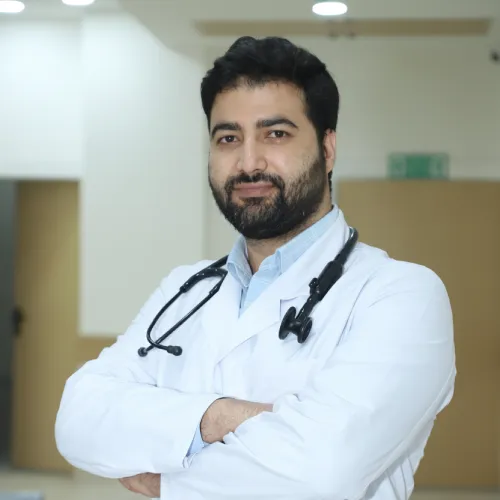
Meet Our Specialist Doctors
Why Choose Nova Hospital for Your ECG in Meerut?
When searching for an "ecg test near me in meerut," accuracy is paramount. A misread ECG can lead to missed diagnoses or unnecessary anxiety.
At Nova Hospital & Research Centre, we prioritize diagnostic precision.
1. Advanced 12-Lead Technology
We utilize hospital-grade 12-lead ECG machines. While smartwatches and portable devices offer single-lead readings, a 12-lead ECG provides a 360-degree view of your heart's electrical system. This ensures we don't miss subtle abnormalities.
2. Expert Cardiologist Interpretation
Automated machine interpretations are helpful, but they are not infallible. At Nova Hospital, every EKG in Meerut is reviewed by experienced technicians and verified by board-certified cardiologists. We treat the patient, not just the paper.
3. Rapid Turnaround
Cardiac concerns are stressful. We understand that waiting for results is difficult. Our streamlined process ensures that your test is conducted promptly, and critical results are flagged immediately for doctor review.
Located Conveniently for "ECG (EKG) Near Me"
Nova Hospital is situated on Mawana Road, Rakshapuram, making it a central choice for patients in Meerut and nearby areas like Ganga Nagar and Modipuram.
Frequently Asked Questions
No. An ECG is completely painless. The electrodes are simply sticky patches. When they are removed, it may feel like pulling off a small bandage, but the test itself involves no pain.
In most emergency cases, results are interpreted immediately. For routine outpatient tests, your cardiologist will typically review and discuss the findings with you during your consultation on the same day or within 24 hours.
Yes, you can usually eat and drink normally. However, avoid drinking ice-cold water immediately before the test, as it can sometimes affect the electrical patterns slightly. Avoid heavy caffeine if possible.
An ECG records the electrical activity of the heart. An Echocardiogram (Echo) uses ultrasound waves to create a visual image of the heart muscle and valves. They are complementary tests often used together.
While many patients are referred by their general physician, you can book an appointment directly with our cardiology department if you are experiencing concerning symptoms.