Best IVF Center in Meerut: Nova Hospital's Complete Fertility Guide
Updated on: September 14, 2026 | Medically reviewed by: Dr. Anupam Kumari
Choosing the best IVF center in Meerut is one of the most important decisions a couple can make on their journey to parenthood — and it's rarely a simple one. Between conflicting success-rate claims, unclear pricing, and a growing number of fertility clinics across the city, it's easy to feel overwhelmed before treatment has even started.
This guide cuts through that noise. It's written to genuinely help you understand infertility, your treatment options, what actually affects IVF success, what to realistically expect in terms of cost and process, and what to look for in an IVF center — with practical, evidence-based information throughout, including how Nova Hospital's in-house fertility care, led by Dr. Anupam Kumari, fits into that picture.
What Is IVF, IUI, and ICSI?
| Treatment | What Happens | Best Suited For |
|---|---|---|
| IUI (Intrauterine Insemination) | Washed, prepared sperm is placed directly into the uterus around ovulation; fertilisation still happens naturally inside the body | Mild male factor infertility, unexplained infertility, ovulation issues, donor sperm use |
| IVF (In Vitro Fertilisation) | Eggs are retrieved and fertilised with sperm in a lab dish; the resulting embryo is transferred into the uterus | Blocked tubes, endometriosis, failed IUI, unexplained infertility, advanced maternal age |
| ICSI (Intracytoplasmic Sperm Injection) | A single sperm is directly injected into an egg during an IVF cycle, rather than relying on natural fertilisation in the dish | Severe male infertility, low sperm count/motility, previous fertilisation failure |
Understanding Infertility: Causes in Men and Women
| Female Infertility Causes | Male Infertility Causes |
|---|---|
| Ovulation disorders (including PCOS) | Low sperm count (oligospermia) |
| Blocked or damaged fallopian tubes | Poor sperm motility or abnormal shape |
| Endometriosis | Varicocele (enlarged veins in the scrotum) |
| Uterine abnormalities (fibroids, polyps, septum) | Hormonal imbalances |
| Age-related decline in egg quantity/quality | Infections affecting sperm production |
| Low ovarian reserve (low AMH) | Genetic factors |
| Thyroid or other hormonal disorders | Lifestyle factors (smoking, excess alcohol, obesity) |
Who Needs IVF?
IVF is generally recommended when other, simpler treatments are unlikely to work or have already failed. Common reasons include:
- Blocked or absent fallopian tubes
- Severe male infertility factors
- Endometriosis affecting fertility
- Failed IUI cycles
- Unexplained infertility after thorough evaluation
- Advanced maternal age with declining ovarian reserve
- Use of donor eggs or sperm
- Genetic conditions requiring embryo screening before transfer
Your fertility specialist will only recommend IVF after reviewing your full history and test results — it is not automatically the first-line treatment for every couple.
PCOS, Low AMH & Male Infertility
PCOS and infertility
Polycystic Ovary Syndrome (PCOS) is one of the most common causes of ovulation-related infertility. Women with PCOS often respond very well to ovarian stimulation during IVF and can produce a good number of eggs, though they need closer monitoring to reduce the risk of Ovarian Hyperstimulation Syndrome (OHSS). With the right protocol and monitoring, PCOS by itself does not necessarily reduce the chance of a live birth.
Low AMH and ovarian reserve
AMH (Anti-Müllerian Hormone) is a simple blood test that estimates your ovarian reserve — roughly, how many eggs remain. A low AMH result can feel alarming, but it mainly affects how many eggs might be retrieved during stimulation; egg quality, closely linked to age, matters just as much for the actual chance of a healthy pregnancy. Treatment protocols are often adjusted specifically for women with low ovarian reserve.
Male infertility treatment
Male infertility contributes to roughly half of all infertility cases, yet it's often under-investigated. A semen analysis is the essential first step, followed by hormonal evaluation or further andrology tests if needed. Depending on the cause, treatment can range from lifestyle changes and medication to ICSI, or in cases of azoospermia (no sperm in ejaculate), surgical sperm retrieval techniques performed in coordination with a urologist.
Why Choose Nova Hospital for IVF in Meerut
| What Matters When Choosing an IVF Center | At Nova Hospital |
|---|---|
| In-house IVF/embryology lab | Yes — in-house IVF, ICSI, and IUI services |
| Experienced fertility-focused doctor | Led by Dr. Anupam Kumari, Obstetrician & Gynecologist with 8+ years of experience |
| Hospital backup for complications | Full multispecialty hospital with 24x7 emergency services |
| Transparent counselling | Individualised evaluation and honest discussion of realistic chances, without guaranteed-outcome promises |
| Personalised treatment planning | Protocols adjusted for PCOS, low AMH, male factor, and other individual conditions |
| Local accessibility | Located in Meerut, serving patients across the city and nearby western Uttar Pradesh, including Muzaffarnagar, Bijnor, Baghpat, and Bulandshahr |
Meet Dr. Anupam Kumari
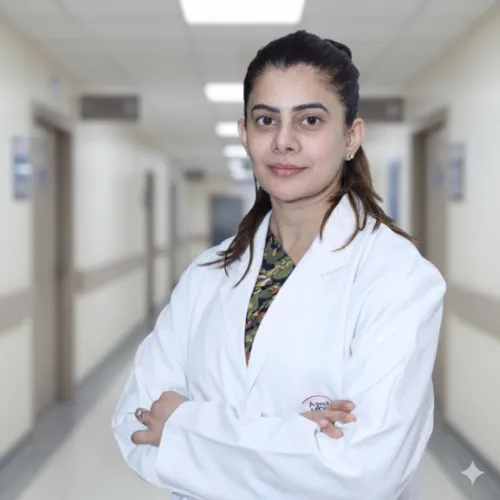
Dr. Anupam Kumari is an Obstetrician and Gynecologist at Nova Hospital, Meerut, with over 8 years of clinical experience. Her training includes MBBS from Lady Hardinge Medical College, specialisation at UCMS & GTB Hospital, and a 3-year Senior Residency at VMMC & Safdarjung Hospital, New Delhi — where she managed high-volume labour rooms handling complex deliveries in a central government institute setting.
At Nova Hospital, Dr. Kumari leads the fertility and infertility care pathway, including patient evaluation, ovulation induction, IUI, and — with Nova Hospital's in-house fertility unit — IVF and ICSI treatment, working alongside the hospital's embryology and nursing team. She also manages high-risk pregnancies and gynecological surgery, including laparoscopy and hysteroscopy, which is particularly valuable for fertility patients who also have conditions like fibroids, ovarian cysts, or endometriosis that need surgical correction alongside fertility treatment.
Tests Before Starting IVF
| Test | Purpose | For |
|---|---|---|
| AMH (Anti-Müllerian Hormone) | Estimates ovarian reserve | Female partner |
| FSH, LH, TSH, Prolactin | Assesses hormonal balance affecting ovulation | Female partner |
| Ultrasound (antral follicle count, uterine assessment) | Checks ovarian reserve and uterine/ovarian structure | Female partner |
| HSG (Hysterosalpingogram) or hysteroscopy | Evaluates tubal patency and uterine cavity | Female partner |
| Semen analysis | Assesses sperm count, motility, and morphology | Male partner |
| Infectious disease screening (HIV, Hepatitis B/C, etc.) | Required for ART safety protocols | Both partners |
| Genetic screening (where indicated) | Identifies inherited conditions relevant to treatment planning | As advised |
The IVF Process, Step by Step
| Step | What Happens | Approx. Duration |
|---|---|---|
| 1. Initial consultation & testing | Full history review, blood tests, ultrasound, semen analysis | 1–2 weeks |
| 2. Ovarian stimulation | Daily hormone injections to stimulate multiple egg development, with monitoring visits | 10–14 days |
| 3. Trigger shot & egg retrieval | A trigger injection matures the eggs; retrieval is a short, sedated procedure | 1 day |
| 4. Fertilisation | Eggs are fertilised with sperm in the lab, using standard IVF or ICSI as needed | Same day |
| 5. Embryo culture | Embryos are monitored in the lab as they develop | 3–5 days |
| 6. Embryo transfer | A selected embryo (fresh or frozen) is placed into the uterus, a quick, usually painless procedure | 1 day |
| 7. Two-week wait & pregnancy test | A blood test (beta-hCG) confirms pregnancy | ~14 days |
IVF Cost in Meerut
| Cost Factor | Why It Affects Price |
|---|---|
| Stimulation protocol & medication dose | Medication is often the single biggest variable cost; doses vary by age and ovarian reserve |
| ICSI vs standard IVF | ICSI typically adds to the base IVF cost |
| Embryo freezing & storage | Additional charge if embryos are frozen for future use |
| Number of cycles needed | Total cost depends on how many cycles are required to achieve pregnancy |
| Additional tests/procedures | Genetic screening, hysteroscopy, or surgical sperm retrieval add to overall cost |
We've deliberately shared a general, India-wide range rather than a fixed Nova Hospital price here, because your actual cost depends entirely on your specific diagnosis and treatment plan. Book a consultation for a personalised, transparent cost estimate before starting treatment — a trustworthy clinic should always explain costs clearly upfront, without hidden charges.
IVF Success Rate: What Really Matters
| Age Group | General Pattern in Live Birth Rate per IVF Cycle* |
|---|---|
| Under 35 | Generally the highest chance per cycle |
| 35–37 | Moderately reduced compared to under-35 |
| 38–40 | Noticeably lower, reflecting declining egg quality |
| 41–42 | Significantly reduced |
| Over 42 | Considerably lower; donor eggs are sometimes discussed as an option |
Factors that influence IVF success
- Female age and ovarian reserve
- Sperm quality
- Underlying cause of infertility
- Uterine health and lining quality
- Embryo quality
- Lifestyle factors (smoking, weight, stress management)
- Number of previous IVF attempts and their outcomes
Repeated IVF Failure — What Next?
Facing a failed IVF cycle, or several, is emotionally difficult — and it's important to know that it doesn't automatically mean IVF won't work for you. After repeated failures, your doctor will typically recommend a more detailed re-evaluation, which may include:
- Detailed uterine assessment (hysteroscopy, endometrial receptivity evaluation)
- Immunological or clotting-related testing, where relevant
- Genetic testing of embryos (PGT), where appropriate
- Adjusting the stimulation protocol or medication dose
- Considering ICSI or assisted hatching if not already used
- A candid discussion of donor eggs/sperm if ovarian reserve or sperm quality is a major limiting factor
Each situation is different, and there is rarely a single "next step" that applies to everyone — this is exactly where a detailed, individualised consultation matters most.
Egg Freezing & Embryo Freezing
Egg freezing
Egg freezing (oocyte cryopreservation) involves stimulating the ovaries, retrieving eggs, and freezing them unfertilised for future use. It's increasingly chosen by women who want to delay childbearing for personal or professional reasons, or before medical treatments (like chemotherapy) that could affect future fertility. Eggs frozen at a younger age generally offer better future outcomes.
Embryo freezing
Embryo freezing stores fertilised embryos from an IVF cycle, allowing a Frozen Embryo Transfer (FET) later without repeating the full stimulation and retrieval process. This is common practice when more embryos are created than are transferred in a fresh cycle, or when a doctor recommends transferring in a later cycle for medical reasons.
Lifestyle Preparation Before IVF
| Area | Practical Guidance |
|---|---|
| Body weight | Both very low and very high BMI can affect hormone balance and IVF response; your doctor may suggest a target range before starting |
| Smoking & alcohol | Both are linked to reduced egg and sperm quality; stopping well before treatment is strongly advised for both partners |
| Chronic conditions | Thyroid disorders, diabetes, and uncontrolled blood pressure should be well managed before starting stimulation |
| Folic acid & prenatal vitamins | Usually recommended before and during treatment; your doctor will advise the right supplement plan |
| Sleep & stress management | Good sleep and stress-reduction practices (yoga, counselling, light exercise) support overall wellbeing during a demanding process |
| Caffeine | Most guidance suggests moderating rather than fully eliminating caffeine; ask your doctor for a specific limit |
None of these changes guarantee success on their own — but combined with the right medical protocol, they give your body the best possible starting point.
Emotional Wellbeing During IVF
The emotional side of infertility treatment is often underestimated. Waiting periods, hormonal changes from medication, and the uncertainty of outcomes can be genuinely stressful for both partners. A few things that consistently help patients cope:
- Open communication with your partner throughout the process, including about difficult possibilities like a failed cycle
- Asking your clinic questions freely — a good fertility team should never make you feel rushed or judged
- Connecting with a counsellor or support group if the emotional load feels heavy; this is common and nothing to be embarrassed about
- Pacing major life decisions (like extended time off work) around your specific treatment calendar, discussed in advance with your clinic
- Being realistic but hopeful — understanding the statistics without letting them define your entire outlook
Questions to Ask Before Choosing an IVF Center
| Question | Why It Matters |
|---|---|
| Is your IVF lab in-house and ART Act registered? | Confirms legitimate, regulated care under one roof |
| How is your success rate calculated, and for which age group? | Prevents misleading comparisons between clinics |
| What will my specific treatment plan and cost look like? | Avoids surprise charges later in treatment |
| Who will be my primary doctor throughout treatment? | Continuity of care improves communication and trust |
| What backup is available if a complication occurs? | Hospital-based centers offer broader emergency support |
| How do you individualise protocols for PCOS, low AMH, or male factor infertility? | One-size-fits-all protocols are a red flag |
Is IVF Regulated in India?
Yes. IVF and other fertility treatments in India are governed by the Assisted Reproductive Technology (Regulation) Act, 2021, which requires every ART clinic and ART bank to register with the National Registry of ART Clinics and Banks of India, and follow standardised ethical and safety protocols — including informed consent, non-commercialisation of gametes and embryos, and confidentiality of patient records. The Act also created a two-tier clinic classification: Level 1 clinics can offer basic procedures like IUI, while Level 2 clinics are equipped and registered for more advanced procedures such as IVF, ICSI, and embryo transfer.
When evaluating any IVF center — in Meerut or elsewhere — it's reasonable to ask whether the facility is properly registered under this Act, since this reflects both legal compliance and a baseline standard of safety and ethics.
Serving Meerut and Western Uttar Pradesh
Nova Hospital is located in Meerut and provides fertility care to patients across the city as well as nearby districts of western Uttar Pradesh, including Muzaffarnagar, Baghpat, Bijnor, Bulandshahr, and surrounding areas — sparing many families the need to travel to Delhi or NCR for advanced fertility treatment.
Conclusion
Choosing the right IVF center comes down to trust, transparency, and finding a team that treats your specific situation — not a generic protocol. Nova Hospital's in-house fertility care, led by Dr. Anupam Kumari, combines individualised evaluation and treatment with the full backing of a multispecialty hospital in Meerut.
Further reading (external, authoritative sources):
- World Health Organization — Infertility: who.int
- Indian Council of Medical Research (ICMR) — ART Guidelines: icmr.gov.in
- ESHRE (European Society of Human Reproduction and Embryology): eshre.eu
- ASRM (American Society for Reproductive Medicine): asrm.org
- Assisted Reproductive Technology (Regulation) Act, 2021, Government of India: artsurrogacy.gov.in