12 Best Foods for Healthy, Glowing & Bright Skin (Backed by Science)
Updated on: September 15, 2026 | Medically reviewed by: Dr Dimpi Malik
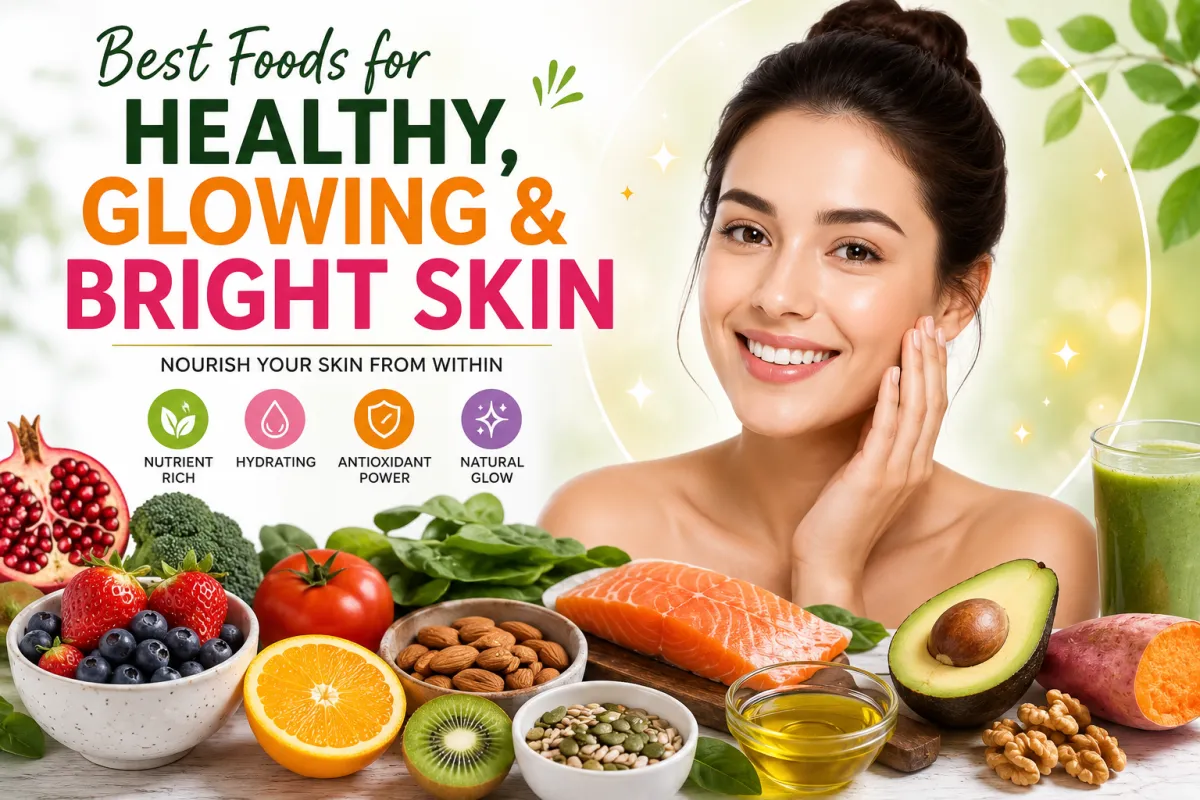
Your skin reflects what's on your plate. A diet rich in antioxidants, vitamins, and healthy fats can visibly improve skin texture, reduce dullness, and support a natural, healthy glow — while a poor diet can accelerate dullness, breakouts, and premature ageing. This guide covers the best skin-brightening foods, the best vegetables for skin, a practical 7-day glow diet, and what peer-reviewed clinical research actually says about food and skin, with every major claim linked to its source study.
Key Takeaways
- Tomatoes, citrus fruits, and fatty fish have the strongest clinical backing for skin glow and UV protection.
- Vitamin C is a required cofactor for collagen synthesis and helps counter photoaging.
- Diet can genuinely brighten skin tone over 8–12 weeks by inhibiting tyrosinase, speeding cell turnover, and reducing UV-triggered melanin production — but it does not bleach or permanently change skin tone.
- How you prepare food (cooking tomatoes in oil, pairing iron with vitamin C) changes how much of each nutrient your skin actually absorbs.
- Persistent pigmentation, acne scarring, or sudden skin changes need in-person evaluation by a dermatologist — diet supports skin health but does not replace medical care.
Why Your Diet Matters for Skin Health
Skin is your body's largest organ, and it renews itself constantly — a process that depends heavily on the nutrients you consume. Vitamin C is a required cofactor for collagen synthesis, the protein that keeps skin firm and elastic. A 2022 peer-reviewed review in Antioxidants by Y.C. Boo (Kyungpook National University), "Ascorbic Acid (Vitamin C) as a Cosmeceutical to Increase Dermal Collagen for Skin Antiaging Purposes," confirms that ascorbic acid promotes collagen gene expression and helps counter photoaging when intake is consistent.
Separately, the Linus Pauling Institute at Oregon State University's clinical summary on Vitamin C and Skin Health cites multiple human studies — including Cosgrove et al. (2007, American Journal of Clinical Nutrition) and Purba et al. (2001, Journal of the American College of Nutrition) — linking higher dietary vitamin C intake to fewer wrinkles and better skin-ageing appearance in population studies.
In short: the right foods don't just support general health — they directly influence how your skin looks and ages.
Skin Brightening vs. Skin Bleaching: The Science of Diet & Pigmentation
Many people search for a "diet for skin whitening" or "skin whitening foods," hoping to change their skin tone through diet alone. It's important to distinguish brightening from bleaching: bleaching agents chemically destroy melanin or melanocytes, while dietary compounds work through gentler, well-documented biological mechanisms. Food-derived antioxidants support skin tone through three main pathways:
- Inhibiting tyrosinase activity: Tyrosinase is the rate-limiting enzyme that converts tyrosine into melanin. A 2019 study in Oxidative Medicine and Cellular Longevity by Miao et al., "Intramelanocytic Acidification Plays a Role in the Antimelanogenic and Antioxidative Properties of Vitamin C and Its Derivatives," found that vitamin C's acidic properties lower intramelanocytic pH, which suppresses tyrosinase activity and reduces melanin content.
- Accelerating epidermal turnover: Vitamins A and C support faster shedding of pigmented surface cells and their replacement with fresh keratinocytes, gradually fading superficial dullness and uneven patches.
- Reducing oxidative and UV-triggered melanogenesis: Antioxidants like lycopene and beta-carotene neutralize the reactive oxygen species that trigger melanocytes to overproduce melanin after sun exposure.
A randomized controlled trial published in the British Journal of Dermatology by Rizwan et al., "Tomato paste rich in lycopene protects against cutaneous photodamage in humans in vivo," found that 20 healthy women who consumed 55g of tomato paste (16mg lycopene) daily for 12 weeks showed significantly reduced UV-induced erythema (skin reddening) compared to a control group — direct clinical evidence that diet can meaningfully change how skin responds to sun-triggered pigmentation over time. So while no food will bleach or permanently alter skin tone overnight, a consistent, tyrosinase-inhibiting, antioxidant-rich diet can genuinely improve tone, radiance, and resilience, especially when paired with sunscreen and a proper skincare routine.
12 Best Foods for Glowing, Bright Skin
1. Tomatoes — For Skin Shine & Sun Protection
Tomatoes are rich in lycopene, a powerful antioxidant. In the tomato-paste study cited above, daily lycopene intake measurably protected skin against UV-induced redness and photodamage over 10–12 weeks, making tomatoes one of the few foods for radiant skin with real clinical-trial backing.
2. Citrus Fruits (Orange, Lemon, Amla) — Vitamin C for Collagen & Glow
Oranges, lemons, and Indian gooseberry (amla) are among the richest natural sources of vitamin C, essential for collagen production. The 2022 systematic review in Antioxidants cited above confirmed vitamin C's direct role in stimulating collagen gene expression in skin cells, supporting firmer, more radiant skin over time.
3. Avocado — Healthy Fats for Hydrated Skin
Rich in vitamin E and monounsaturated fats, avocado helps maintain the skin's lipid barrier, keeping it soft, supple, and resistant to moisture loss.
4. Fatty Fish (Salmon, Mackerel) — Omega-3s for Skin Barrier Repair
A 2011 review in Experimental Dermatology by Pilkington et al. (University of Manchester), "Omega-3 polyunsaturated fatty acids: photoprotective macronutrients," summarizes multiple human trials showing that oral fish-oil supplementation (providing EPA and DHA, the fatty acids found in fatty fish) significantly reduced UV-induced skin sensitivity and inflammatory markers. One double-blind trial found a 36% increase in the skin's minimal erythemal dose after 3g of purified EPA, making fatty fish one of the best skin-glow foods for people with dry, inflamed, or sun-sensitive skin.
5. Carrots & Sweet Potatoes — Beta-Carotene for Natural Radiance
Beta-carotene, which the body converts to vitamin A, supports skin cell turnover and has been shown in multiple clinical studies (alongside lycopene) to reduce UV-induced erythema, giving skin a warm, healthy glow from within.
6. Walnuts & Almonds — Vitamin E & Zinc for Skin Repair
Nuts are rich in vitamin E, an antioxidant that protects cell membranes, and zinc, which supports wound healing and skin barrier repair — key nutrients for anyone looking for good food for shiny, healthy-looking skin.
7. Spinach & Leafy Greens — Vitamins A, C & K for Brightness
Leafy greens are packed with vitamins A, C, and K, which support skin healing, reduce dark circles, and help maintain an even, bright complexion.
8. Green Tea — Catechins for Elasticity & Even Tone
Green tea is rich in catechins, antioxidants shown to improve skin elasticity and hydration while reducing redness — a simple daily addition to any skin-brightening food routine.
9. Dark Chocolate (70%+ Cocoa) — Flavonoids for Blood Flow & Glow
High-cocoa dark chocolate contains flavonoids that improve blood flow to the skin and offer some protection against sun damage, contributing to a soft, radiant appearance.
10. Watermelon & Cucumber — Hydration for Dewy Skin
Both are over 90% water and rich in antioxidants, helping maintain skin hydration, reduce puffiness, and support a fresh, dewy look, especially valuable in Meerut's hot summer months.
11. Yoghurt & Curd — Probiotics for Gut-Skin Health
Fermented dairy like yoghurt supports gut health, which is increasingly linked to skin health via the gut-skin axis, while its zinc and lactic acid content support cell renewal and an even tone.
12. Eggs — Protein & Biotin for Skin Structure
Eggs provide high-quality protein, essential for collagen and skin repair, along with biotin, which supports overall skin, hair, and nail health.
How to Maximize Nutrient Absorption
Eating the right foods is only half the equation — how you prepare and combine them determines how much of each nutrient your skin actually absorbs.
- Lycopene (Tomatoes): Lycopene is fat-soluble, so raw tomatoes alone yield significantly lower bioavailable antioxidant levels than cooked tomatoes. Lightly cooking tomatoes and pairing them with a source of healthy fat — olive oil, avocado, or nuts — meaningfully increases lycopene absorption, which is why the clinical trials showing UV protection used tomato paste cooked in olive oil rather than raw tomato.
- Iron + Vitamin C (Spinach + Citrus): Plant-based (non-heme) iron in spinach and other leafy greens is poorly absorbed on its own. Pairing iron-rich greens with a vitamin C source — a squeeze of fresh lemon juice over sautéed spinach, or citrus fruit alongside a salad — can substantially improve iron absorption, supporting the oxygen delivery that keeps skin cells healthy and well-nourished.
- Beta-Carotene (Carrots, Sweet Potato, Pumpkin): Like lycopene, beta-carotene is fat-soluble. Roasting or sautéing these vegetables with a small amount of oil, or eating them alongside nuts or seeds, improves conversion to usable vitamin A in the body.
- Vitamin E (Nuts, Seeds, Avocado): Vitamin E is best absorbed with dietary fat, which nuts and avocado already provide naturally, making them efficient, self-contained sources rather than needing extra pairing.
- Vitamin C (Citrus, Amla, Bell Peppers): Vitamin C is heat-sensitive and water-soluble, so it degrades with prolonged cooking. Eat these sources raw or lightly cooked, and consume them soon after cutting or juicing to preserve potency.
Best Vegetables for Skin Health
Vegetables deserve their own spotlight — most competitor articles bury them inside general food lists, but several vegetables are uniquely powerful for skin:
- Beetroot — Rich in betalains and antioxidants that support detoxification and an even skin tone.
- Bell Peppers (Capsicum) — Among the highest vitamin C content of any vegetable, supporting collagen and brightness.
- Broccoli — Contains vitamin C, vitamin A, and sulforaphane, which has antioxidant and anti-inflammatory properties.
- Pumpkin — High in beta-carotene, supporting cell renewal and a warm, healthy glow.
- Cucumber — Hydrating with a cooling effect, useful for calming sun-exposed or irritated skin.
Aim for at least 2–3 servings of vegetables for skin health daily, alongside fruits, for a well-rounded skin glow diet.
7-Day Diet Plan for Glowing Skin
| Day | Morning | Lunch | Dinner |
|---|---|---|---|
| 1 | Warm lemon water + 1 cup papaya & pomegranate seeds topped with flaxseeds | Dal, mixed sautéed vegetables (cooked with a drizzle of olive oil), 1 roti | Grilled fish or paneer tikka + cucumber-tomato salad with lemon dressing |
| 2 | Fresh amla juice + a small handful of soaked almonds | Spinach and chickpea curry (finished with lemon juice) + brown rice | Clear vegetable soup + mixed greens salad with olive oil |
| 3 | Green tea + sliced papaya with a squeeze of lime | Quinoa bowl with roasted sweet potato, bell peppers & pumpkin | Moong dal khichdi + sautéed spinach with a dash of lemon |
| 4 | Berry & yoghurt smoothie with a teaspoon of chia seeds | Grilled chicken or tofu + roasted beetroot and carrot salad | Stir-fried seasonal vegetables (in a little sesame oil) + 1 roti |
| 5 | Coconut water + a small handful of walnuts | Lentils + roasted beetroot salad with olive oil and lemon | Light khichdi + cucumber raita |
| 6 | Citrus fruit bowl (orange + kiwi) + chia seeds | Roasted sweet potato + sautéed leafy greens with garlic | Grilled fish + steamed broccoli tossed in olive oil |
| 7 | Green smoothie (spinach + banana + flaxseed) + walnuts | Balanced thali — dal, sabzi, roti, and a side salad | Light vegetable soup + mixed greens salad |
Core principles: stay hydrated (8+ glasses of water daily), include one vitamin-C source and one healthy-fat source at every meal, and limit processed sugar, which accelerates skin ageing through a process called glycation.
Foods to Avoid for Healthy Skin
- Refined sugar & sugary drinks — accelerate glycation, which stiffens and damages collagen.
- Deep-fried and processed foods — linked to increased inflammation and breakouts.
- Excess dairy (in acne-prone individuals) — may worsen acne in some people; response varies by individual.
- Excess alcohol — dehydrates skin and depletes vitamin A and C stores.
- High-sodium packaged foods — contribute to puffiness and water retention.
Lifestyle Habits That Boost Your Skin Glow Diet
Diet works best combined with these habits:
- Sun protection — daily sunscreen (SPF 30+), since UV exposure is the single biggest driver of dullness, tanning, and pigmentation.
- 7–8 hours of sleep — skin repair and collagen synthesis peak during deep sleep.
- Stress management — chronic stress raises cortisol, which can trigger breakouts and dullness.
- Consistent skincare routine — cleansing, moisturising, and sunscreen work alongside, not instead of, a good diet.
When to See a Dermatologist or Skin Specialist
Diet and lifestyle changes can meaningfully improve skin radiance over 8–12 weeks, but persistent concerns like severe pigmentation, acne scarring, or sudden skin changes need professional evaluation by a qualified dermatologist. Our team at Nova Hospital can guide you to the right specialist for your specific concern; for skin-related surgical needs such as scarring, burns, or reconstructive care, Dr. Bhanu Pratap Singh (MBBS, MS, MCh – Plastic & Reconstructive Surgery) is available for consultation.
Book an Appointment | Call: +91-70550 06662
Sources Cited
- Boo, Y.C. (2022). "Ascorbic Acid (Vitamin C) as a Cosmeceutical to Increase Dermal Collagen for Skin Antiaging Purposes." Antioxidants. Kyungpook National University.
- Cosgrove, M.C. et al. (2007). American Journal of Clinical Nutrition.
- Purba, M.B. et al. (2001). Journal of the American College of Nutrition.
- Miao, F. et al. (2019). "Intramelanocytic Acidification Plays a Role in the Antimelanogenic and Antioxidative Properties of Vitamin C and Its Derivatives." Oxidative Medicine and Cellular Longevity.
- Rizwan, M. et al. "Tomato paste rich in lycopene protects against cutaneous photodamage in humans in vivo." British Journal of Dermatology.
- Pilkington, S.M. et al. (2011). "Omega-3 polyunsaturated fatty acids: photoprotective macronutrients." Experimental Dermatology. University of Manchester.
- Linus Pauling Institute, Oregon State University. Clinical summary: Vitamin C and Skin Health.
Editorial note: This article was researched and written by the Nova Hospital content team, citing the peer-reviewed clinical studies listed above under "Sources Cited." It covers general nutrition-and-skin science and is not a substitute for individualised medical advice. For diagnosis or treatment of specific skin conditions — persistent pigmentation, acne, scarring, or burns — please consult a qualified dermatologist in person, or the plastic & reconstructive surgery team at Nova Hospital for surgical or scar-related concerns.