H1N1 Cases in Delhi Surge: Symptoms, Warning Signs, Prevention and When to See a Doctor
Updated on: September 25, 2026 | Medically reviewed by: Dr. Vikrant Solanki
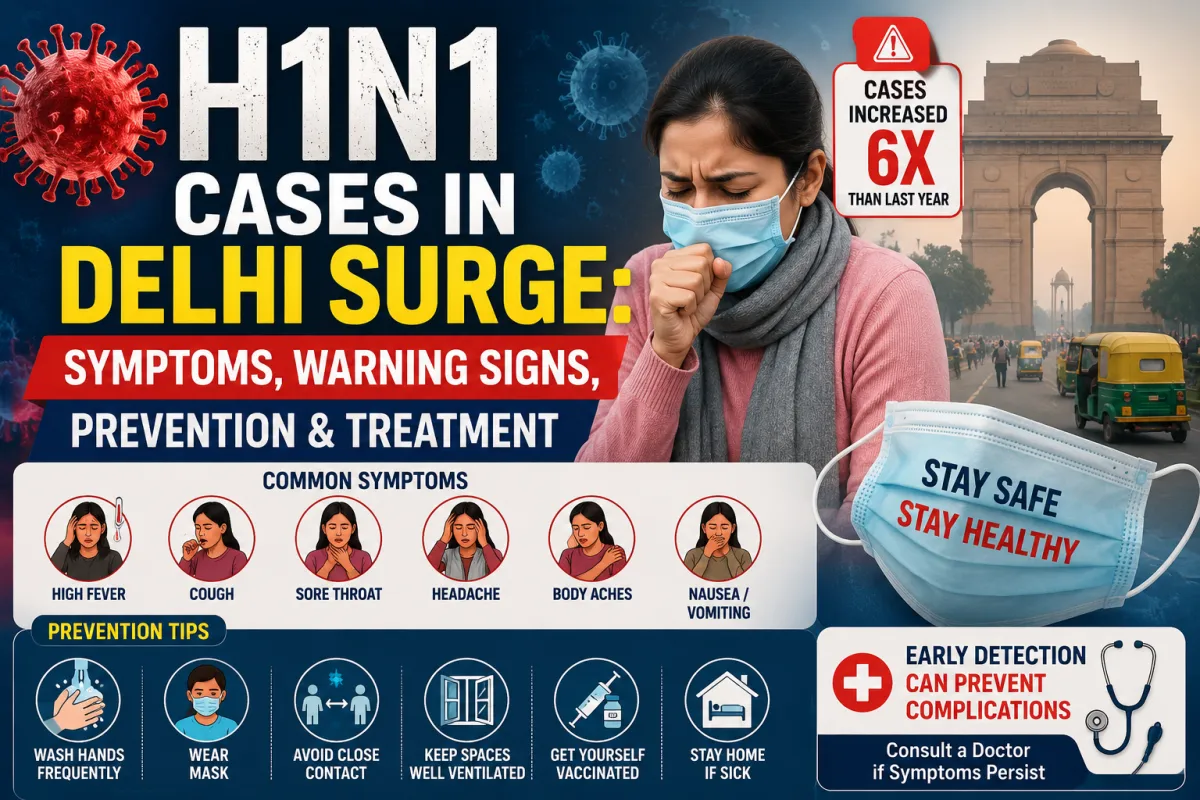
Delhi has reported 1,349 confirmed H1N1 (swine flu) cases so far in 2026, according to Delhi's Health Minister Pankaj Singh — a nearly six-fold rise from around 229 cases recorded during the same period last year. Officials say no deaths have been confirmed by the government so far, though some media reports have cited deaths that authorities have disputed. Hospitals across Delhi-NCR report increased flu-like admissions this monsoon season.
- Delhi has recorded roughly 1,344–1,349 H1N1 cases in 2026 so far, compared to about 229 in the same period last year — as reported by Delhi's Health Minister and multiple news outlets on August 6–10, 2026.
- Common symptoms include fever, cough, sore throat, body aches, headache, chills, and fatigue — but not everyone develops every symptom, and fever isn't always present.
- Warning signs like breathing difficulty, chest pain, bluish lips, confusion, or symptoms that improve then suddenly worsen need urgent medical attention.
- Young children, older adults, pregnant women, and people with chronic conditions (asthma, heart disease, diabetes, weakened immunity) are at higher risk of complications.
- Annual flu vaccination, hand hygiene, masking in crowded settings when unwell, and staying home when sick remain the most practical prevention steps.
- Antibiotics do not treat H1N1, since it's caused by a virus — antiviral medicines and supportive care, guided by a doctor, are the standard approach.
- Symptoms of H1N1 overlap significantly with dengue, COVID-19, and the common cold — so symptoms alone cannot reliably tell them apart; testing may be needed.
1. H1N1 Cases in Delhi: Why Are Cases Rising?
| Period | Reported H1N1 Cases |
|---|---|
| Comparable period, previous year | ~229 cases |
| 2026 (as of early-mid August, per Delhi Health Minister) | ~1,344–1,349 cases |
Case counts are based on the latest publicly reported figures available at the time of publication (August 6–10, 2026, as reported by Delhi's Health Minister Pankaj Singh and multiple news outlets including PTI, Business Standard, and The Week) and may change as surveillance data is updated. These are reported/confirmed cases, not an estimate of total infections in the city — many mild cases are never tested or reported.
Delhi's Health Department has confirmed a sharp, nearly six-fold increase in H1N1 (swine flu) cases in 2026 compared to the same period last year. Delhi's Health Minister stated on August 6, 2026 that no deaths had been officially recorded due to H1N1 this year, and that government hospitals were "fully prepared" to handle patients. It's worth noting transparently: a small number of media reports have described deaths in Delhi linked to H1N1, which the government has not confirmed — this is an area where official clarification should be checked closer to any date you're reading this, since situations like this can evolve quickly.
Possible Contributing Factors (Not a Single Proven Cause)
Health experts have pointed to several possible contributing factors for this monsoon-season rise — it's important to note these are possible contributing factors, not a single confirmed cause:
- Seasonal pattern: India typically sees two H1N1 peaks — one from January to March, and another post-monsoon from August to October — so a rise around this time of year is a recognized seasonal pattern for influenza.
- Monsoon conditions: Humid weather and waterlogging can support conditions in which respiratory viruses spread more easily indoors.
- Increased clinical suspicion and testing: Some hospitals have reported screening more patients with flu-like symptoms for H1N1 specifically, which may partly reflect better detection alongside a genuine rise in circulation.
- Crowded indoor settings: Monsoon weather often pushes people indoors into less-ventilated, crowded spaces, which can support viral transmission.
Delhi hospitals — including government facilities like Safdarjung Hospital and private centres in the wider NCR — have reported rising confirmed cases through July and early August 2026, with some cases progressing to severe viral pneumonia requiring ICU care in vulnerable patients.
2. What Is H1N1?
H1N1 gained global attention during the 2009 pandemic, when it spread rapidly worldwide. Since then, it has become one of the seasonal influenza A strains that circulates regularly, alongside other influenza subtypes. This is an important distinction: today's H1N1 circulating in Delhi is generally discussed as a seasonal influenza strain, not a declared pandemic — though it's still capable of causing serious illness in vulnerable individuals.
The virus primarily infects the respiratory tract — nose, throat, and lungs — and in most healthy people causes an illness similar to typical seasonal flu.
3. How Does H1N1 Spread?
H1N1 spreads mainly through:
- Respiratory droplets: released when an infected person coughs, sneezes, or talks
- Close contact: being near someone who is infected, especially in enclosed spaces
- Contaminated surfaces and hands: touching a surface with the virus on it, then touching your nose, mouth, or eyes
- Crowded indoor environments: markets, offices, schools, and public transport where ventilation may be poor
Good ventilation, staying home when unwell, and basic respiratory hygiene meaningfully reduce transmission risk — this is why public health guidance consistently emphasizes these simple measures over more complex interventions.
4. H1N1 Symptoms
- Fever (though not always present)
- Cough
- Sore throat
- Runny or stuffy nose
- Headache
- Body aches
- Chills
- Fatigue and weakness
- Vomiting and diarrhea (more common in some children)
5. H1N1 Symptoms in Children
In children, H1N1 may present with fever, cough, poor feeding, fatigue, irritability, and sometimes vomiting or diarrhea. Parents should watch specifically for pediatric warning signs such as:
- Fast or difficult breathing
- Bluish or grey skin colour
- Not drinking enough fluids
- Not waking up or not interacting
- Being so irritable that the child doesn't want to be held
- Symptoms that improve but then return with fever and worse cough
Any of these signs in a child warrant prompt medical evaluation.
6. H1N1 Symptoms in Adults
Most healthy adults experience a flu-like illness — fever, cough, sore throat, body aches, and fatigue — that resolves within about a week with rest and supportive care. However, adults with underlying health conditions, or those who notice breathing difficulty, persistent high fever, or symptoms that worsen after initially improving, should seek medical evaluation rather than waiting it out.
7. H1N1 Symptoms in Elderly People
Older adults may sometimes have a less typical presentation — for instance, confusion, unusual weakness, or a general decline in function, without the high fever younger patients typically show. This atypical presentation, combined with a generally higher risk of complications like pneumonia in this age group, makes early medical evaluation especially important for elderly patients with any flu-like symptoms.
8. H1N1 During Pregnancy
Pregnancy is recognized as a period of increased concern for influenza complications, due to changes in the immune system and lung function during pregnancy. If a pregnant woman develops flu-like symptoms, contacting a doctor early — rather than waiting to see if symptoms resolve on their own — is generally advised, since timely evaluation allows for appropriate monitoring and treatment decisions specific to her situation.
Vaccination considerations during pregnancy should be discussed with an obstetrician, and any treatment decisions, including antiviral use, should be made by the treating clinician based on individual assessment — this is not something to self-manage.
9. H1N1 Warning Signs — When Should You See a Doctor?
| Warning Sign | Why It Matters | What to Do |
|---|---|---|
| Difficulty breathing / shortness of breath | May indicate the lower respiratory tract is affected | Seek urgent care / emergency services |
| Chest pain or pressure | Can signal serious respiratory or cardiac involvement | Seek urgent care / emergency services |
| Bluish lips or face | Suggests low oxygen levels | Seek emergency services immediately |
| Severe or persistent weakness | May indicate the body is struggling to cope with infection | Contact a doctor promptly |
| Confusion or disorientation | Can indicate a serious complication, especially in elderly patients | Seek emergency services immediately |
| Persistent or worsening fever | May suggest the infection is not resolving as expected | Contact a doctor promptly |
| Signs of dehydration | Reduced fluid intake plus fever/vomiting increases dehydration risk | Contact a doctor promptly; seek urgent care if severe |
| Inability to keep fluids down | Increases risk of dehydration and complicates recovery | Contact a doctor promptly |
| Symptoms that improve, then suddenly worsen | Can indicate a secondary infection (e.g., bacterial pneumonia) | Seek medical evaluation promptly |
| Worsening symptoms in a high-risk individual | Higher-risk patients can deteriorate faster | Contact a doctor promptly; don't wait it out |
10. Who Is at Higher Risk of Severe H1N1?
While H1N1 can affect anyone — and healthy people can and do develop complications too — certain groups face a higher risk of severe illness:
- Young children, especially under 5
- Older adults
- Pregnant women
- People with asthma or chronic lung disease
- People with heart disease
- People with diabetes
- People with weakened immune systems
- People with other significant chronic medical conditions
11. Is H1N1 Dangerous?
It's important to strike a balanced tone here: the majority of H1N1 cases are mild to moderate and resolve without complications. The goal of knowing warning signs isn't to create fear, but to help the smaller group of people who may develop complications get care early, when it makes the most difference.
12. H1N1 vs Common Cold vs COVID-19 vs Dengue
| Feature | H1N1 (Flu) | Common Cold | COVID-19 | Dengue |
|---|---|---|---|---|
| Fever | Common, often sudden and high | Rare or mild | Common, variable | Usually high, sudden onset |
| Cough | Common, can be significant | Mild to moderate | Common, can be dry | Uncommon |
| Body aches | Often severe | Mild | Common, variable | Often severe ("breakbone fever") |
| Respiratory symptoms | Common | Common (mild) | Common, can progress | Uncommon |
| GI symptoms | Sometimes, especially in children | Rare | Sometimes | Nausea, vomiting common |
| Distinctive clue | Sudden onset, sore throat, chills | Gradual onset, milder overall | Loss of taste/smell in some cases, variable presentation | Rash, severe joint/muscle pain, low platelet count |
| Testing | Influenza/RT-PCR test | Usually clinical diagnosis | RT-PCR/antigen test | NS1 antigen/antibody or platelet count |
13. How Is H1N1 Diagnosed?
Diagnosis typically involves:
- Clinical assessment: a doctor evaluates your symptoms and their pattern
- Medical history: including exposure risk, vaccination status, and existing health conditions
- Physical examination
- Influenza testing when clinically indicated: such as rapid antigen tests or molecular/PCR testing, especially for high-risk patients or when the result would change management
Not every patient with flu-like symptoms needs to be tested — many hospitals base testing decisions on clinical judgment, symptom severity, and risk factors rather than testing everyone with a cough or fever.
14. H1N1 Treatment
- Supportive care: rest and adequate hydration are central to recovery for most people
- Symptom management: fever and pain relief as advised by a doctor
- Antiviral medicines: may be recommended by a doctor for appropriate patients, particularly those at higher risk, and tend to work best when started early in the illness
- Early medical evaluation for high-risk patients: is important, since these patients benefit most from timely assessment and treatment
This article does not provide specific antiviral, antibiotic, or steroid dosing information, as this must be determined by a treating clinician based on individual assessment.
15. Can H1N1 Be Treated at Home?
Mild H1N1 illness in an otherwise healthy person can often be managed at home under general medical guidance, with rest, fluids, and symptom monitoring. However, home care is not appropriate if you're in a high-risk group, if symptoms are severe, or if any warning signs described in Section 9 appear.
Home Care Checklist
- Get adequate rest
- Drink plenty of fluids
- Monitor your symptoms, including temperature, regularly
- Avoid close contact with others, especially high-risk individuals
- Wear a mask around others when appropriate, especially indoors
- Follow medical advice for any medication use
- Monitor high-risk patients (children, elderly, pregnant women) more closely, and don't hesitate to seek care sooner for them
16. H1N1 Prevention Tips
- Consider annual influenza vaccination, especially if you're in a higher-risk group — discuss timing with your doctor
- Practice regular hand hygiene — wash hands with soap and water or use a hand sanitizer
- Follow respiratory etiquette — cover coughs and sneezes with a tissue or your elbow
- Avoid close contact with people who are sick
- Stay home when you're unwell, rather than going to work, school, or public places
- Wear a mask in crowded or high-risk indoor settings when appropriate
- Improve indoor ventilation where possible
- Avoid touching your face — especially eyes, nose, and mouth — with unwashed hands
- Clean frequently touched surfaces regularly
- Avoid unnecessary close exposure to people showing symptoms
17. H1N1 Vaccine — Who Should Consider It?
Seasonal influenza vaccines, which typically include protection against circulating H1N1 strains, are generally recommended annually, particularly for high-risk groups such as young children, older adults, pregnant women, healthcare workers, and people with chronic health conditions. Vaccine formulations can change from year to year based on circulating strains, and timing recommendations depend on local/national health authority guidance.
It's important to set realistic expectations: vaccination does not guarantee zero risk of infection, but it can meaningfully reduce the risk of severe influenza and complications. We won't cite a specific effectiveness percentage here, since this varies by season and population — for current Indian recommendations, check with your doctor or refer to Ministry of Health and Family Welfare / ICMR guidance.
18. H1N1 Vaccine Myths vs Facts
Fact: Flu vaccines do not contain live virus capable of causing flu illness in this way; any mild post-vaccination symptoms are generally the immune system responding, not an active infection.
Fact: Even healthy people can get seriously ill from flu and can also spread it to higher-risk individuals around them — vaccination is broadly recommended, not just for high-risk groups.
Fact: H1N1 is a virus; antibiotics only work against bacterial infections and don't treat the flu itself.
Fact: Fever during Delhi's monsoon season could be due to H1N1, dengue, common viral fever, or other causes — testing helps determine the actual cause.
Fact: Most people recover fully with mild to moderate illness; severe disease is more common in specific higher-risk groups.
Fact: Flu viruses change over time, and immunity from a past infection or vaccine doesn't guarantee protection against future strains — that's part of why annual vaccination is recommended.
Fact: No vaccine offers absolute protection, but it can meaningfully lower the risk of severe illness and complications.
Fact: Getting immunity through natural infection carries the real risk of complications from the illness itself, which vaccination avoids while still building immune protection.
Fact: Vaccination during pregnancy is generally considered an important protective measure — but this should be discussed individually with an obstetrician.
Fact: Guidance varies by situation — a doctor can advise whether to vaccinate now or wait until you've recovered.
Fact: It typically takes about two weeks after vaccination for full immune protection to develop.
Fact: Masks can help reduce transmission of several respiratory viruses, including influenza, particularly in crowded indoor settings.
19. H1N1 Prevention at Home (If Someone Is Infected)
- Keep the infected person's personal items (towels, utensils, etc.) separate from others
- Improve ventilation in shared spaces where possible
- Practice frequent handwashing for everyone in the household
- Clean frequently touched surfaces regularly
- Consider masking, especially around high-risk family members
- Protect high-risk family members (elderly, young children, pregnant women, those with chronic conditions) by limiting their close contact with the infected person where possible
- Avoid unnecessary close contact until the infected person has recovered
20. How Long Is H1N1 Contagious?
People with flu, including H1N1, are generally considered contagious starting around a day before symptoms appear and for several days after becoming sick — children may remain contagious for a longer period than adults. Rather than relying on a fixed day count, a practical general guide is to wait until you've been fever-free (without fever-reducing medicine) and feeling notably better before resuming normal activities — and to follow current medical or public health advice for your specific situation.
21. How Long Does H1N1 Take to Recover?
Uncomplicated H1N1 cases typically improve within about a week, though fatigue and a lingering cough can persist a bit longer for some people. Recovery time varies by individual, overall health, and how early treatment (if needed) was started. Importantly, if symptoms seem to improve and then suddenly worsen again, this needs prompt medical evaluation rather than being assumed as normal recovery.
22. When Should You Go to a Hospital?
- Breathing difficulty or fast breathing
- Chest pain or pressure
- Signs of low oxygen (e.g., bluish lips), where relevant
- Severe dehydration or inability to keep fluids down
- Confusion or unusual drowsiness
- Persistent deterioration instead of gradual improvement
- A high-risk patient (child, elderly, pregnant, or with chronic illness) showing worsening symptoms
23. H1N1 in Delhi — What Should Families Do Right Now?
If you have symptoms:
- Reduce close contact with others, especially high-risk individuals.
- Wear a mask around others when appropriate.
- Contact a doctor if symptoms are significant, or if you belong to a high-risk group.
- Stay hydrated and rest.
- Monitor for the warning signs listed in Section 9.
- Avoid self-starting antibiotics or antivirals without medical advice.
- Seek urgent care immediately for any severe symptoms.
24. फ्लू जैसे लक्षण होने पर डॉक्टर से कब संपर्क करें?
अगर आप या आपके परिवार में किसी को तेज़ बुखार, सांस लेने में तकलीफ, लगातार खांसी या फ्लू जैसे अन्य लक्षण महसूस हो रहे हैं — खासकर मानसून के इस मौसम में जब डेंगू और H1N1 दोनों सक्रिय हैं — तो इसे नज़रअंदाज़ न करें। सही समय पर जांच से सही कारण पता चल सकता है और इलाज की दिशा स्पष्ट हो सकती है।
Note: Nova Hospital Meerut is located in Meerut, not Delhi. This section is positioned for readers in Meerut and the wider NCR region seeking care for flu-like symptoms, not as a claim of a Delhi location.