Lipoma Treatment Without Surgery: Complete Guide to Non-Surgical Removal
Updated on: October 22, 2026 | Medically reviewed by: Dr. Mohd. Arif
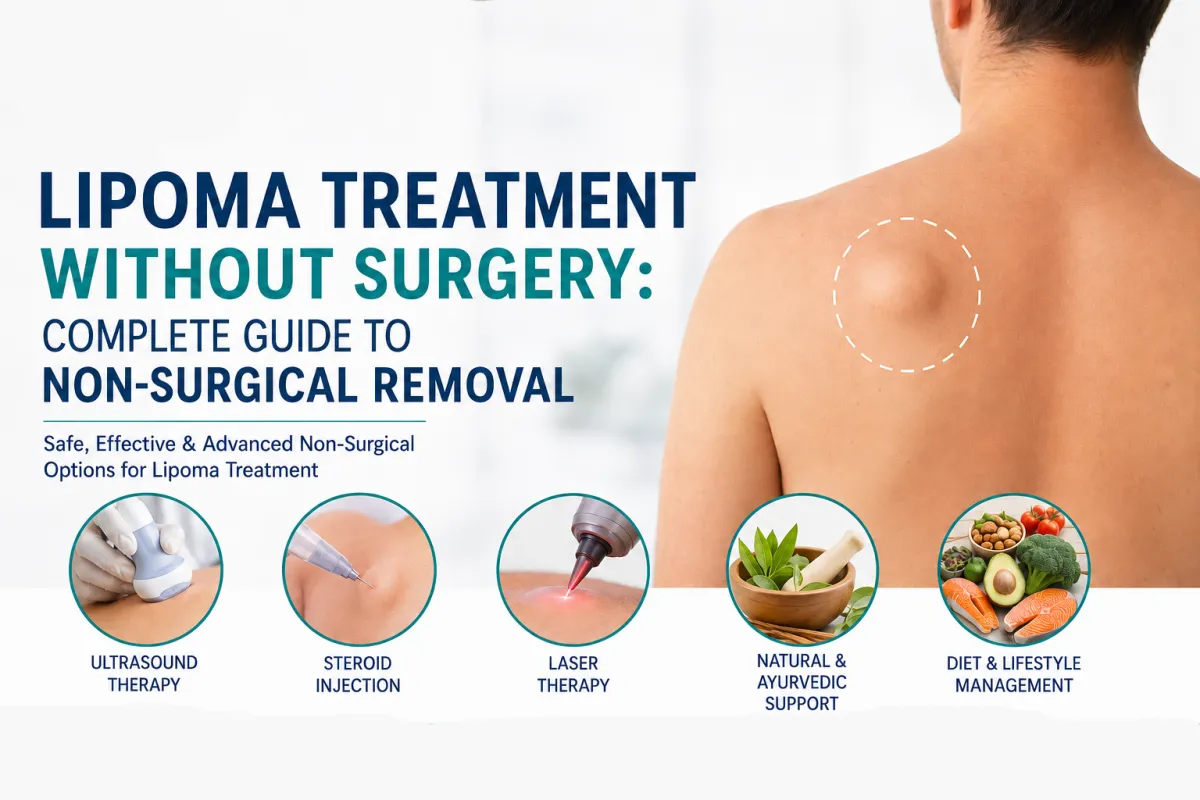
Have you or someone you love noticed a soft, doughy lump under the skin that moves slightly when pressed? If yes, it is likely a lipoma — one of the most common benign (non-cancerous) soft-tissue tumors in the human body. While lipomas are harmless in most cases, many people are concerned about their appearance, growth, or whether they need treatment.
This guide answers every important question about lipoma — from its meaning in Hindi (लिपोमा) to the latest treatment options available in Meerut. Whether you are researching lipoma treatment without surgery, looking for home remedies, or want to understand when surgery is necessary, you will find medically accurate, easy-to-understand information here.
Worried about a lump under your skin?
Consult the experienced surgeons at Nova Hospital Meerut for an accurate diagnosis and personalised lipoma treatment plan.
What Is a Lipoma?
A lipoma is a slow-growing, soft mass of fatty tissue that forms just beneath the skin (in the subcutaneous layer) and above the muscle. The word comes from the Greek word lipos (fat) and -oma (tumor or growth).
Lipomas are the most common type of benign soft-tissue tumor. According to the American Academy of Orthopaedic Surgeons, approximately 1 in every 1,000 people will develop a lipoma during their lifetime.
Key characteristics of a lipoma:
- Soft and doughy to the touch
- Moves easily when pressed with a finger
- Usually painless (but can cause pain if pressing on a nerve)
- Grows slowly over months or years
- Typically less than 5 cm in size, though some grow larger
- Most commonly found on the neck, shoulders, back, arms, abdomen, and thighs
Lipoma Meaning in Hindi – लिपोमा क्या होता है?
लिपोमा (Lipoma) एक मुलायम, दर्द रहित, और धीरे-धीरे बढ़ने वाली गांठ होती है जो त्वचा के नीचे वसा (चर्बी) की परत में बनती है। यह एक गैर-कैंसरयुक्त (Benign) ट्यूमर है, जो शरीर के किसी भी हिस्से में हो सकती है — जैसे गर्दन, कंधे, पीठ, पेट, जांघ या बाहें।
लिपोमा के मुख्य लक्षण:
- त्वचा के नीचे मुलायम गांठ
- दबाने पर आसानी से हिलती है
- आमतौर पर दर्द नहीं होता
- धीरे-धीरे आकार बढ़ता है
लिपोमा का उपचार (Lipoma Treatment in Hindi): अधिकतर मामलों में लिपोमा को उपचार की जरूरत नहीं होती। यदि गांठ बड़ी हो रही हो, दर्द हो रहा हो, या आप इसे हटवाना चाहते हों, तो डॉक्टर से परामर्श करें। सर्जरी सबसे प्रभावी उपचार है।
अगर आप Meerut में Lipoma का इलाज ढूंढ रहे हैं, तो Nova Hospital Meerut में अनुभवी सर्जन उपलब्ध हैं।
Lipoma Symptoms
Lipomas often cause no symptoms at all. However, knowing what to look for helps you distinguish a lipoma from other lumps.
Common Signs of a Lipoma
- Soft lump under the skin — feels doughy, not hard
- Moveable — slides easily under the finger
- Painless in most cases
- Slow growth — rarely grows more than a few centimeters per year
- Size — usually 2–5 cm, but some grow larger (called giant lipomas)
- Location — neck, upper back, shoulders, upper arms, abdomen, thighs
When a Lipoma Causes Pain
Most lipomas are painless. However, a painful lipoma (called angiolipoma) contains small blood vessels that can make it tender or painful, especially when pressed. Pain can also occur if the lipoma:
- Presses against a nearby nerve
- Contains blood vessels (angiolipoma)
- Is located in a joint or an area of friction
If your lump is hard, fixed (does not move), grows rapidly, or feels painful — see a doctor immediately. These features can point to something other than a simple lipoma.
Lipoma Causes
The exact cause of lipoma is not fully understood. Medical research from institutions like the Mayo Clinic and NIH suggests that lipomas likely result from a combination of genetic and environmental factors.
Possible Causes Include:
- Genetics: Lipomas tend to run in families. A family history is the strongest known risk factor.
- Gene mutations: Some lipomas are associated with mutations in genes such as HMGA2 and HMGA1.
- Physical trauma: Some people develop a lipoma after a minor injury or impact, though this link is not fully proven.
- Age: Although lipomas can occur at any age, they are most common in adults between 40 and 60 years.
- Medical conditions: Certain rare conditions — such as Gardner's syndrome, Madelung's disease, Cowden syndrome, and familial multiple lipomatosis — cause multiple lipomas to develop.
Important: Obesity does not directly cause lipomas, but high body fat levels can make them more noticeable.
Who Is at Risk?
Lipomas can affect anyone, but certain factors increase your risk:
| Risk Factor | Details |
|---|---|
| Age | Most common between ages 40–60 |
| Family history | Strong genetic component; runs in families |
| Genetic conditions | Gardner's syndrome, Cowden syndrome, familial lipomatosis |
| Gender | Slightly more common in men |
| Previous injury | Minor trauma may trigger growth in some individuals |
Types of Lipoma
Not all lipomas are the same. Doctors classify them by their tissue composition and location:
- Conventional lipoma — the most common type; made up of white fat cells
- Angiolipoma — contains fat and blood vessels; often painful
- Myelolipoma — contains fat and blood-forming tissue
- Spindle cell lipoma — contains fat cells and spindle-shaped cells; more common in men
- Pleomorphic lipoma — cells vary in shape and size; generally benign
- Fibrolipoma — contains fat and fibrous tissue; firm to the touch
- Hibernoma — made up of a rare type of brown fat tissue
- Intramuscular lipoma — grows within a muscle; more difficult to remove
When Should You See a Doctor?
Most lipomas are harmless, but you should consult a doctor if:
- The lump is growing rapidly
- The lump is painful or tender
- The lump is hard or fixed (does not move)
- The lump is larger than 5 cm
- You are not sure whether it is a lipoma or something else
- The lump is in a location that affects your daily activities
- You develop multiple new lumps
Not sure if your lump is a lipoma? Book a consultation at Nova Hospital Meerut for an accurate diagnosis — early evaluation is always better.
Is Lipoma Cancer?
No. Lipomas are almost always benign (non-cancerous). They do not spread to other parts of the body and are not life-threatening in most cases.
However, a rare malignant fatty tumor called liposarcoma can sometimes look similar to a lipoma. Features that distinguish liposarcoma from a lipoma include:
- Rapid growth over a short period
- Hard or fixed lump (does not move)
- Pain without apparent reason
- Large size (usually greater than 5 cm)
- Deep location (under the muscle, not just under the skin)
If you have any of these features, your doctor may recommend an ultrasound, MRI, or biopsy to rule out cancer.
How Is Lipoma Diagnosed?
A doctor can usually diagnose a lipoma through a physical examination alone. However, additional tests may be ordered to confirm the diagnosis or rule out other conditions.
Diagnostic Methods
- Physical examination — the doctor feels the lump for its texture, size, and mobility
- Ultrasound — a safe, painless test that shows the internal structure of the lump and helps distinguish fat-filled lipomas from cysts or other growths
- MRI (Magnetic Resonance Imaging) — provides a detailed image of the lump's depth and relationship to nearby tissues; used for large or deep lipomas
- CT scan — occasionally used for lipomas in internal organs or deep tissues
- Biopsy — a small sample of tissue is removed and examined in a laboratory; used when cancer cannot be ruled out
At Nova Hospital Meerut's Diagnostic Services, all these investigations are available under one roof with same-day reporting for most tests.
Lipoma Treatment Options
The good news: not all lipomas need treatment. If a lipoma is small, painless, and not growing, a doctor may recommend a "watchful waiting" approach — simply monitoring it over time.
Treatment is recommended when a lipoma:
- Is growing larger
- Is causing pain or discomfort
- Is in a cosmetically sensitive area
- Is interfering with normal movement
- Appears to be changing in nature
Overview of Treatment Options
- Watchful waiting (no treatment)
- Surgical excision (most effective)
- Liposuction
- Steroid injections
- Injection lipolysis (lipodissolve)
- Laser lipolysis
- Radiofrequency therapy
Lipoma Treatment Without Surgery
Many patients ask about lipoma removal without surgery. While surgical excision remains the most effective and definitive treatment, there are some medically recognised non-surgical options:
a) Steroid Injections
A corticosteroid (such as triamcinolone) is injected directly into the lipoma. This causes the fatty tissue to shrink gradually. Steroid injections can reduce the size of a lipoma by up to 75% but rarely eliminate it completely. This option is best suited for small to medium lipomas.
b) Liposuction
A thin tube (cannula) is inserted through a small cut, and the fatty contents of the lipoma are suctioned out. This technique leaves a very small scar but has a higher recurrence rate than surgical excision because the capsule may remain.
c) Injection Lipolysis (Lipodissolve)
A chemical solution is injected to dissolve fat cells within the lipoma. This is a minimally invasive clinic procedure. It is more commonly used for cosmetic fat reduction but has been applied to lipoma treatment in selected cases. Evidence for its use in lipomas is still limited; consult your surgeon before considering this option.
d) Laser Lipolysis
Laser energy is used to heat and liquefy the fat within the lipoma. The body then absorbs the liquefied fat over time. This is performed under local anaesthesia and leaves minimal scarring. It is most effective for small lipomas.
e) Radiofrequency Therapy
Radiofrequency (RF) waves generate heat that breaks down fat cells. The destroyed fat is then naturally eliminated by the body. This non-invasive technique may reduce lipoma size in some cases but is not yet a standard treatment option with strong clinical evidence.
Lipoma Medicine
There is no approved oral medication that can dissolve or permanently eliminate a lipoma. No pill, syrup, or tablet has been clinically proven to cure lipomas.
Some practitioners use injectable medications (such as corticosteroids or phosphatidylcholine) to reduce lipoma size, but these are procedures, not medicines you take at home. If someone is selling you an oral medicine claiming to cure lipomas, be cautious — no such drug is recognised by major medical bodies including the WHO, NHS, or Mayo Clinic.
Pain relievers (such as paracetamol or ibuprofen) may be prescribed if a lipoma is causing discomfort, but they do not treat the lipoma itself.
Lipoma Removal Cream – Does It Work?
Multiple creams and ointments are marketed online and in pharmacies claiming to dissolve or reduce lipomas. There is no scientific evidence that any topical cream can penetrate deep enough into the subcutaneous fat layer to dissolve a lipoma.
The lipoma sits beneath the skin's dermis layer. Even the most potent topical preparations cannot reach this depth in concentrations sufficient to break down a fatty capsule.
Using unregulated creams may also cause skin irritation, allergic reactions, or delay appropriate medical treatment. We strongly advise against using unverified lipoma removal creams without medical guidance.
Lipoma Treatment at Home
Many people search for ways to treat or shrink a lipoma at home. While we understand the appeal of home-based solutions, it is important to be honest: no home treatment has been scientifically proven to cure or eliminate a lipoma.
Self-monitoring at home is, however, useful and appropriate:
- Gently feel the lump regularly and note any changes in size or consistency
- Photograph the lump monthly to track any changes visually
- Note if any pain or tenderness develops
- Report significant changes to your doctor promptly
Maintaining a healthy weight, eating well, and staying active is always good for overall health, but these changes will not make an existing lipoma disappear.
Lipoma Home Remedies
Several home remedies are frequently cited online — including apple cider vinegar, castor oil, turmeric, and essential oils. Here is what the medical evidence actually says:
| Home Remedy | Claimed Benefit | Medical Evidence |
|---|---|---|
| Apple cider vinegar | Shrinks fat deposits | No clinical evidence for lipomas |
| Turmeric (curcumin) | Anti-inflammatory, reduces lump | Anti-inflammatory properties exist, but no evidence for lipoma reduction |
| Castor oil | Softens fatty tissue | No clinical studies support lipoma removal |
| Sage / chickweed | Dissolves fat deposits | No scientific backing |
| Essential oils | Breaks down fatty tissue | No evidence for lipoma use |
| Dietary changes | Prevents new lipomas | Good for general health; no direct evidence for lipoma prevention |
Lipoma Natural Treatment
The idea of natural lipoma treatment is appealing, but it is important to set realistic expectations. There is currently no natural treatment that has been proven in clinical trials to eliminate a lipoma.
Some supportive lifestyle measures that promote general health include:
- Healthy diet — rich in fresh fruits, vegetables, lean proteins, and whole grains
- Reduced processed food intake — minimise trans fats, refined sugars, and ultra-processed foods
- Regular physical activity — supports healthy fat metabolism and overall wellbeing
- Hydration — adequate water intake supports metabolic health
- Weight management — maintaining a healthy BMI is beneficial for overall health
These measures are good for your overall health but are not proven lipoma treatments. Please discuss your options with a doctor.
How to Remove Lipoma Naturally
This is one of the most-searched questions online, and the honest answer is: a lipoma cannot be permanently removed naturally.
A lipoma is enclosed in a fibrous capsule. Even if a home remedy were to reduce the fat content slightly, the capsule would remain — meaning the lipoma could regrow. The only way to remove a lipoma completely (including its capsule) is through a surgical or minimally invasive medical procedure performed by a qualified professional.
If you are concerned about surgery, ask your doctor about minimally invasive options such as liposuction-assisted removal or steroid injections, which involve much smaller incisions or no incision at all.
Looking for a minimal-scar lipoma removal?
Ask our General Surgery team at Nova Hospital Meerut about the best option for you.
Can You Remove a Lipoma Yourself?
Searches for "how to remove a lipoma yourself" are common online, driven by videos and blogs that make it appear simple. The answer is straightforward: you should never attempt to remove a lipoma yourself.
Why Self-Removal Is Dangerous
Attempting to cut out, squeeze, or "pop" a lipoma at home carries serious risks:
- Infection: Breaking the skin without sterile equipment can introduce bacteria and lead to a serious skin or soft-tissue infection (cellulitis or abscess).
- Incomplete removal: Without surgical training, it is virtually impossible to remove the entire lipoma capsule. Incomplete removal almost always leads to the lipoma growing back, often larger.
- Bleeding: Lipomas may have a blood supply. Cutting without proper technique can cause uncontrolled bleeding.
- Nerve or vessel damage: Nearby nerves and blood vessels can be damaged, leading to numbness, weakness, or more serious complications.
- Scarring: Amateur attempts often result in much worse scarring than a professionally performed surgical excision.
- Misdiagnosis: What you think is a lipoma may actually be a cyst, lymph node, or, in rare cases, a malignant tumor. Self-removal without proper diagnosis is dangerous.
Always consult a qualified surgeon for lipoma removal. The procedure is straightforward in experienced hands and is performed under local anaesthesia as a day-care procedure.
Lipoma Surgery Procedure
Surgical excision is the most effective treatment for lipoma. Here is what to expect:
Step-by-Step: Lipoma Excision
- Consultation: The surgeon examines the lipoma, may order an ultrasound, and discusses your treatment options.
- Local anaesthesia: The area around the lipoma is numbed with a local anaesthetic injection. You remain awake and comfortable throughout.
- Incision: A small cut (usually equal to or smaller than the lipoma diameter) is made over the lump.
- Excision: The surgeon carefully removes the lipoma along with its capsule to prevent recurrence.
- Closure: The wound is closed with dissolvable or removable sutures. A small dressing is applied.
- Day-care procedure: Most lipoma surgeries take 20–45 minutes. Patients go home the same day.
Advantages of Surgical Excision
- Permanent removal with very low recurrence rate (less than 5%)
- Specimen sent for pathology to confirm benign nature
- Quick procedure with fast recovery
- Minimal scarring with modern closure techniques
Recovery After Lipoma Removal
Recovery from lipoma surgery is generally quick and straightforward.
What to Expect After Surgery
- Day 1–3: Mild soreness or swelling at the wound site; manageable with standard pain relievers
- Day 3–7: Most patients return to light daily activities; avoid strenuous exercise
- Week 1–2: Wound check; suture removal (if non-dissolvable stitches were used)
- Week 4–6: Return to full activity including exercise
- Scar: Fades significantly over 3–6 months; most scars are barely visible at 1 year
Post-operative Care Tips
- Keep the wound clean and dry for 48 hours
- Avoid swimming or soaking the wound until fully healed
- Eat a nutritious diet to support healing
- Attend all follow-up appointments
- Report any signs of infection (increasing redness, warmth, discharge, or fever) immediately
Lipoma Treatment Cost in India
The cost of lipoma treatment in India varies depending on the size and location of the lipoma, the treatment method chosen, the hospital, and the city.
| Treatment Type | Approximate Cost in India |
|---|---|
| Consultation (OPD) | ₹300 – ₹800 |
| Ultrasound / Imaging | ₹500 – ₹2,000 |
| Steroid Injection | ₹1,000 – ₹3,000 per session |
| Surgical Excision (small lipoma) | ₹5,000 – ₹15,000 |
| Surgical Excision (large / multiple) | ₹15,000 – ₹40,000+ |
| Liposuction-assisted removal | ₹10,000 – ₹30,000 |
Note: These are approximate ranges. Actual costs depend on the specific hospital, surgeon, and individual case. Nova Hospital Meerut offers transparent pricing — contact us for an accurate estimate tailored to your situation.
Lipoma Treatment in Meerut
If you are in Meerut or nearby areas of western Uttar Pradesh (Ghaziabad, Hapur, Muzaffarnagar, Baghpat, Bulandshahr), getting lipoma treatment locally saves you the expense and inconvenience of travelling to Delhi or other metro cities.
Nova Hospital Meerut provides:
- Expert surgical consultation by experienced general surgeons
- On-site ultrasound and diagnostic imaging
- Day-care lipoma excision under local anaesthesia
- Affordable, transparent pricing
- Post-operative follow-up care
- Hindi and English-speaking medical staff
Why Choose Nova Hospital Meerut?
Nova Hospital Meerut is a leading multi-specialty hospital in Meerut, Uttar Pradesh, trusted by thousands of patients across the region for surgical care, diagnostics, and specialist consultations.
Our Strengths for Lipoma Treatment
- Experienced General Surgeons with expertise in soft-tissue procedures and minimal-scar techniques
- Advanced Diagnostic Centre — ultrasound, MRI, and histopathology on-site
- Day-care Surgery Facility — most lipoma removals completed as outpatient procedures; no overnight stay needed
- Transparent Pricing — no hidden costs; affordable packages for diagnostics and surgery
- Patient-first Approach — personalized treatment plans, not a one-size-fits-all protocol
- Convenient Location — easily accessible from across Meerut and surrounding districts
✅ Book Your Lipoma Consultation at Nova Hospital Meerut
Our surgical team is ready to evaluate your condition and recommend the best treatment — surgical or non-surgical.
Key Takeaways
- A lipoma is a soft, non-cancerous, slow-growing fatty lump under the skin
- Most lipomas are harmless and do not require treatment
- Surgical excision is the most effective and permanent treatment
- Non-surgical options (steroid injections, liposuction) can reduce but may not permanently remove lipomas
- No oral medicine or cream has been proven to cure lipomas
- Home remedies and natural treatments lack clinical evidence — do not use them in place of medical care
- Never attempt self-removal — it is dangerous and rarely successful
- See a doctor if your lump is growing rapidly, is painful, is hard, or has changed in character
- Nova Hospital Meerut offers expert lipoma evaluation and treatment close to home
Conclusion
A lipoma is a common, benign condition that affects millions of people worldwide. While it rarely poses a health threat, it can cause cosmetic concerns, discomfort, or anxiety — all of which are valid reasons to seek evaluation.
The most important thing you can do is consult a qualified doctor for an accurate diagnosis. Once confirmed as a lipoma, your doctor will advise you on the most suitable treatment approach based on the size, location, symptoms, and your personal preferences.
There is no proven home remedy, cream, or medicine that can permanently eliminate a lipoma. The safest and most effective approach remains medical — either watchful waiting, a minimally invasive procedure, or surgical excision.
At Nova Hospital Meerut, our experienced General Surgery team is here to guide you through every step — from accurate diagnosis using our Diagnostic Services to personalised treatment and compassionate post-operative care. You do not need to travel far or wait long for quality lipoma treatment in Meerut.
Ready to take the next step?
Book your consultation at Nova Hospital Meerut today and get expert advice from experienced surgeons — in a friendly, patient-first environment.
📅 Book an Appointment | 🏥 Learn About Our General Surgery Services
Disclaimer: This article is for informational purposes only and does not constitute medical advice. Always consult a qualified healthcare professional for diagnosis and treatment. Nova Hospital Meerut, Uttar Pradesh, India.