Sinusitis: Causes, Symptoms, Diagnosis and Treatment
Updated on: September 23, 2026 | Medically reviewed by: Dr. Vikrant Solanki
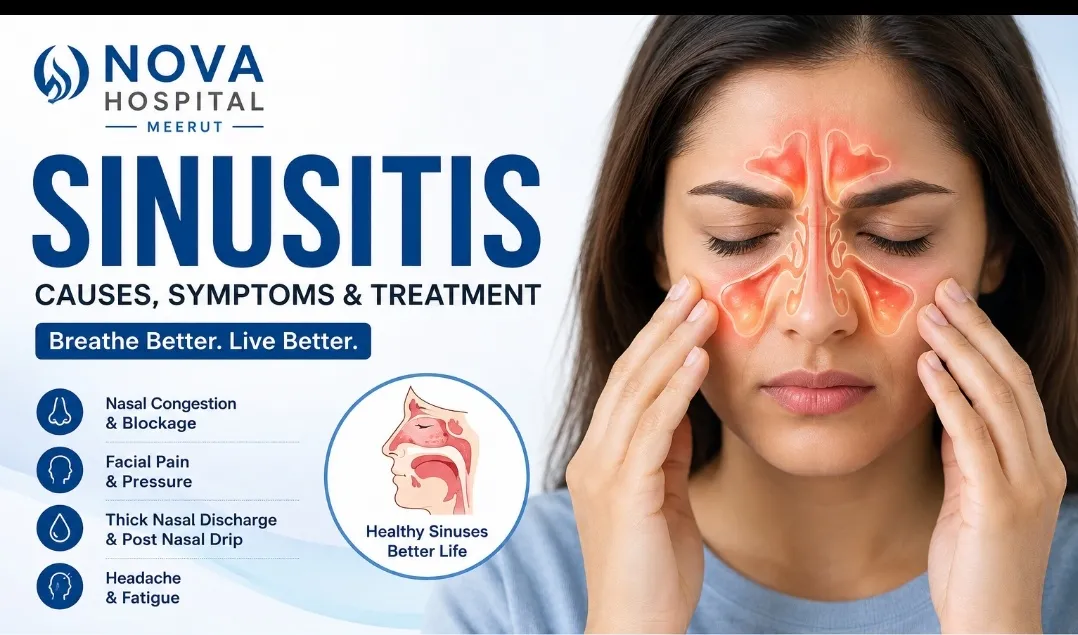
Sinusitis is a common condition in which the tissues lining the sinuses become inflamed or swollen. It can cause nasal blockage, facial pain or pressure, headache, nasal discharge and difficulty breathing through the nose. Sinusitis may occur after a viral infection such as a common cold, due to allergies, or because of structural problems inside the nose.
At Nova Hospital, Meerut, patients can receive comprehensive evaluation and treatment for sinusitis and other ENT conditions based on the underlying cause and severity of symptoms.
What is Sinusitis?
The sinuses are air-filled spaces located around the nose, cheeks, eyes and forehead. They help humidify the air we breathe and are connected to the nasal passages through small openings.
When these openings become blocked, mucus can accumulate and the sinus lining may become inflamed. This can result in sinusitis, sometimes also referred to as a sinus infection.
Sinusitis may be:
Acute sinusitis – symptoms develop suddenly and usually occur following a respiratory infection.
Chronic sinusitis – inflammation persists for a prolonged period or keeps recurring.
Recurrent sinusitis – multiple episodes occur over a period of time.
What Causes Sinusitis?
Several factors can contribute to sinus inflammation, including:
Viral respiratory infections and common cold
Bacterial infections in some cases
Allergic rhinitis
Nasal polyps
Deviated nasal septum
Narrow or blocked sinus drainage pathways
Recurrent upper respiratory infections
Exposure to smoke and other irritants
Certain dental infections that can affect the nearby maxillary sinus
Understanding the underlying cause is important because treatment may differ from one patient to another.
Symptoms of Sinusitis
Common symptoms may include:
Blocked or stuffy nose
Facial pain, pressure or heaviness
Headache
Thick nasal discharge
Post-nasal drip
Reduced or altered sense of smell
Difficulty breathing through the nose
Cough, particularly at night
Sore throat
Bad breath
Fever in some cases
Tiredness or a feeling of pressure around the eyes and cheeks
Symptoms can vary depending on whether sinusitis is acute, chronic or associated with allergies.
Sinusitis vs Common Cold
Sinusitis and a common cold can have similar symptoms, which can make them difficult to distinguish.
A cold generally improves with time, whereas persistent or recurrent nasal blockage, facial pressure, thick nasal discharge, reduced sense of smell or symptoms that repeatedly return may require evaluation by an ENT specialist.
Self-medication with antibiotics is not recommended, as many cases of sinusitis are not caused by bacteria.