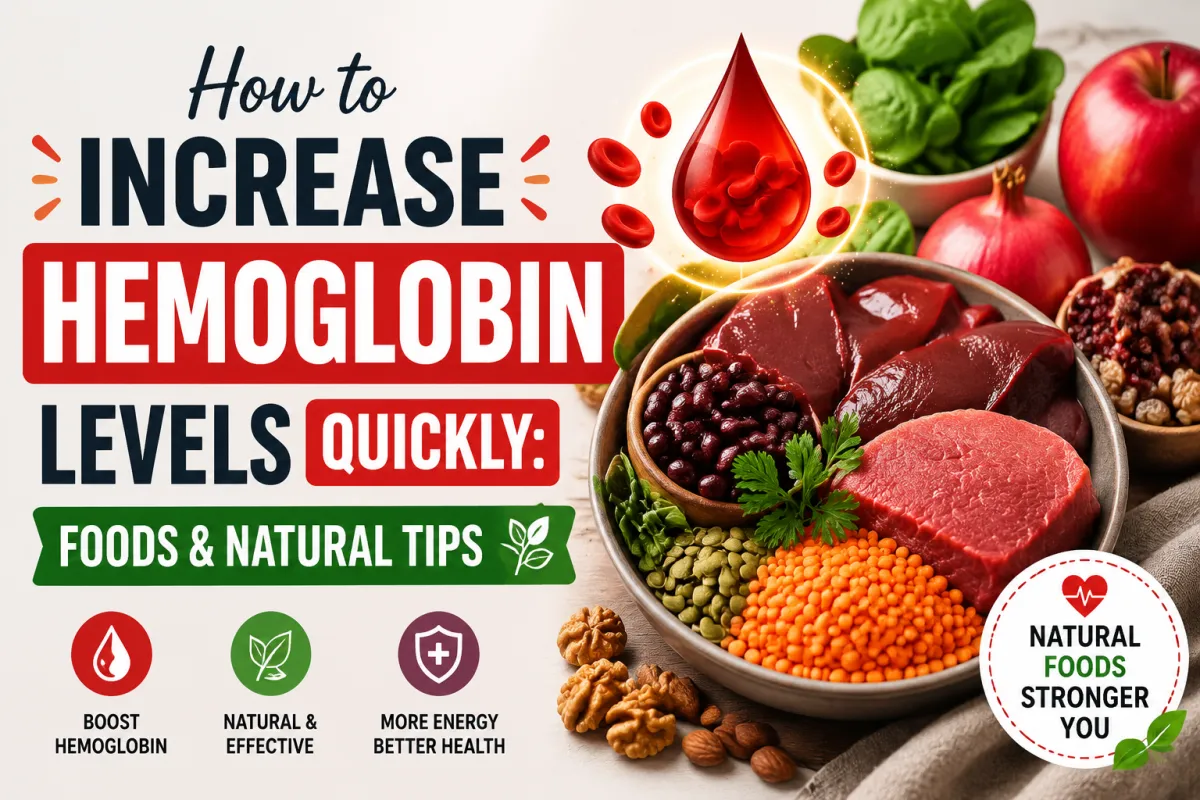
How to Increase Hemoglobin Levels Quickly: Foods & Natural Tips
Updated on: October 13, 2026 | Medically reviewed by: Dr. Anupam Kumari
If you've been feeling unusually tired, breathless after light activity, or just "off," low hemoglobin could be part of the picture. Hemoglobin is the protein in your red blood cells that carries oxygen from your lungs to every organ and tissue in your body — so when levels drop, your whole body can feel it.
The good news: for most people, hemoglobin levels respond well to the right foods and daily habits. This guide covers what hemoglobin actually is, what counts as a normal range, what causes it to drop, the best foods to raise it naturally, and — just as importantly — when diet alone isn't enough and it's time to get tested.
Quick Summary
- Hemoglobin's job: carries oxygen from your lungs to your tissues.
- Normal range (general reference): roughly 13.5–17.5 g/dL (men), 12.0–15.5 g/dL (women).
- Common cause of low Hb: iron deficiency, followed by vitamin B12/folate deficiency and blood loss.
- Best foods: red meat, organ meat, legumes, leafy greens, seeds, fortified cereals, and vitamin C-rich fruit.
- Absorption tip: pair iron-rich foods with vitamin C; avoid tea/coffee at mealtimes.
- Timeline: mild dietary deficiency often improves in 6–8 weeks of consistent effort, but this varies by cause and severity.
What Is Hemoglobin, and Why Does It Matter?
Hemoglobin (often shortened to "Hb" or "HGB") is an iron-containing protein packed inside your red blood cells. Its job is simple but essential: it binds oxygen in your lungs and delivers it to every cell in your body, then carries carbon dioxide back to be exhaled. Without enough hemoglobin, your tissues don't get enough oxygen — and your body responds with fatigue, weakness, and other symptoms.
Because iron is a core building block of hemoglobin, most cases of low hemoglobin trace back to low iron levels — either from not eating enough iron-rich food, not absorbing it well, or losing more than the body can replace (for example, through menstruation).
Normal Hemoglobin Levels by Age & Gender
Hemoglobin is measured in grams per decilitre (g/dL) through a routine blood test called a Complete Blood Count (CBC). Reference ranges vary slightly between laboratories, but the World Health Organization (WHO) and major health bodies generally use the following as working benchmarks:
| Group | Typical Normal Range | WHO Anemia Threshold (below this = anemia) |
|---|---|---|
| Adult men | 13.5–17.5 g/dL | < 13.0 g/dL |
| Adult women (non-pregnant) | 12.0–15.5 g/dL | < 12.0 g/dL |
| Pregnant women | 11.0–14.0 g/dL | < 11.0 g/dL (all trimesters) |
| Children (6 months–5 years) | 11.0–14.0 g/dL | < 11.0 g/dL |
What Causes Low Hemoglobin?
Low hemoglobin (anemia) isn't one single condition — it's a symptom with several possible causes. Diet only fixes one of them.
- Iron deficiency: the most common cause worldwide, from inadequate intake, poor absorption, or ongoing blood loss.
- Vitamin B12 or folate deficiency: both are needed to make healthy red blood cells; low levels cause a different type of anemia.
- Chronic blood loss: heavy menstrual periods, gastrointestinal bleeding, or frequent blood donation.
- Chronic disease: conditions like kidney disease or long-term inflammation can suppress red blood cell production.
- Pregnancy: blood volume expands faster than iron stores, increasing iron needs significantly.
- Inherited blood disorders: conditions such as thalassemia or sickle cell disease affect hemoglobin production or red blood cell shape, and diet cannot correct these — they need specialist care.
Signs & Symptoms of Low Hemoglobin
- Unusual fatigue or weakness
- Pale skin, lips, or inner eyelids
- Shortness of breath, especially on exertion
- Dizziness or lightheadedness
- Cold hands and feet
- Fast or irregular heartbeat
- Headaches
- Brittle nails or unusual cravings for non-food items like ice (a sign sometimes linked to iron deficiency)
These symptoms can overlap with many other conditions, so they're a signal to get tested — not to self-diagnose.
Foods That Increase Hemoglobin Naturally
Since iron is the main raw material for hemoglobin, the foods below focus on iron — both from animal sources (heme iron, absorbed easily) and plant sources (non-heme iron, absorbed less efficiently but still valuable, especially when combined with vitamin C).
Leafy Green Vegetables
Spinach, kale, Swiss chard, fenugreek leaves, and mustard greens all provide non-heme iron along with folate, which also supports red blood cell formation. Cooking them lightly and pairing them with a vitamin C source (like lemon juice or tomatoes) improves how much iron your body actually absorbs.
Legumes and Beans
Lentils, chickpeas, black beans, kidney beans, and soybeans combine iron, plant protein, and folate. They're especially useful for vegetarians and vegans, who generally need close to double the standard iron intake because plant-based (non-heme) iron is absorbed less efficiently than heme iron.
Red Meat and Organ Meat
Lean red meat, and particularly liver, is one of the most concentrated sources of heme iron, which the body absorbs far more efficiently than non-heme iron. Moderate portions of lean beef, lamb, or pork can meaningfully support hemoglobin levels, especially when iron deficiency is confirmed by a blood test.
Poultry and Seafood
Chicken (especially dark meat), turkey, tuna, and shellfish such as clams, mussels, and oysters all provide heme iron along with vitamin B12, which is also essential for healthy red blood cells.
Nuts and Seeds
Pumpkin seeds, sesame seeds, sunflower seeds, cashews, and almonds are compact sources of iron that work well as snacks or toppings for salads and yoghurt.
Fortified Cereals and Whole Grains
Iron-fortified breakfast cereals, oats, quinoa, and whole wheat products offer a convenient, consistent source of iron — particularly useful for people who don't eat much meat.
Fruits
Pomegranate, dates, raisins, and apples provide small amounts of iron directly, while citrus fruits, strawberries, and bell peppers are rich in vitamin C, which significantly boosts how well your body absorbs iron from plant foods eaten in the same meal.
| Food | Approx. Iron per 100 g | Iron Type |
|---|---|---|
| Beef liver (cooked) | ~6.5 mg | Heme |
| Lentils (cooked) | ~3.3 mg | Non-heme |
| Spinach (cooked) | ~3.6 mg | Non-heme |
| Pumpkin seeds (roasted) | ~8.8 mg | Non-heme |
| Chickpeas (cooked) | ~2.9 mg | Non-heme |
| Lean beef (cooked) | ~2.6 mg | Heme |
| Chicken, dark meat (cooked) | ~1.3 mg | Heme |
| Tofu (firm) | ~5.4 mg | Non-heme |
| Dark chocolate (70–85% cocoa) | ~11.9 mg | Non-heme |
Heme vs. Non-Heme Iron, Explained
Heme iron comes from animal sources (meat, poultry, seafood) and is absorbed by the body relatively easily — typically 15–35% of what you eat. Non-heme iron comes from plant sources (lentils, spinach, fortified grains) and is absorbed less efficiently — typically only 2–20%, depending heavily on what else is in the meal. This is exactly why vitamin C pairing matters so much for vegetarians and vegans, and why the RDA for iron is higher for people on plant-based diets.
How Much Iron Do You Actually Need?
According to the U.S. National Institutes of Health (NIH) Office of Dietary Supplements, the Recommended Dietary Allowance (RDA) for iron is:
| Group | RDA (mg/day) |
|---|---|
| Adult men (19–50 yrs) | 8 mg |
| Adult women (19–50 yrs) | 18 mg |
| Pregnant women | 27 mg |
| Breastfeeding women | 9 mg |
| Women 51+ (post-menopause) | 8 mg |
| Teen boys (14–18 yrs) | 11 mg |
| Teen girls (14–18 yrs) | 15 mg |
Tips to Raise Hemoglobin at Home
- Eat iron-rich meals consistently rather than occasionally — steady intake matters more than one "iron-heavy" meal.
- Pair iron with vitamin C — squeeze lemon over lentils, add bell peppers to a stir-fry, or finish a meal with citrus fruit.
- Keep tea and coffee away from meals — the tannins in these drinks can significantly reduce non-heme iron absorption. Have them an hour before or after eating instead.
- Cook in cast iron cookware occasionally, particularly for acidic dishes like tomato-based sauces, which can pick up small amounts of iron during cooking.
- Include folate-rich foods — lentils, leafy greens, citrus fruit, and eggs support red blood cell formation alongside iron.
- Check your vitamin B12 intake — vegetarians and vegans in particular should monitor this, since B12 comes mainly from animal products and fortified foods.
- Don't self-supplement with high-dose iron — excess iron can cause digestive side effects and, in rare inherited conditions like hemochromatosis, can be harmful. Test first, supplement only if advised.
- Get enough sleep and manage stress — while not a direct iron source, chronic stress and poor sleep are linked with poorer overall nutrient absorption and energy regulation.
Foods & Habits That Block Iron Absorption
| Do | Avoid / Limit |
|---|---|
| Eat vitamin C-rich foods alongside iron-rich meals | Drinking tea or coffee immediately with meals |
| Soak or sprout lentils and grains before cooking | Relying heavily on calcium supplements at the same time as iron-rich meals |
| Space out calcium-rich foods (like dairy) from iron-rich meals | Excessive intake of unfermented soy alongside iron sources |
| Cook leafy greens lightly rather than eating them only raw in large amounts | Long-term use of antacids without medical guidance, which can affect absorption |
How Long Does It Take to See Results?
For mild, diet-related iron deficiency, many people notice some improvement in energy within a few weeks, with measurable improvement in hemoglobin typically over 6 to 8 weeks of consistent dietary changes — though this depends on the severity of the deficiency, the underlying cause, and individual absorption. If iron supplements are prescribed, doctors often recheck hemoglobin after 4–12 weeks to confirm the treatment is working. If your levels don't improve despite consistent effort, that's a sign to revisit the underlying cause with your doctor rather than simply increasing iron intake further.
When to See a Doctor & Get Tested
- You have ongoing fatigue, breathlessness, or dizziness that doesn't improve with rest
- You notice pale skin, brittle nails, or unusual cravings for ice or starch
- You have heavy menstrual periods or any unexplained bleeding
- You are pregnant or planning pregnancy
- You follow a strict vegetarian or vegan diet and haven't checked your levels recently
- You've already tried dietary changes for 6–8 weeks without improvement
A simple Complete Blood Count (CBC) checks your hemoglobin level, and a ferritin test can show your body's iron stores even before hemoglobin drops — useful for catching deficiency early. Get tested at a reliable diagnostic lab rather than guessing based on symptoms alone.
Can Hemoglobin Be Too High?
Yes — while this article focuses on raising low hemoglobin, hemoglobin can also be abnormally high, a condition called polycythemia. This can happen with dehydration, smoking, living at high altitude, certain lung or heart conditions, or rarely, a bone marrow disorder. Don't take iron supplements "just in case" without a blood test confirming you actually need them, since unnecessarily high iron intake can cause its own problems.
Myths vs. Facts
| Myth | Fact |
|---|---|
| Only meat-eaters can have healthy hemoglobin levels | Vegetarians and vegans can maintain healthy levels with careful planning — combining iron-rich plant foods with vitamin C and monitoring B12 |
| More iron supplements always means faster recovery | Excess iron doesn't speed up recovery and can cause digestive side effects or, in rare cases, toxicity |
| Iron tablets alone will fix any tiredness | Fatigue has many causes; iron only helps if the underlying issue is actually iron deficiency |
| Beetroot juice instantly boosts hemoglobin | Beetroot supports overall blood health and iron absorption modestly, but it isn't a fast, standalone fix |
| You'll always feel low hemoglobin coming on | Many people have no symptoms until levels drop quite low, which is why testing matters more than "feeling fine" |
Conclusion
For most people, healthy hemoglobin levels start with a plate of the right foods — iron-rich staples like leafy greens, legumes, lean meats, seeds, and fortified grains, eaten alongside vitamin C and away from tea or coffee. Simple daily habits, followed consistently, can make a real difference over a matter of weeks.
That said, "low energy" has many possible causes, and hemoglobin levels can only be confirmed with a blood test — not guessed from symptoms. If you've been feeling consistently tired, or simply want a baseline, getting a Complete Blood Count is a quick, low-effort way to know exactly where you stand and whether dietary changes are enough or whether you need further medical guidance.