Vitamin D Foods: The Complete 2026 Guide to the Best Vitamin D Rich Foods
Updated on: September 18, 2026 | Medically reviewed by: Dr Dimpi Malik
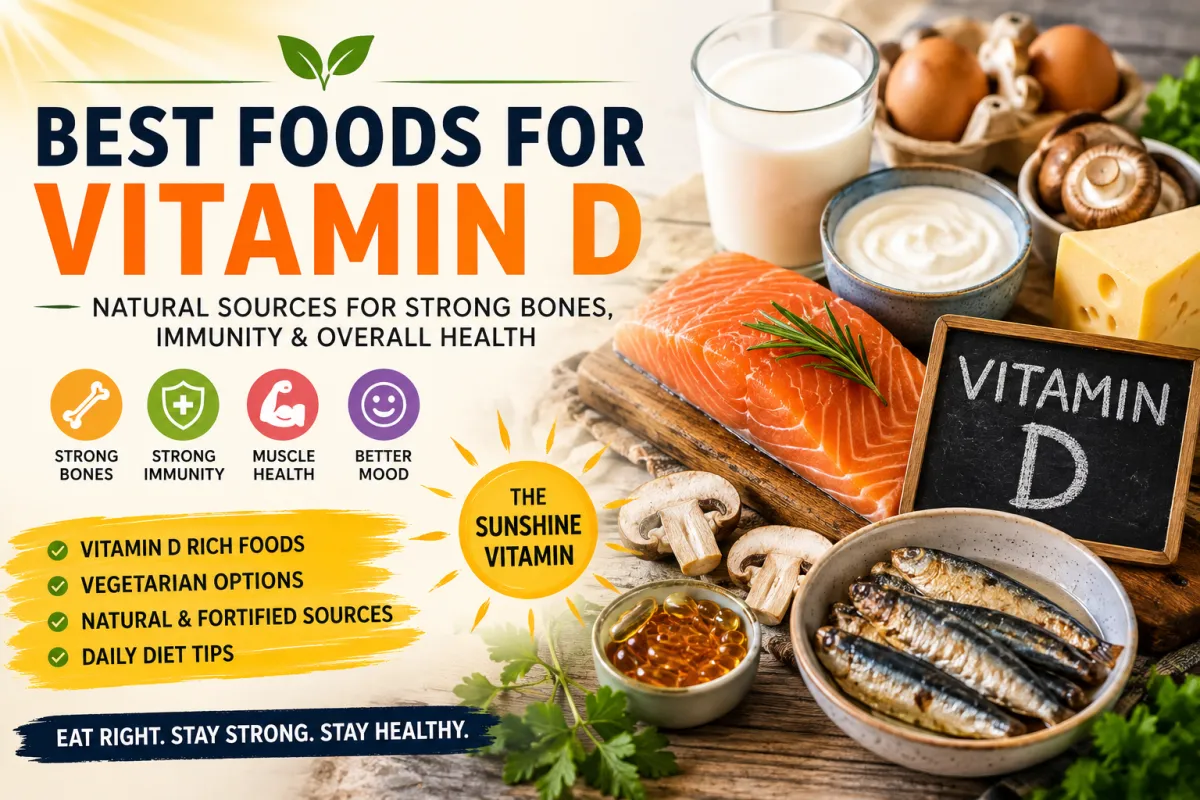
- Very few foods are naturally rich in vitamin D — the best natural sources are fatty fish, egg yolks, and UV-exposed mushrooms.
- Fortified foods (milk, cereal, plant milks) are a major practical source of vitamin D for most people, especially vegetarians.
- Vitamin D3 (from animal sources and sun exposure) is generally more effective at raising blood vitamin D levels than vitamin D2 (mostly from plant/fungal sources).
- Diet alone often cannot fully correct a vitamin D deficiency — sunlight exposure and, when advised by a doctor, supplements usually play a role too.
- Daily vitamin D needs vary by age, skin tone, geography, and health status — a blood test and medical advice are the most reliable way to know your personal requirement.
Vitamin D is a fat-soluble vitamin essential for calcium absorption, bone strength, muscle function, and immune health. Because natural dietary sources are limited, this guide brings together the most vitamin D–dense foods — both vegetarian and non-vegetarian — along with practical serving sizes, absorption tips, and age-wise requirements, so you can build a realistic, food-first plan to support healthy vitamin D levels. This article is for general education; it does not replace a personal medical evaluation.
1. What Is Vitamin D?
Vitamin D is a fat-soluble vitamin that behaves more like a hormone than a typical nutrient. Your skin produces it when exposed to sunlight, and it is also available from a limited number of foods and from fortified products. Once absorbed, vitamin D is converted by the liver and kidneys into its active form, which helps your intestines absorb calcium and phosphorus — two minerals critical for strong bones and teeth.
Vitamin D2 vs Vitamin D3
There are two main dietary forms of vitamin D:
- Vitamin D2 (ergocalciferol): Found mainly in plant sources such as UV-exposed mushrooms and some fortified foods.
- Vitamin D3 (cholecalciferol): Found in animal-based foods like fatty fish, egg yolk, and liver, and is also the form your skin makes from sunlight.
Research generally suggests vitamin D3 is somewhat more efficient at raising and maintaining blood vitamin D levels compared to D2, although both forms contribute to overall status.
Why the Body Needs Vitamin D
- Supports calcium and phosphorus absorption for bone mineralisation
- Contributes to normal muscle function and neuromuscular coordination
- Plays a role in supporting a healthy immune response
- Is being studied for its relationship with mood and overall wellbeing
- Supports healthy ageing by helping maintain bone density
2. Why Vitamin D Matters
Bone Health
Vitamin D works together with calcium to build and maintain bone density. Long-term low levels are associated with softer, weaker bones — called rickets in children and osteomalacia or osteoporosis-related issues in adults.
Calcium Absorption
Without adequate vitamin D, the intestines absorb only a small fraction of dietary calcium, regardless of how much calcium-rich food you eat.
Muscle Strength
Vitamin D receptors are present in muscle tissue, and adequate levels are linked with better muscle strength and a lower risk of falls in older adults.
Immune Function
Vitamin D helps modulate the immune system, and researchers continue to study its role in respiratory health and general immune resilience.
Mood
Some studies associate low vitamin D levels with low mood, though the science is still evolving and vitamin D should not be seen as a standalone treatment for mood disorders.
Healthy Ageing
Maintaining sufficient vitamin D as you age supports bone strength, muscle function, and may help reduce fall and fracture risk.
3. Top 25 Vitamin D Foods (Full Table)
The table below lists 25 of the most useful vitamin D foods, mixing natural and fortified sources for both vegetarians and non-vegetarians. Values are approximate and can vary by brand, region, and preparation.
| Food | Veg/Non-Veg | Vitamin D (approx. per serving) | Other Key Nutrients | Health Benefits | Best Serving Size | Best Cooking Method |
|---|---|---|---|---|---|---|
| Cod liver oil | Non-Veg | ~450 IU (11 mcg) per tsp | Omega-3, Vitamin A | Very high natural D source; supports joints & heart | 1 tsp | Taken directly or with juice |
| Salmon (wild) | Non-Veg | ~570–990 IU per 100g | Omega-3, protein | Heart & brain health, muscle repair | 100–150g | Grilled or baked |
| Salmon (farmed) | Non-Veg | ~250 IU per 100g | Omega-3, protein | Bone & muscle support | 100–150g | Grilled or baked |
| Sardines (canned) | Non-Veg | ~190 IU per 100g | Calcium, omega-3 | Bone health, heart health | 2–3 sardines | Grilled or in salads |
| Tuna (canned) | Non-Veg | ~230 IU per 100g | Protein, selenium | Muscle repair, immunity | 100g | Canned, drained |
| Herring/Mackerel | Non-Veg | ~250–360 IU per 100g | Omega-3 | Heart & bone health | 100g | Grilled or pan-seared |
| Egg yolk | Non-Veg (Ovo-veg) | ~40 IU per yolk | Choline, protein | Muscle & brain support | 1–2 yolks | Boiled or poached |
| Beef liver | Non-Veg | ~50 IU per 100g | Iron, Vitamin A | Supports energy metabolism | 100g, occasional | Sautéed |
| Fortified milk (dairy) | Veg | ~100–130 IU per cup | Calcium, protein | Bone health | 1 cup (250ml) | Chilled or warm |
| Fortified yogurt | Veg | ~80–100 IU per cup | Probiotics, calcium | Gut & bone health | 1 cup | As is |
| Fortified cheese | Veg | Varies (check label) | Calcium, protein | Bone support | 1–2 slices | As is |
| UV-exposed mushrooms | Vegan | ~450 IU per 100g | B vitamins, fibre | Natural vegan D source | 100g | Sautéed, grilled |
| Regular button mushrooms | Vegan | Low unless UV-treated | B vitamins | Low-calorie nutrition | 100g | Sautéed |
| Fortified cereals | Vegan/Veg | ~40–100 IU per serving | Iron, B vitamins | Convenient morning source | 1 bowl | With fortified milk |
| Soy milk (fortified) | Vegan | ~100–120 IU per cup | Plant protein | Vegan-friendly bone support | 1 cup | Chilled or in smoothies |
| Almond milk (fortified) | Vegan | ~100 IU per cup | Vitamin E | Lactose-free D source | 1 cup | Chilled or in cereal |
| Oat milk (fortified) | Vegan | ~100 IU per cup | Fibre | Dairy-free D source | 1 cup | Chilled or in coffee |
| Orange juice (fortified) | Vegan | ~100 IU per cup | Vitamin C | Immunity & D together | 1 cup | Fresh/chilled |
| Tofu (fortified) | Vegan | ~100 IU per 100g (fortified brands) | Plant protein, calcium | Muscle & bone support | 100g | Grilled or stir-fried |
| Butter | Veg | Very limited (~50 IU/100g) | Vitamin A | Minor contributor only | Small amount | As spread/cooking |
| Paneer | Veg | Naturally low; check fortified variants | Protein, calcium | Muscle support (not a strong D source) | 100g | Grilled or curried |
| Caviar | Non-Veg | ~230 IU per 100g | Omega-3 | Occasional treat, D source | Small serving | As is |
| Shiitake mushrooms (sun-dried) | Vegan | ~150+ IU per 100g | B vitamins | Vegan D contributor | 100g | Sun-dried, sautéed |
| Egg (whole, fortified-feed hens) | Non-Veg (Ovo-veg) | Higher than regular eggs (check label) | Protein, choline | Enhanced D intake | 1–2 eggs | Boiled/poached |
| Fortified plant-based yogurt | Vegan | ~80–100 IU per cup (brand dependent) | Probiotics | Vegan gut & bone support | 1 cup | As is |
Note: IU values are approximate averages compiled from general nutrition references and can differ by brand, region, feed/fortification practice, and season. Always check product labels for fortified foods.
4. Vitamin D Vegetarian & Vegan Foods
Vegetarians and vegans often need to plan more deliberately for vitamin D, since most naturally rich sources are fish-based. The good news is there are still meaningful options:
Best Vegetarian (includes dairy/egg) Sources
- Fortified milk and yogurt
- Fortified cheese
- Egg yolk
- UV-exposed mushrooms
Best Vegan Sources
- UV-exposed mushrooms (the only significant naturally vegan source)
- Fortified soy, almond, or oat milk
- Fortified orange juice
- Fortified tofu
- Fortified breakfast cereals
Because vegan diets have very few natural vitamin D sources, vegans are often advised by doctors to monitor blood levels and discuss supplementation, particularly during winter months or in regions with limited sunlight.
5. Vitamin D3 Foods: D2 vs D3 Explained
| Aspect | Vitamin D2 (Ergocalciferol) | Vitamin D3 (Cholecalciferol) |
|---|---|---|
| Source | Plants, fungi, UV-exposed mushrooms, some fortified foods | Animal foods (fish, egg yolk, liver), sunlight on skin |
| Effectiveness at raising blood levels | Generally less potent | Generally more effective and longer-lasting |
| Common in supplements | Sometimes, especially vegan supplements | Most common form used in supplements |
| Best for | Vegans/vegetarians avoiding animal products | Non-vegetarians and those getting sun exposure |
Natural D3 sources include salmon, sardines, mackerel, egg yolk, and cod liver oil. Fortified D3 foods increasingly include some plant milks and cereals, since manufacturers can now derive D3 from lichen for vegan-friendly fortification — check the label if this matters to you.
6. What Foods Have Vitamin D? (Quick Answer)
Quick answer: The foods with the most vitamin D are fatty fish (salmon, sardines, mackerel, tuna), cod liver oil, egg yolks, and UV-exposed mushrooms. Fortified foods — including milk, plant-based milks, orange juice, cereals, and tofu — are also major everyday sources, especially for vegetarians and vegans.
7. Foods High in Vitamin D — Ranked Highest to Lowest
🏆 Top 10 Vitamin D Foods (Quick Reference)
If you need to quickly optimize your dietary intake, prioritize these ten highly dense natural and fortified sources:
- Cod liver oil: ~450 IU per tsp
- Wild salmon: ~570–990 IU per 100g
- UV-exposed mushrooms: ~450 IU per 100g
- Herring/Mackerel: ~250–360 IU per 100g
- Farmed salmon: ~250 IU per 100g
- Canned tuna: ~230 IU per 100g
- Sardines: ~190 IU per 100g
- Fortified plant milks (Soy/Almond/Oat): ~100–120 IU per cup
- Fortified cow's milk: ~100–130 IU per cup
- Fortified orange juice: ~100 IU per cup
8. Daily Vitamin D Requirement by Age
| Age Group | Approximate Daily Requirement (IU) | Approximate (mcg) |
|---|---|---|
| Infants (0–12 months) | 400 IU | 10 mcg |
| Children (1–18 years) | 600 IU | 15 mcg |
| Adults (19–70 years) | 600–800 IU | 15–20 mcg |
| Adults over 70 years | 800 IU | 20 mcg |
| Pregnant/breastfeeding women | 600–800 IU | 15–20 mcg |
These figures are general population guidelines and can vary between countries and health organisations. Individuals with obesity, darker skin, limited sun exposure, malabsorption conditions, or an existing deficiency may need higher amounts — this should be determined by a doctor, ideally using a blood test.
9. Vitamin D Deficiency: Symptoms, Causes, Risk Factors
Common Symptoms
- Fatigue and low energy
- Bone pain or aching joints
- Muscle weakness or cramps
- Frequent infections
- Low mood
- Slow wound healing
- Hair thinning
Common Causes
- Limited sun exposure
- Darker skin tone (reduces vitamin D synthesis efficiency)
- Poor dietary intake
- Obesity (vitamin D gets sequestered in fat tissue)
- Malabsorption conditions (e.g., celiac disease, Crohn's disease)
- Older age (skin becomes less efficient at synthesis)
- Certain medications
For a detailed medical evaluation of symptoms, physiological causes, and standard treatment plans, please read our clinical guide on Vitamin D Deficiency Symptoms, Causes & Treatment.
10. Can Food Alone Meet Your Vitamin D Needs?
For most people, diet alone is difficult to rely on for adequate vitamin D, because naturally rich food sources are limited and fortification levels are modest. A combination approach generally works best:
- Sunlight: Roughly 10–30 minutes of midday sun exposure on exposed skin, several times a week, helps most people generate meaningful vitamin D — though this varies by skin tone, season, latitude, and sunscreen use.
- Diet: Regularly including fatty fish, fortified dairy/plant milks, eggs, and UV-exposed mushrooms helps maintain levels.
- Supplements: When blood tests show deficiency, or for people with limited sun exposure (indoor workers, covered clothing, elderly, darker skin, northern latitudes), a doctor may recommend a supplement dose tailored to the individual.
If you suspect low vitamin D, the most reliable approach is a blood test (25-hydroxyvitamin D) followed by medical guidance — self-treating a suspected deficiency with high-dose supplements without testing is not recommended.
🩺 Need to Check Your Vitamin D Levels?
While adjusting your diet is a great first step, verifying an actual deficiency requires a professional diagnostic blood test. You can easily schedule a 25-Hydroxy Vitamin D test or consult our physicians at Nova Hospital Meerut. Call us directly at +91 70550 06662 or use the appointment form on this page to request a callback.
11. Best Time to Eat Vitamin D Foods
Because vitamin D is fat-soluble, it is best absorbed when eaten alongside a meal that contains some healthy fat. Practical tips:
- Pair vitamin D foods with a meal rather than eating them on an empty stomach.
- Some research suggests taking vitamin D with the largest meal of the day may improve absorption.
- Consistency matters more than exact timing — regular intake over weeks and months is what improves blood levels.
12. Foods That Improve Vitamin D Absorption
- Healthy fats: Olive oil, nuts, seeds, and avocado can help since vitamin D is fat-soluble.
- Omega-3-rich foods: Fatty fish naturally combine vitamin D with fats that aid its absorption.
- Balanced meals: Including protein and healthy fats alongside vitamin D–fortified foods supports better uptake compared to eating them alone.
- Magnesium-rich foods: Nuts, seeds, leafy greens, and whole grains support the enzymes that help activate vitamin D in the body.
13. Foods and Habits That May Affect Vitamin D Status
No single food "blocks" vitamin D, but certain patterns can make maintaining healthy levels harder:
- Very low-fat diets may reduce absorption of fat-soluble vitamin D from food or supplements.
- Excessive alcohol intake can affect liver processing of vitamin D.
- Diets very low in overall variety (highly restrictive diets) may lack fortified staples.
- Prolonged indoor lifestyles reduce natural synthesis, making dietary intake more important.
These are general associations, not guarantees of deficiency — individual risk depends on many factors.
14. One-Day Vitamin D Meal Plan
| Meal | Vegetarian Option | Non-Vegetarian Option |
|---|---|---|
| Breakfast | Fortified cereal with fortified soy milk + orange juice | 2 boiled eggs + fortified milk |
| Mid-morning | Handful of nuts | Handful of nuts |
| Lunch | Sautéed UV-exposed mushrooms with tofu and vegetables | Grilled salmon or mackerel with vegetables |
| Evening snack | Fortified yogurt with fruit | Fortified yogurt with fruit |
| Dinner | Paneer/tofu curry with whole grains | Grilled sardines or tuna salad |
15. Myth vs Fact
Fact: Most dairy needs to be fortified with vitamin D — it isn't naturally high unless labeled fortified.
Fact: Diet alone often isn't enough; sunlight and, when advised, supplements usually help.
Fact: Fortified foods and UV-exposed mushrooms provide meaningful vegetarian/vegan sources.
Fact: Brief, moderate exposure is usually enough; excessive sun raises skin cancer risk without proportionally raising vitamin D.
Fact: D3 is generally considered more effective at raising and sustaining blood levels.
Fact: Paneer is naturally low in vitamin D unless specifically fortified.
Fact: Deficiency can affect people of all ages, including children and young adults.
Fact: Cod liver oil contains vitamin A and D in addition to omega-3s; regular fish oil usually does not.
Fact: Many people with low vitamin D have no obvious symptoms; a blood test is the only reliable way to know.
Fact: Toxicity from food alone is extremely rare; it's almost always linked to very high-dose, unsupervised supplementation.
Fact: It also supports muscle function, immune health, and is linked to broader wellbeing.
Fact: Only mushrooms deliberately exposed to UV light are meaningfully high in vitamin D; regular mushrooms are low.
Fact: It usually takes weeks to months of consistent intake (and sometimes supplementation) to correct a deficiency.
Fact: Supplements address one nutrient; a varied diet is still needed for overall health.
Fact: Only fortified milk contributes meaningful vitamin D; plain, unfortified milk contributes very little.