Albendazole 400 mg Tablet: Uses, Dosage for Adults, Deworming & Complete Guide (2026)
Updated on: September 18, 2026 | Medically reviewed by: Dr. Vikrant Solanki
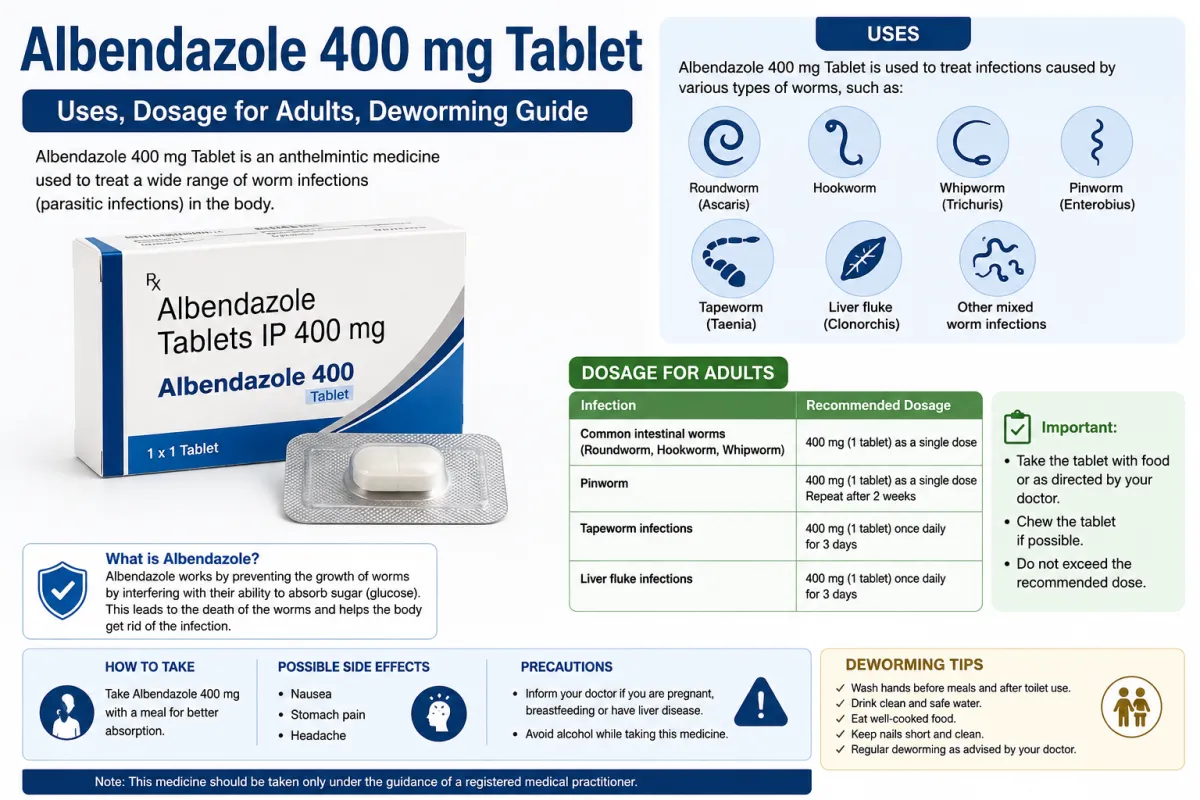
Albendazole 400 mg is one of the most widely used deworming tablets in the world. Whether you are looking for information on albendazole tablet uses, the correct albendazole tablet dose for adults for deworming, or how it is used in India's national health programs — this comprehensive, medically reviewed guide covers everything you need to know.
Albendazole is a broad-spectrum anthelmintic (deworming) drug used to kill and expel parasitic worms from the body. The 400 mg tablet is the most commonly prescribed formulation and is classified as an Essential Medicine by the World Health Organization (WHO).
Known by brand names such as Zentel, Bandy, and Noworm in India, albendazole belongs to the benzimidazole class of antiparasitic drugs. It works against a wide range of parasites — both in the intestine and in body tissues like the liver, lungs, and brain.
- Drug Class: Benzimidazole anthelmintic (antiparasitic)
- Active Ingredient: Albendazole 400 mg per tablet
- Route of Administration: Oral tablet — take with food
- Onset of Action: Begins working within 1–3 days; worms expelled in 3–5 days
- Also spelled: Albendazol 400 mg (common in Spanish/Portuguese; same drug)
Albendazole Tablet Uses
Albendazole tablets are prescribed for a wide range of parasitic infections. Here are the primary albendazole tablet uses:
Intestinal Worm Infections (Deworming)
This is the most common use of albendazole. As a deworming tablet, it is effective against:
- Roundworms (Ascaris lumbricoides) — causes abdominal pain, malnutrition, and stunted growth in children
- Hookworms (Ancylostoma duodenale, Necator americanus) — causes anaemia, fatigue, and weakness
- Whipworms (Trichuris trichiura) — causes diarrhoea and rectal prolapse in heavy infections
- Pinworms / Threadworms (Enterobius vermicularis) — causes intense anal itching, especially at night
- Strongyloidiasis — causes skin rash, cough, and gastrointestinal symptoms
Hydatid Disease (Echinococcosis)
Caused by larval stages of the Echinococcus tapeworm, hydatid disease leads to cyst formation in organs such as the liver and lungs. Albendazole 400 mg is used in treatment cycles to shrink cysts and prevent recurrence after surgery.
Neurocysticercosis
Caused by the larvae of the pork tapeworm (Taenia solium), neurocysticercosis affects the brain and can cause seizures, headaches, and neurological problems. Albendazole 400 mg is a first-line treatment, typically used alongside corticosteroids and anticonvulsants.
Lymphatic Filariasis (Elephantiasis)
Albendazole is used in combination with ivermectin or diethylcarbamazine (DEC) as part of WHO's global elimination program. A single 400 mg annual dose reduces the worm burden in the bloodstream.
Cutaneous Larva Migrans
A skin infection caused by animal hookworm larvae. Albendazole 400 mg for 3–7 days eliminates the migrating larvae and relieves the characteristic snake-like skin rash.
Other Uses of Albendazole Tablet
Albendazole is also used for giardiasis (in some countries), microsporidiosis (in immunocompromised patients), visceral larva migrans caused by Toxocara species, and gnathostomiasis.
How Does Albendazole Work?
Albendazole's mechanism of action is well-understood in clinical pharmacology:
- Inhibits tubulin polymerization — Albendazole binds to β-tubulin in parasitic cells, preventing microtubule formation needed for the worm's cell structure and function.
- Blocks glucose uptake — Without intact microtubules, the worm's cells cannot absorb glucose, its primary energy source.
- Depletes glycogen stores — The parasite's energy reserves become exhausted rapidly.
- Worm immobilization and death — The worm becomes paralyzed, dies, and is expelled from the body through normal bowel movements.
Importantly, albendazole acts on both adult worms and larvae, making it more effective than older antiparasitic drugs that only killed adult worms.
Albendazole Tablet 400 Mg Dose For Adults & Children
The albendazole tablet 400 mg dose for adults depends on the type of infection. Below is the complete dosage guide based on WHO and Indian clinical guidelines:
| Condition / Indication | Adult Dose | Duration | Notes |
|---|---|---|---|
| Deworming — Intestinal Worms (General) | 400 mg — Single Dose | 1 day | Take with food. Repeat after 2 weeks if needed. |
| Roundworm (Ascariasis) | 400 mg — Single Dose | 1 day | Usually curative with a single dose. |
| Hookworm | 400 mg — Single Dose | 1–3 days | 3-day course for severe infections. |
| Whipworm (Trichuriasis) | 400 mg Once Daily | 3 days | Single dose has lower cure rate for whipworm. |
| Pinworm (Enterobiasis) | 400 mg — Single Dose | 1 day | Repeat after 2 weeks; treat entire household. |
| Hydatid Disease | 400 mg Twice Daily | 28-day cycles (up to 3 cycles, with 14-day gaps) | Take with fatty meal. Monitor liver enzymes. |
| Neurocysticercosis | 400 mg Twice Daily | 8 to 30 days | Co-prescribed with corticosteroids & anticonvulsants. |
| Lymphatic Filariasis | 400 mg — Single Annual Dose | Once yearly | Combined with DEC or ivermectin per MDA program. |
| Cutaneous Larva Migrans | 400 mg Once Daily | 3–7 days | Relief usually seen within 3 days. |
| Children (2–12 years) | 400 mg — Single Dose | As prescribed | Same 400 mg dose per WHO guidelines for children above 2 years. |
How to Take Albendazole Tablet
- Take with food — a fatty meal increases absorption significantly for systemic infections
- Swallow the tablet whole with water
- For children who cannot swallow tablets, the tablet can be chewed or crushed and mixed with food
- For multi-day courses, take at the same time each day
- Do not skip doses in multi-day treatment courses
5. Albendazole for Deworming in India
India runs one of the world's largest deworming programs — the National Deworming Day (Rashtriya Bal Swasthya Karyakram / NDD), typically held in February and August each year.
- Children aged 1–19 years receive a single albendazole 400 mg deworming tablet
- Administered at Anganwadi centres, government schools, and primary health centres
- Over 24 crore children are targeted annually across India
- Albendazole 400 mg is available free at government health facilities
- Adults in high-risk or endemic zones may also be included in Mass Drug Administration (MDA) programs
India has a high burden of soil-transmitted helminths (STH), particularly in states like Uttar Pradesh, Bihar, Jharkhand, Odisha, and Rajasthan. Studies estimate that 20–30% of India's population is affected by worm infections. Deworming with albendazole has been shown to improve school attendance, haemoglobin levels, and nutritional outcomes in children.
For adults in India who wish to deworm preventively, the standard recommendation is a single albendazole 400 mg tablet taken once every 6–12 months, ideally under medical guidance.
Who Should Take Albendazole 400 mg Deworming Tablet?
Albendazole deworming tablets are recommended for:
- Adults and children diagnosed with worm infections — intestinal or systemic parasitic infections
- Children in endemic areas showing signs such as pot belly, anaemia, poor appetite, itching, or weight loss
- Travelers returning from high-risk countries with high STH prevalence
- Agricultural workers who work barefoot in soil or handle animal waste
- People in crowded living conditions or community settings with poor sanitation
- Participants in National Deworming Day or WHO Mass Drug Administration programs
Who should NOT take albendazole without medical clearance:
- Pregnant women (especially in the first trimester)
- Individuals with severe liver disease
- People with a known allergy to albendazole or other benzimidazole drugs
- Children below 1 year of age
Albendazole 400 mg — Side Effects
Albendazole is generally well-tolerated, especially for single-dose deworming. Side effects are more common with long-term use.
Common Side Effects (Mild)
- Headache
- Nausea or vomiting
- Abdominal pain or discomfort
- Dizziness
- Temporary hair thinning or hair loss (with prolonged use)
- Mild elevation of liver enzymes
- Fever (rare)
Serious / Rare Side Effects (Seek Medical Help Immediately)
- Jaundice — yellowing of skin or eyes (sign of liver damage)
- Bone marrow suppression (agranulocytosis — dangerously low white blood cells)
- Stevens-Johnson syndrome (severe skin reaction)
- Thrombocytopenia (low platelet count)
- Severe allergic reactions (rash, swelling, difficulty breathing)
Precautions & Safety Warnings
Pregnancy — AVOID (Consult Doctor)
Albendazole is not recommended during pregnancy, especially in the first trimester. Animal studies have demonstrated teratogenic effects (harm to the fetus). Women of childbearing age should use effective contraception during treatment and for at least one month after completing the course. Consult your doctor immediately if you are or may be pregnant.
Breastfeeding — Consult Doctor
Albendazole passes into breast milk in small amounts. A single deworming dose is generally considered safe during breastfeeding, but always consult a doctor before taking this medicine while nursing.
Alcohol — Consult Doctor
The interaction between albendazole and alcohol is not fully established. Both are processed by the liver, so it is advisable to avoid alcohol — especially during multi-day treatment courses.
Driving — Use Caution
Albendazole may cause dizziness or visual disturbances. Avoid driving or operating heavy machinery until you know how this medicine affects you.
Liver Disease — Use with Caution
Albendazole is metabolized in the liver. Patients with liver disease require close monitoring and regular liver enzyme tests. Seek medical attention if you notice jaundice, itching, or clay-colored stools.
Kidney Disease — Generally Safe
Albendazole is generally safe for patients with kidney disease. Dose adjustments are usually not required, but always confirm with your doctor.
Drug Interactions
Inform your doctor about all medicines you are taking. Albendazole may interact with:
- Cimetidine — increases albendazole blood levels
- Dexamethasone — increases plasma levels of albendazole
- Praziquantel — increases absorption of albendazole
- Phenytoin / Carbamazepine / Phenobarbitone — may reduce albendazole effectiveness
- Theophylline — albendazole may affect its metabolism
Albendazole Tablet Uses in Hindi (एल्बेंडाजोल टैबलेट के उपयोग)
एल्बेंडाजोल 400 mg एक कृमिनाशक (deworming) दवा है जो पेट के कीड़ों को मारने के लिए उपयोग की जाती है। यह दवा गोल कृमि (roundworm), हुकवर्म, व्हिपवर्म और पिनवर्म के इलाज में अत्यंत प्रभावी है।
एल्बेंडाजोल टैबलेट के प्रमुख उपयोग:
- आंतों के कीड़े (intestinal worms) — राउंडवर्म, हुकवर्म, पिनवर्म
- न्यूरोसिस्टीसर्कोसिस (दिमाग में कीड़े)
- हाइडेटिड रोग (लिवर या फेफड़ों में सिस्ट)
- लिम्फैटिक फाइलेरियासिस (हाथीपाँव)
वयस्कों के लिए डीवर्मिंग खुराक (Albendazole Dose for Adults for Deworming in India):
- सामान्य कृमि संक्रमण: एक बार में 400 mg — खाने के साथ लें
- न्यूरोसिस्टीसर्कोसिस: 400 mg दिन में दो बार — 8 से 30 दिन तक
- हाइडेटिड रोग: 400 mg दिन में दो बार — 28 दिन के चक्र में
महत्वपूर्ण सावधानियाँ:
- गर्भावस्था में यह दवा न लें (विशेषकर पहले तीन महीनों में)
- जिगर (liver) की बीमारी हो तो डॉक्टर की सलाह लें
- दवा हमेशा खाने के साथ लें — खाली पेट न लें
- भारत में राष्ट्रीय कृमि मुक्ति दिवस (NDD) पर यह दवा मुफ्त दी जाती है
- बिना डॉक्टर की सलाह के बच्चों को 1 साल से कम उम्र में न दें
Conclusion
Albendazole 400 mg is an effective, widely trusted deworming tablet used across the world, including India's large-scale National Deworming Day program. Whether you need it for simple intestinal deworming or more complex conditions like neurocysticercosis or hydatid disease, the albendazole tablet dose for adults is well-established and safe when used correctly.
Always take albendazole with food, follow the prescribed dose, and consult a doctor for any condition beyond routine deworming — especially if you are pregnant, have liver disease, or are treating children below 2 years of age.