Paneer Nutrition Facts Per 100g: Protein, Calories & Complete Nutritional Value (2026)
Updated on: September 18, 2026 | Medically reviewed by: Dr. Bhavana Tiwari
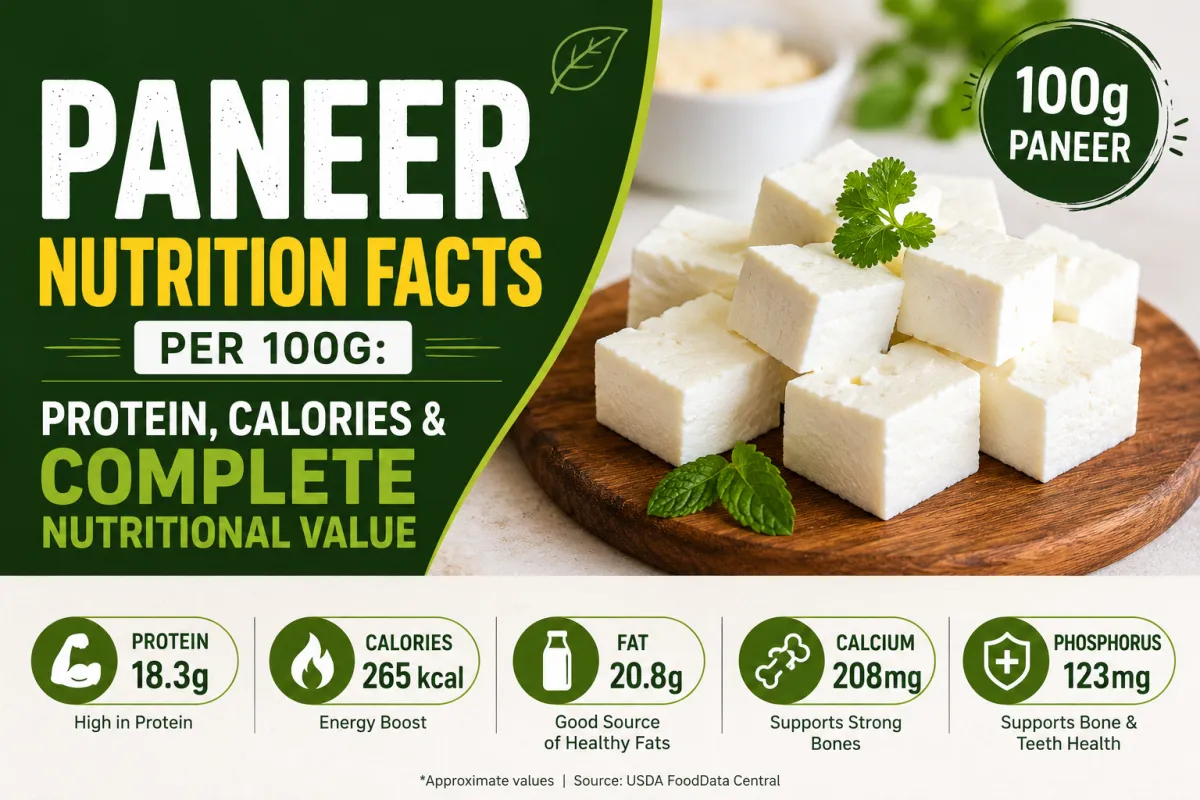
Paneer is one of the most popular and nutritious foods in Indian vegetarian diets. Whether you are a fitness enthusiast tracking macros, a vegetarian looking for high-quality protein, or simply curious about the nutritional value of paneer per 100g — this complete guide covers everything: how much protein in 100gm paneer, calories, fat, calcium, and all key nutrients. We also include a Hindi section for those searching 100 gram paneer mein kitna protein hota hai.
What is Paneer?
Paneer is a fresh, non-melting Indian cottage cheese made by curdling full-fat cow or buffalo milk with a natural food acid — typically lemon juice, vinegar, or citric acid. The curds are then drained and pressed into a firm block.
Unlike most cheeses, paneer is not aged or fermented. It is consumed fresh and is a staple in Indian, Pakistani, Bangladeshi, and Nepali cuisines. Because the whey (and most of the lactose) is removed during the curdling process, paneer is often better tolerated by people with mild lactose intolerance compared to regular milk.
- Type: Fresh dairy cheese (non-melting, unaged)
- Made from: Full-fat cow or buffalo milk
- Also known as: Indian cottage cheese, paneer cheese
- Key nutritional strength: High complete protein + high calcium
- Suitable for: Vegetarians, fitness enthusiasts, older adults, people with mild lactose intolerance
Paneer Nutrition Facts Per 100g — Complete Table
Below is the detailed nutritional information of paneer per 100g. Values are based on full-fat homemade or standard commercial paneer:
| Nutrient | Amount per 100g | % Daily Value (approx.) |
|---|---|---|
| Calories | 296–321 kcal | 15–16% |
| Protein | 18–21 g | 36–42% |
| Total Fat | 20–25 g | 28–32% |
| Saturated Fat | 13–14 g | 65–70% |
| Carbohydrates | 3–4 g | 1–2% |
| Sugars (Lactose) | 2.5–3 g | — |
| Dietary Fibre | 0 g | 0% |
| Calcium | 480–710 mg | 48–71% |
| Phosphorus | 300–400 mg | 30–40% |
| Magnesium | 22–30 mg | 6–8% |
| Sodium | 18–30 mg (homemade) / up to 400mg (packaged) | Varies |
| Potassium | 98–105 mg | 2–3% |
| Cholesterol | 70–89 mg | 23–30% |
| Vitamin A | 250–300 IU | 6–8% |
| Vitamin B12 | 0.5–0.8 µg | 20–33% |
| Zinc | 1.5–2.5 mg | 14–23% |
Note: Values vary based on whether the milk is cow or buffalo milk, full-fat or low-fat, and homemade vs. packaged. Buffalo milk paneer tends to be higher in fat and calories. Low-fat paneer has approximately 180–200 kcal and 20–22g protein per 100g.
How Much Protein in 100gm Paneer?
100gm paneer contains 18 to 21 grams of protein — making it one of the richest vegetarian protein sources available. The exact amount depends on the type of milk used and the fat content:
| Type of Paneer | Protein per 100g | Calories per 100g |
|---|---|---|
| Full-fat cow milk paneer | 18–20 g | 296–310 kcal |
| Full-fat buffalo milk paneer | 19–21 g | 310–321 kcal |
| Low-fat / toned milk paneer | 20–22 g | 180–210 kcal |
| Commercial packaged paneer (avg) | 18–20 g | 300–320 kcal |
What Type of Protein Does Paneer Contain?
Paneer's primary protein is casein — a slow-digesting complete protein that contains all 9 essential amino acids: histidine, isoleucine, leucine, lysine, methionine, phenylalanine, threonine, tryptophan, and valine.
Casein digests slowly (over 5–7 hours), which means it provides a sustained, steady release of amino acids into the bloodstream. This makes paneer especially useful for:
- Muscle repair and recovery after exercise
- Reducing muscle breakdown during sleep (if consumed at night)
- Maintaining satiety for longer periods
Paneer provides complete protein — unlike most plant proteins which are incomplete (missing one or more essential amino acids). This is a significant nutritional advantage for vegetarians.
Paneer Protein Compared to Daily Requirements
The Indian Council of Medical Research (ICMR) recommends approximately 0.8–1g of protein per kg body weight per day for adults. For a 60kg person, that is 48–60g of protein daily. A 100g serving of paneer alone provides 18–21g — approximately 35–40% of the daily protein requirement.
Paneer Calories Per 100g
100g of paneer contains approximately 296 to 321 calories (kcal). The calorie count comes primarily from its fat content. Here is how the calories break down by macronutrient:
| Macronutrient | Amount per 100g | Calories from this nutrient |
|---|---|---|
| Protein (18–21g) | 18–21 g | 72–84 kcal |
| Fat (20–25g) | 20–25 g | 180–225 kcal |
| Carbohydrates (3–4g) | 3–4 g | 12–16 kcal |
| Total | — | ~296–321 kcal |
If you are managing calories or following a weight loss diet, low-fat paneer (made from toned or skimmed milk) is a better choice — it contains roughly 180–200 kcal per 100g with higher relative protein content.
Key Nutrients in Paneer
Calcium — Bone Health Powerhouse
Paneer delivers 480–710 mg of calcium per 100g — which can meet 48–71% of the daily calcium requirement for an adult (ICMR recommends 600–1000mg/day). Calcium is essential for bone density, muscle contraction, and nerve transmission. Regular paneer consumption is particularly beneficial for women, who are at higher risk of osteoporosis with age.
Phosphorus
Paneer provides 300–400mg of phosphorus per 100g. Phosphorus works alongside calcium to build and maintain strong bones and teeth, and plays a role in energy metabolism (ATP production).
Vitamin B12
Vegetarians are at high risk of Vitamin B12 deficiency. Paneer provides 0.5–0.8 µg per 100g — contributing approximately 20–33% of the daily requirement. B12 is essential for nerve function, red blood cell formation, and DNA synthesis.
Healthy Fats
While paneer is high in saturated fat (13–14g per 100g), it also contains conjugated linoleic acid (CLA) — a naturally occurring fatty acid in dairy foods associated with potential benefits for body composition and immune function.
Low in Carbohydrates
At just 3–4g of carbs per 100g, paneer is an excellent food for low-carb, keto, or diabetic diets. The carbohydrate content is primarily residual lactose (milk sugar), which is significantly lower than in regular milk due to the whey-removal process during cheese-making.
Health Benefits of Paneer
1. High-Quality Protein for Muscle Health
The casein protein in paneer supports muscle protein synthesis — the process by which muscles are repaired and built after exercise. With 18–21g of complete protein per 100g, paneer is one of the best non-meat protein sources for athletes, gym-goers, and anyone looking to build or maintain lean muscle mass.
2. Supports Bone Strength
The combination of high calcium (480–710mg) and phosphorus (300–400mg) makes paneer one of the best dietary sources for bone health. This is especially important for women post-menopause, older adults at risk of osteoporosis, and teenagers whose bones are still developing.
3. Helps in Weight Management
Protein and fat together produce strong satiety signals. Including paneer in a meal slows digestion, keeps you fuller for longer, and reduces the urge to snack between meals. When consumed in appropriate portions (50–100g per serving) as part of a calorie-controlled diet, paneer can support healthy weight management.
4. Beneficial for Blood Sugar Control
Paneer has a very low glycaemic index (GI). The casein protein digests slowly, and the very low carbohydrate content (3–4g per 100g) means it causes minimal blood sugar spikes. It can be a good protein choice for people with type 2 diabetes or prediabetes when consumed in moderation.
5. Good for Lactose-Intolerant Individuals
During the paneer-making process, most of the whey (which contains the majority of lactose) is drained off. This makes paneer significantly lower in lactose than regular milk. Many people with mild lactose intolerance can consume paneer without discomfort.
6. Rich Source of B12 for Vegetarians
Since Vitamin B12 is found almost exclusively in animal products, vegetarians are at high risk of deficiency. Paneer is one of the few vegetarian foods that naturally provides B12, making it a valuable part of a plant-based diet.
7. Versatile — Easy to Include Daily
Paneer can be grilled, curried, stir-fried, added to salads, used in parathas, or eaten raw with a sprinkle of spices. Its mild flavour and firm texture make it easy to incorporate into daily meals consistently.
Paneer vs Other Protein Sources — Nutritional Comparison
| Food Item | Protein per 100g | Calories per 100g | Key Advantage |
|---|---|---|---|
| Paneer (full-fat) | 18–21 g | 296–321 kcal | Complete protein + high calcium; best for vegetarians |
| Low-fat paneer | 20–22 g | 180–200 kcal | Higher protein-to-calorie ratio; good for weight management |
| Tofu (firm) | 10–12 g | 70–80 kcal | Plant-based; cholesterol-free; lower calories; contains isoflavones |
| Cow milk (full-fat) | 3.3 g | 61 kcal | Lower protein density; contains whey protein |
| Greek yogurt (plain) | 10 g | 59 kcal | Low calorie; rich in probiotics; versatile |
| Boiled egg (whole) | 12.6 g | 155 kcal | Complete protein; rich in vitamins; not vegetarian |
| Chicken breast (cooked) | 31 g | 165 kcal | Highest protein; lean; not vegetarian |
| Moong dal (cooked) | 7–8 g | 105 kcal | Plant-based; high fibre; incomplete protein |
| Cheddar cheese | 25 g | 402 kcal | High protein but very high in calories and sodium |
Key Takeaway: Among vegetarian protein sources, paneer offers the best combination of complete protein, calcium, and practical usability in Indian cooking. Low-fat paneer offers an even better protein-to-calorie ratio for those watching their weight.
Who Should Eat Paneer?
Paneer is suitable for most people. It is especially beneficial for:
- Vegetarians and vegans (who include dairy) — best complete protein source in a plant-heavy diet
- Athletes and gym-goers — high casein protein supports muscle recovery and growth
- Older adults (50+ years) — helps preserve muscle mass (sarcopenia prevention) and bone density
- People with diabetes — low GI, minimal carbs; supports stable blood sugar
- Children and teenagers — excellent source of calcium and protein for growth
- Pregnant and breastfeeding women — calcium and B12 requirements are higher during this period
- People with mild lactose intolerance — lower lactose than milk; usually well tolerated
- People on low-carb or keto diet — very low in carbohydrates
Who should limit or avoid paneer:
- People with dairy allergy — strict avoidance required
- People with severe lactose intolerance — even small amounts of lactose may cause symptoms
- People with high cholesterol or heart disease — paneer is high in saturated fat; use low-fat paneer or limit portion size; consult your doctor
- People with kidney disease — high phosphorus and protein content may need to be restricted; consult a nephrologist
How to Include Paneer in Your Diet
- Paneer sabzi / curry: Add cubed paneer to spinach (palak paneer), tomato-based gravies, or dry sabzis. Pair with roti or brown rice for a balanced meal.
- Grilled or pan-seared paneer: Slice into thick pieces, marinate with spices, and grill or pan-sear. Eat with salad or as a snack.
- Paneer bhurji: Scrambled paneer with onions, tomatoes, and spices — quick, high-protein breakfast or dinner.
- Paneer in salads: Cube and add to salads with cucumber, tomato, mint, and lemon dressing for a protein-rich meal.
- Paneer paratha: Stuffed with spiced grated paneer — a filling, protein-rich Indian flatbread.
- Raw paneer snack: Sprinkle with chaat masala and eat raw as a high-protein snack between meals.
- Paneer in wraps or rolls: Grilled paneer in a whole wheat wrap with vegetables and chutneys.
Recommended portion size: 50–100g per serving for most adults. For weight management, stick to 50–75g per serving of full-fat paneer, or use low-fat paneer for larger portions.
100 Gram Paneer Mein Kitna Protein Hota Hai (Hindi में जानें)
100 gram paneer mein kitna protein hota hai?
100 gram paneer mein approximately 18 se 21 gram protein hota hai. Yeh ek complete protein hai — matlab isme saare 9 essential amino acids hote hain jo body khud nahi bana sakti.
Paneer Nutrition Per 100g (Hindi mein):
- Protein: 18–21 gram
- Calories: 296–321 kcal
- Fat (Vasa): 20–25 gram
- Carbohydrate: 3–4 gram
- Calcium: 480–710 mg (haddiyon ke liye bahut zaruri)
Paneer ke fayde (Health Benefits in Hindi):
- Muscles banane aur repair karne mein madad karta hai
- Haddiyan mazboot karta hai (calcium ki wajah se)
- Vegetarians ke liye sabse accha protein source hai
- Blood sugar stable rakhne mein madad karta hai (low GI)
- Lactose intolerance wale log bhi zyada tar paneer khaa sakte hain
- Weight management mein madad karta hai (zyada der tak pet bhara rehta hai)
Kitna paneer khana chahiye?
Ek din mein 50 se 100 gram paneer zyatar adults ke liye theek hai. Agar weight loss par hain toh low-fat paneer use karein — isme protein zyada aur calories kam hoti hain.
Kaun paneer nahi khaa sakta?
Jinhe dairy allergy ho, severe lactose intolerance ho, ya kidney disease ho — woh log paneer doctor ki salah ke baad hi khaayen.
Conclusion
Paneer is one of the most nutritionally dense foods in the Indian diet. With 18–21g of complete protein per 100g, high calcium content, low carbohydrates, and essential vitamins, it earns its place as a superfood for vegetarians. Whether your goal is building muscle, managing weight, strengthening bones, or simply eating a balanced diet — paneer is a practical, versatile, and delicious choice.
For the best nutritional outcome, choose low-fat paneer if you are calorie-conscious, eat it in appropriate portions (50–100g per meal), and pair it with fibre-rich vegetables, whole grains, or legumes for a complete, balanced meal.