Thyroid Diet Chart for Women: Complete Indian Vegetarian Guide for Weight Loss
Updated on: September 30, 2026 | Medically reviewed by: Dr. Anupam Kumari
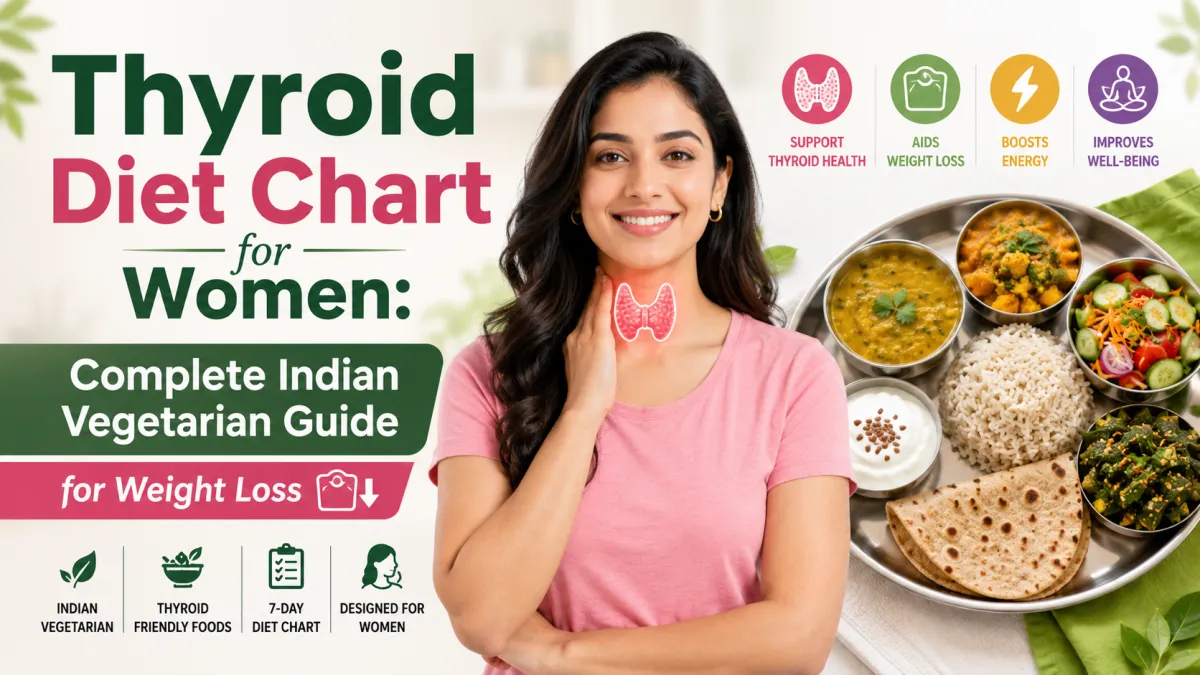
A practical, doctor-reviewed thyroid diet chart for women — covering Indian vegetarian meal plans, a weight-loss-focused chart, and a quick Hindi reference table — based on guidance from recognised health authorities and the clinical nutrition team at Nova Hospital Meerut.
There is no single universal "thyroid diet chart" because needs differ depending on whether a woman has hypothyroidism, hyperthyroidism, or related conditions like PCOS. However, most evidence-aligned thyroid diet charts for women share common pillars: adequate (not excessive) iodine and selenium, sufficient protein at every meal, fibre-rich whole grains and vegetables, healthy fats, and consistent meal timing around thyroid medication. For Indian vegetarian women, this usually translates into dal, paneer, curd, nuts, seeds, seasonal vegetables, and whole grains such as ragi, jowar, and brown rice, while limiting ultra-processed foods, excess sugar, and very large raw servings of cruciferous vegetables or soy. This article is educational; please personalise any diet chart with your doctor or registered dietitian, especially if you are pregnant, breastfeeding, or already on thyroid medication.
Why Thyroid Disorders Are More Common in Women
Thyroid disorders, particularly hypothyroidism, affect women far more often than men. National health survey data from India has consistently shown that self-reported thyroid disorder prevalence among women rises with age, and clinical screening studies in young Indian women have found roughly one in eight to have some degree of thyroid dysfunction. Hormonal transitions unique to women — puberty, pregnancy, the postpartum period, and perimenopause — all place extra demand on thyroid hormone production, which is one reason doctors recommend thyroid screening during pregnancy planning and again around midlife.
Women with polycystic ovary syndrome (PCOS) also show a higher overlap with thyroid dysfunction, and both conditions can independently contribute to weight gain, fatigue, and irregular periods — which is exactly why a generic "diet chart" rarely works as well as one that accounts for your specific hormonal picture. This is also why a woman's thyroid diet chart often differs from a man's: it needs to account for iodine needs during reproductive years, iron losses from menstruation, and the metabolic overlap with conditions like PCOS.
How Diet Influences Thyroid Function
Your thyroid gland uses iodine as a raw material to produce two hormones, T4 (thyroxine) and T3 (triiodothyronine), which regulate metabolic rate, body temperature, and energy use in almost every cell. An enzyme called thyroid peroxidase (TPO) attaches iodine to a protein inside the thyroid gland to build these hormones, and selenium-dependent enzymes are needed to convert the less active T4 into the more active T3 in the rest of the body.
Diet affects this process in a few specific ways:
- Iodine is the essential building block — too little impairs hormone production, but unsupervised excess (for example, from iodine or kelp supplements) can also disturb thyroid function, especially in those with autoimmune thyroid disease.
- Selenium supports the T4-to-T3 conversion step and has antioxidant effects that may protect thyroid tissue from oxidative stress, particularly relevant in autoimmune (Hashimoto's) thyroiditis.
- Goitrogens — natural compounds found in raw cruciferous vegetables (cabbage, broccoli, cauliflower) and unfermented soy — can interfere with the TPO enzyme and iodine uptake, but cooking substantially deactivates this effect, which is why moderate cooked portions are generally considered fine for most women.
- Other micronutrients — zinc, iron, and vitamin D — act as supporting cofactors for healthy thyroid hormone metabolism, and deficiencies in any of these are common in women of reproductive age.
Diet alone cannot cure a diagnosed thyroid disorder and is not a substitute for prescribed medication such as levothyroxine, but a well-structured diet can help manage symptoms, support medication absorption, and reduce the metabolic and weight-related side effects many women experience.
7 Evidence-Based Diet Principles for Women's Thyroid Health
- Get enough iodine — but don't overdo it. Iodised salt used in normal cooking generally covers daily needs for most women; avoid additional iodine or kelp supplements unless specifically advised by your doctor, since excess iodine can also disturb thyroid function.
- Prioritise selenium-rich foods in moderation. Sunflower seeds, mushrooms, whole grains, and a small daily portion of Brazil nuts (1–2 nuts, as they are extremely concentrated) can help meet selenium needs without supplementation for most women.
- Cook your cruciferous vegetables rather than avoiding them. Steaming or boiling cabbage, cauliflower, and broccoli significantly reduces their goitrogenic compounds while preserving their fibre and antioxidant benefits.
- Include adequate protein at every meal. Protein supports muscle mass, satiety, and metabolic rate — especially important since hypothyroidism can already slow metabolism and contribute to weight gain.
- Choose fibre-rich, minimally processed carbohydrates. Whole grains like ragi, jowar, bajra, oats, and brown rice support digestion and help regulate blood sugar, which matters more for women who also have PCOS or insulin resistance.
- Watch your vitamin D, B12, iron, and zinc status. These are commonly low in Indian women, particularly vegetarians, and can compound thyroid-related fatigue; ask your doctor about a simple blood panel rather than self-supplementing.
- Keep meal timing consistent around your thyroid medication. If you take levothyroxine, the timing of food, coffee, calcium, and iron relative to your dose matters more than almost any single "superfood."
Foods to Include in Your Thyroid Diet Chart
| Nutrient Focus | Vegetarian Indian Food Sources | Why It Matters |
|---|---|---|
| Iodine | Iodised salt (in normal cooking amounts), milk, curd, paneer | Raw material for thyroid hormone production |
| Selenium | Sunflower seeds, mushrooms, whole wheat, brown rice, 1–2 Brazil nuts | Supports T4-to-T3 conversion and antioxidant defence |
| Protein | Moong dal, chana, rajma, paneer, tofu, curd, soy chunks (in moderation) | Maintains muscle mass and metabolic rate |
| Fibre & complex carbs | Ragi, jowar, bajra, oats, whole vegetables, fruits with skin | Supports digestion, satiety, and blood sugar control |
| Healthy fats | Nuts, seeds, til (sesame), groundnut oil, a moderate amount of ghee | Supports hormone synthesis and nutrient absorption |
| Zinc & iron | Pumpkin seeds, sesame seeds, jaggery (moderate), leafy greens, legumes | Cofactors for thyroid hormone metabolism; iron is often low in women |
| Vitamin D & B12 | Fortified milk, curd, mushrooms exposed to sunlight, sunlight exposure | Frequently deficient in Indian vegetarian women; ask your doctor about testing |
Foods to Limit or Avoid
| Category | Examples | Reason to Limit |
|---|---|---|
| Ultra-processed & packaged foods | Namkeen, packaged snacks, instant noodles, bakery items | High in refined carbs, sodium, and trans fats; contribute to weight gain |
| Added sugar & sweets | Sweetened beverages, mithai in excess, sugary tea | Promotes weight gain and blood sugar swings, worse with PCOS overlap |
| Excess raw cruciferous vegetables | Large raw servings of cabbage, broccoli, cauliflower | Raw forms retain more goitrogenic activity than cooked forms |
| Large amounts of unfermented soy near medication | Soy milk, soy chunks taken right before/after thyroid pills | Can reduce absorption of thyroid medication if not spaced out |
| Excess caffeine near medication | Tea/coffee within an hour of levothyroxine | Can reduce medication absorption |
| Crash or very-low-calorie diets | Skipping meals, under ~1,200 kcal/day without supervision | Can worsen fatigue and is not a safe approach for thyroid patients |
| Excess alcohol & smoking | — | Linked to worse thyroid and metabolic outcomes generally |
Most women with normal iodine intake and no autoimmune thyroid disease do not need to eliminate cruciferous vegetables or soy entirely — moderation and cooking matter more than total avoidance. If you have Hashimoto's thyroiditis or another autoimmune thyroid condition, ask Nova Hospital Meerut's endocrinology team for individualised advice, since tolerance can vary.
Read More- 11 Best Foods for Thyroid Patients in India
Indian Vegetarian Thyroid Diet Chart for Women (Full-Day Sample)
This sample chart illustrates how the principles above translate into a typical Indian vegetarian day. Portion sizes should be adjusted to your age, activity level, and any other condition — use this as a structural template, not a fixed prescription.
| Time | Meal | Sample Options |
|---|---|---|
| Early morning | On waking | 1 glass warm water (take thyroid medication now, on an empty stomach, with plain water, as advised by your doctor) |
| Breakfast (30–60 min after medication) | Main meal | Vegetable poha/upma with peanuts, or moong dal chilla, or oats with milk and seeds, with a small bowl of curd |
| Mid-morning | Snack | 1 seasonal fruit (apple, papaya, guava, orange) + a small handful of nuts/seeds |
| Lunch | Main meal | 2 multigrain rotis (ragi/jowar/wheat) or 1 cup brown rice, 1 bowl dal/rajma/chana, 1 cooked vegetable, salad, small bowl curd |
| Evening | Snack | Roasted chana or sprouts chaat, herbal tea (avoid milk tea right before/after medication window) |
| Dinner (lighter, earlier if possible) | Main meal | Vegetable khichdi or 1–2 rotis with dal and a cooked seasonal vegetable, small salad |
| Bedtime | Optional | Warm turmeric milk or plain warm milk (well spaced from medication timing) if tolerated |
Thyroid Diet Chart for Women for Weight Loss (Vegetarian Plan)
Weight gain is one of the most common concerns women raise with hypothyroidism, but the goal of a thyroid diet chart for weight loss should be sustainable fat loss alongside stable thyroid hormone levels — not rapid or extreme calorie cutting, which can worsen fatigue and is not considered safe without medical supervision.
Core Principles for the Weight-Loss Vegetarian Plan
- Aim for a modest calorie deficit (roughly 300–500 kcal/day below maintenance) rather than a drastic cut — ask a dietitian to calculate your individual maintenance calories.
- Put a palm-sized portion of protein (dal, paneer, tofu, curd, soy chunks) on every plate to preserve muscle and improve satiety.
- Fill half your plate with non-starchy vegetables to add volume and fibre without excess calories.
- Replace refined grains (white rice, maida) with whole grains (ragi, jowar, bajra, oats) in moderate, measured portions.
- Pair diet changes with regular movement — brisk walking, strength training, or yoga — since exercise supports both weight management and insulin sensitivity, which is especially relevant if PCOS is also present.
- Track progress over weeks, not days; weight changes in thyroid patients are often slower until hormone levels stabilise on medication.
| Time | Meal | Sample Options (Portion-Controlled) |
|---|---|---|
| Early morning | On waking | Warm water + thyroid medication on empty stomach (per your doctor's timing instructions) |
| Breakfast | 30–60 min after medication | Vegetable-loaded moong dal chilla or oats upma + 1 boiled egg or a small bowl of curd for extra protein |
| Mid-morning | Snack | 1 small fruit + 5–6 almonds/walnuts |
| Lunch | Main meal | 1–2 multigrain rotis or ½ cup brown rice, 1 bowl dal/chana, large portion of cooked vegetables, salad, buttermilk |
| Evening | Snack | Roasted chana/sprouts or vegetable soup, green tea |
| Dinner | Lighter, earlier meal | Grilled paneer or tofu with stir-fried vegetables, or vegetable and dal soup with 1 small roti |
| Bedtime | Optional | Herbal tea (chamomile/fennel), away from medication window |
If you are not losing weight despite consistent diet and exercise, this is more likely to be a sign that your TSH levels need rechecking and medication dose adjustment than a sign you need a more extreme diet. Speak to your endocrinologist before cutting calories further.
North vs South Indian Thyroid Diet Adaptations
Indian vegetarian eating patterns vary significantly by region, and most regional staples can be adapted into a thyroid-friendly pattern with small swaps:
- North Indian: Favour multigrain rotis over excess refined-flour paratha, use mustard or groundnut oil in moderation, and include paneer, rajma, and chole as protein staples. Limit deep-fried snacks like pakoras and excess ghee.
- South Indian: Fermented foods like idli and dosa are a good fit, since fermentation tends to reduce goitrogenic compounds in batters containing legumes. Pair with sambar (rich in dal and vegetables) and use coconut and curd in moderate amounts; go easy on white-rice-heavy meals and reduce the frequency of deep-fried items like vada.
Woman Thyroid Diet Chart in Hindi (थायराइड डाइट चार्ट हिंदी में) – Quick Reference
महिलाओं में थायराइड एक सामान्य समस्या है। नीचे दी गई तालिका में थायराइड के लिए उपयोगी और सीमित मात्रा में लेने योग्य खाद्य पदार्थों की संक्षिप्त सूची दी गई है। कृपया अपनी व्यक्तिगत स्थिति के अनुसार डॉक्टर या आहार विशेषज्ञ से सलाह अवश्य लें।
| श्रेणी (Category) | खाद्य पदार्थ (Foods) | लाभ / सलाह (Benefit / Advice) |
|---|---|---|
| आयोडीन (Iodine) | आयोडीन युक्त नमक, दूध, दही, पनीर | थायराइड हार्मोन बनाने के लिए ज़रूरी, अधिक मात्रा से बचें |
| प्रोटीन (Protein) | दाल, चना, राजमा, पनीर, टोफू, दही | मेटाबॉलिज्म और मांसपेशियों के लिए ज़रूरी |
| फाइबर (Fibre) | रागी, ज्वार, बाजरा, ओट्स, हरी सब्जियाँ (पकी हुई) | पाचन और वज़न नियंत्रण में सहायक |
| सीमित करें (Limit) | तली हुई चीज़ें, अधिक मीठा, पैकेज्ड स्नैक्स | वज़न बढ़ने और ब्लड शुगर असंतुलन का कारण बन सकते हैं |
| दवा के समय ध्यान दें | दूध, चाय, सोया उत्पाद | थायराइड की दवा के 3–4 घंटे बाद ही लें |
Lifestyle Habits That Support Your Thyroid Diet
- Sleep: Aim for 7–8 hours of consistent sleep; poor sleep is linked with worse metabolic and hormonal regulation.
- Stress management: Chronic stress affects the hypothalamic-pituitary-thyroid axis; gentle practices like walking, breathing exercises, or yoga may help some women manage stress, though these are supportive habits and not a treatment for thyroid disease.
- Movement: A mix of brisk walking, strength training, and flexibility work supports weight management and muscle mass, both of which are commonly affected by hypothyroidism.
- Regular monitoring: TSH, free T4, and sometimes thyroid antibody tests should be repeated as advised by your doctor — diet adjustments work best alongside monitored medication dosing, not instead of it.
Diet and Thyroid Medication: Timing Matters
If you're on levothyroxine or another thyroid hormone replacement, how and when you eat can affect how well your medication works:
- Take the medication on an empty stomach, typically 30–60 minutes before breakfast, or at bedtime at least 3–4 hours after your last meal, as advised by your prescribing doctor.
- Wait at least 3–4 hours before taking calcium or iron supplements, calcium-fortified foods, or antacids, since these can bind to the medication and reduce absorption.
- Space out coffee, milk, soy products, and high-fibre meals from your dosing time where possible, and try to keep your routine consistent day to day.
- Never change your medication brand, dose, or timing on your own — always confirm changes with your treating doctor, especially if you start a new diet or supplement.
When to See an Endocrinologist
Diet and lifestyle changes are supportive, not diagnostic or curative. Please consult a doctor promptly if you experience any of the following:
- Unexplained or rapid weight gain or weight loss
- Persistent fatigue, cold intolerance, or hair thinning that doesn't improve
- Irregular periods, heavy bleeding, or difficulty conceiving
- A noticeable swelling or lump in the front of the neck (possible goitre)
- Heart palpitations, tremors, or unexplained anxiety (possible hyperthyroidism signs)
- Persisting symptoms despite taking thyroid medication as prescribed
- Before starting any new supplement, fasting routine, or significant diet change, if you are pregnant, breastfeeding, or trying to conceive
Thyroid Care at Nova Hospital Meerut
Personalised Thyroid & Diet Counselling for Women
This article provides general, educational guidance. Your ideal thyroid diet chart depends on your TSH, T3/T4, and antibody levels, your weight goals, and any overlapping conditions like PCOS. Nova Hospital Meerut's endocrinology and clinical nutrition team can review your reports and build a chart suited to you.
Book a Consultation at Nova Hospital MeerutGeneral sources consulted for this article: patient guidance published by the American Thyroid Association, publicly available nutrition guidance referencing the U.S. National Institutes of Health and World Health Organization on iodine intake, UK NHS patient information on hypothyroidism, and Indian National Family Health Survey (NFHS) data on thyroid disorder prevalence among women. This list is illustrative of the type of authority used and should not be read as direct verbatim quotation; readers seeking the original guidelines should refer to each organisation's official website.